Breakfast stalls with steaming soy milk, bowls of white and smooth tofu brains, spicy and tender mabo tofu, as well as thousand sheets, phyllo knots, bean curd and vegetarian chicken…… have breast cancer, do you really have to say goodbye to these delicacies? Answer: Of course not!
Soy increases breast cancer risk? The misconceptions run too deep ……
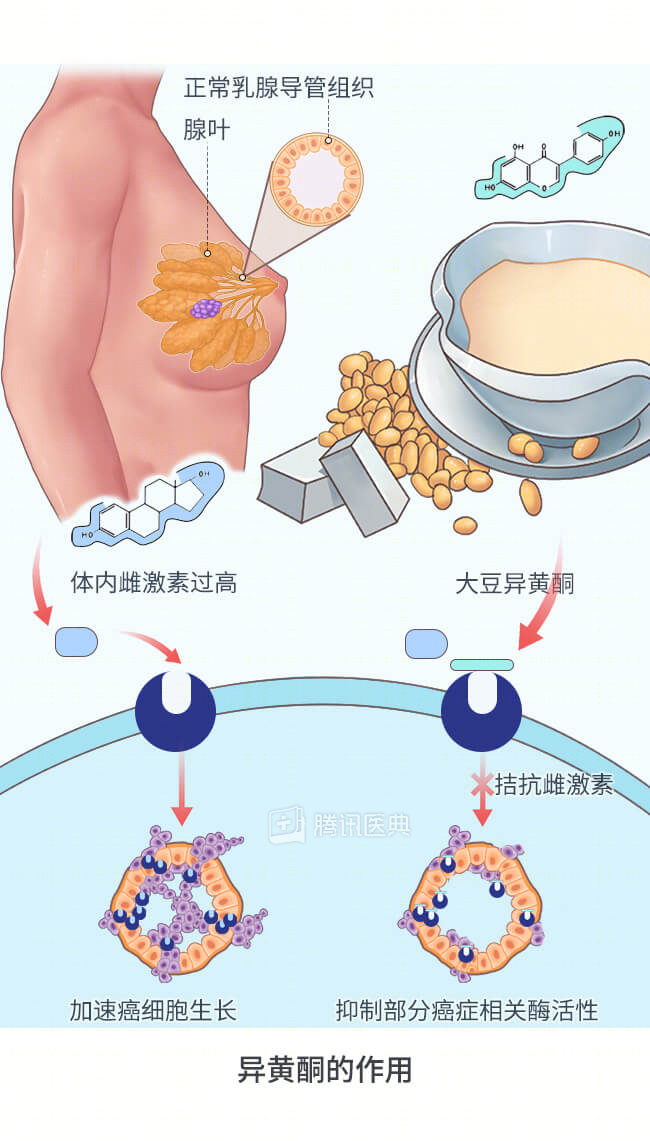
We all know that excess estrogen is a major cause of the high incidence of breast cancer in women. And soy products contain large amounts of soy isoflavones, which have a molecular structure very similar to estrogen. So there are many patients who are worried that long-term consumption of soy products will raise the level of estrogen in the body, promote breast enlargement and eventually induce breast cancer, so is this really true?
No, the proper consumption of soy and its products will not induce breast cancer!
Soy isoflavones are really aggravating. It is very similar in chemical structure to the endogenous estrogen in the human body, but it is of plant origin! It’s not the same thing as the estrogen in the human body, so to speak. Soy isoflavones, as “estrogen”, have only one hundred thousandth of the activity of endogenous estrogen. The company’s main goal is to provide a comprehensive range of products and services to the public.
In fact, compared to estrogen-like effects, isoflavones have a greater role in antagonizing estrogen and inhibiting some cancer-related enzyme activity, instead lowering the body’s blood estrogen levels, which has a preventive effect on breast cancer. Epidemiological surveys have found that Asian populations that consume more soy products have lower rates of breast cancer. One study of Asian women reported that a higher intake of soy products from adolescence onward reduced the risk of breast cancer by 30%.
In addition, soy products are rich in high-quality vegetable protein, dietary fiber, and unsaturated fatty acids, and increasing soy and soy product intake in the daily diet to achieve a balanced diet is beneficial to the health of all people. The Dietary Guidelines for Chinese Residents recommends that we consume 25-35 grams of soybeans and nuts per day, and 25 grams of soybeans (in dry form) is about half a tael. Every week, you can use various soybean products in rotation to make dishes for consumption, such as shredded tofu cold, soybean milk and fish soup, dried beans and bean curd stir-fry, etc., which not only meet the nutritional needs but also change the taste. So proper intake of soy and its products not only does not increase the risk of cancer, but also brings many health benefits, especially for menopausal women, who should eat some every day.
Women, eat some every day.
Soy intake also reduces the risk of breast cancer recurrence
Epidemiological surveys have found that breast cancer rates are lower in Asian populations that consume more soy products. A study of Asian women reported that a higher intake of soy products from adolescence onward reduced the risk of breast cancer by 30%. A study of more than 5,000 breast cancer patients followed for 7 years showed that soy and isoflavones consumption reduced mortality and cancer recurrence in breast cancer patients. In a study that included 5,000 breast cancer patients in Shanghai, the highest soy protein intake group had a 29% lower risk of death and a 32% lower risk of recurrence. The results of the joint US-China study showed that soy intake reduced the risk of breast cancer recurrence by 25%, with a more pronounced protective effect in patients who were estrogen receptor-negative.
Consumption of soy products may prevent breast cancer and improve prognosis for breast cancer patients
Normal intake of soy products does not affect estrogen levels in the body and does not increase the risk of breast cancer. On the contrary, consumption of soy products has a positive effect on preventing breast cancer and improving the prognosis of breast cancer patients.
In addition, soy products are rich in high-quality vegetable protein, dietary fiber, and unsaturated fatty acids, and increasing the intake of soy and soy products in the daily diet to achieve a balanced diet is beneficial to the health of all people. The Dietary Guidelines for Chinese Residents recommends that we consume 25-35 grams of soybeans and nuts per day. 25 grams of soybeans (in dry form) is about half a tael, and you can rotate the dishes with a variety of soybean products each week, such as shredded tofu cold, soybean milk and fish soup, dried beans, and fried vegetables with bean curd, which not only meet the nutritional needs but also change the taste, and it is safe to consume soybean products in moderation.
Watch out, these soy products beware!
However, due to a lack of research evidence, supplements containing soy isoflavones are not recommended for breast cancer patients to reduce the risk of recurrence. The most important thing is to make sure that you have the right amount of soy products and that you have the right amount of oil, salt, sugar and other additives. At the same time bean food purine content is relatively high, gout patients caution. If you have indigestion, stomach pain, flatulence and other symptoms, avoid bean products.
| Knock on wood to highlight: |
|
. |
|