Key points of this article:
- There are still many treatment options for advanced prostate cancer that can effectively control the disease, and currently the main clinical approach is a combination of endocrine therapy.
- Radiotherapy can effectively improve the symptoms and improve the quality of life in patients with advanced prostate cancer.
- The efficacy of endocrine therapy will decrease after a period of time and develop into destructive resistant prostate cancer. These patients still need to continue with anti-androgen therapy and also control disease progression with chemotherapy and treat bone metastases with drugs such as zoledronic acid.
Prostate cancer is a cancer with a relatively good prognosis compared to other cancers, such as lung and liver cancer, and many patients can survive for a long time or even achieve a cure if detected early and treated early.
However, because of the insidious onset of prostate cancer and the lack of screening, most prostate cancer patients in China are now diagnosed with advanced disease, making treatment more difficult and the survival rate and quality of life of patients greatly reduced.
Advanced prostate cancer is defined as localized tumor invasion of the bladder or rectum, or metastasis to one or more lymph nodes, or metastasis to other tissues or organs at a distant site. The most common type of prostate cancer is bone metastasis.
So, is there no hope for advanced prostate cancer? No, it is not. The main clinical treatment for patients with advanced disease is a combination of endocrine therapy.
The main treatment option for advanced prostate cancer – endocrine therapy
Endocrine therapy is the primary treatment for advanced prostate cancer. Most prostate cancer cells die in the absence of androgen stimulation, and endocrine therapy is designed to “starve” prostate cancer cells by blocking the nutritional effects of androgens on prostate cancer cells.
There are two ways to “starve” prostate cancer cells:
There are two ways to starve prostate cancer cells:
- One way is to lower testosterone levels in the body by suppressing testosterone production, so that prostate cancer cells have no “food” to “eat. LHRH-a);
- Another approach is to prevent testosterone from coming into contact with cancer cells, that is, the “food” is still there, but the prostate cancer cells “can’t eat it,” that is, to use anti-androgen drugs that work by competitively inhibiting androgen binding to the androgen receptors of prostate cancer cells. The first thing you need to do is to use an anti-androgen drug that works by competitively inhibiting the binding of androgens to androgen receptors in prostate cancer cells.
The combination of debulking therapy (surgical or pharmacologic debulking) and anti-androgen drugs can achieve maximum androgen blockade, so the combination is often used clinically to give prostate cancer both a lack of “food” and a “lack of access” to the only “food” available. “The most important thing is to make sure that you have the best possible chance of getting the most out of your tumor.
In addition to these treatments, other strategies include inhibiting the synthesis of adrenal-derived androgens and inhibiting the conversion of testosterone to dihydrotestosterone. This is because in addition to the testes, which are responsible for the majority of androgen production in the body, the adrenal glands are also capable of producing a small proportion of androgens, so orchiectomy does not completely eliminate androgens from the body. In addition, depot treatment is not effective in reducing the levels of dihydrotestosterone, the active androgen inside the prostate, which also helps promote the growth of prostate cancer.
Radiotherapy helps improve the quality of survival in patients with advanced prostate cancer
Another treatment for advanced prostate cancer is palliative radiotherapy, which is used to reduce symptoms and improve quality of life. In addition to conventional external radiation therapy, 3D conformal radiotherapy and intensity-modulated radiotherapy have been used in recent years and have become mainstream techniques in the treatment of prostate cancer.
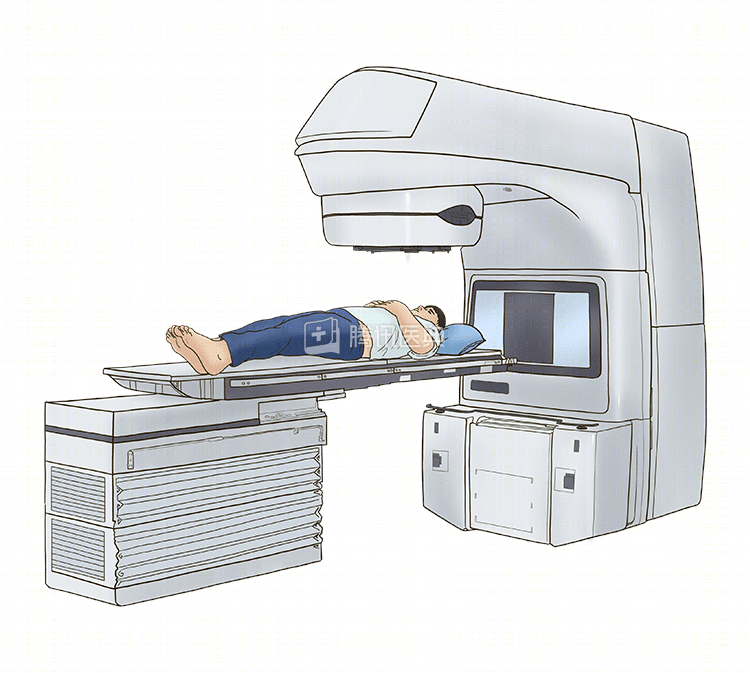
The combination of radiotherapy and endocrine therapy for locally advanced prostate cancer can significantly improve tumor control and survival rates. The pelvic spread or lymph node metastasis of advanced prostate cancer can lead to pain, constipation, swelling of the lower extremities, ureteral obstruction or hydronephrosis, and radiotherapy can significantly improve symptoms. Radiation therapy can also relieve pain and spinal cord compression caused by bone metastases from prostate cancer.
Destructive resistant prostate cancer, what should be done?
Prostate cancer is often effective when it is initially treated with debulking therapy because prostate cancer cells are still very dependent on androgens at this time. But as the treatment lasts, the prostate cancer cells begin to become insensitive to androgens and develop “castration resistant prostate cancer” (CRPC).
Statistically, the duration of endocrine therapy for metastatic prostate cancer is about 18 to 24 months, although some patients may become non-androgen dependent within just a few months of endocrine therapy and become castration resistant prostate cancer.
While destructive prostate cancer becomes less dependent on androgens, the androgen receptors on the cancer cells are still active, so anti-androgen therapy must be continued to prevent the cancer cells from having the opportunity to “eat” androgens.
The principles of systemic therapy for destructive-resistant prostate cancer are:
- Continue endocrine medications to ensure that serum testosterone is maintained at depleted levels;
- The use of chemotherapy to improve symptoms such as pain and weakness and to prolong survival;
- Apply bisphosphonates to patients with bone metastases to prevent bone-related events (e.g., bone pain, fractures, etc.).
There are several chemotherapy regimens available for this group of prostate cancer patients, including mitoxantrone, polyene paclitaxel, and estradiol nitrogen mustard, among others. These regimens can reduce prostate-specific antigen (PSA), control disease progression and relieve pain, and improve patient survival to some extent.
Chemotherapy kills normal cells in addition to cancer cells, so the adverse effects are more severe, causing diarrhea, hair loss, fatigue, and increased risk of infection, which can be hard on the body.
The new drug abiraterone acetate, developed in recent years, blocks androgen biosynthesis including testicular, adrenal, and prostate cancer cell sources, thereby minimizing androgen levels in the body and even within tumor cells.
Treatment of bone metastases
For patients with hormone-non-dependent prostate cancer with bone metastases, the primary treatment goals are to relieve bone pain, prevent and reduce bone-related events, and improve quality of life and survival.
Unexpected adverse events associated with bone metastases include pathologic fractures, spinal cord compression, and more, which can cause significant pain and severely reduce quality of life.
Zolay phosphate is a third-generation bisphosphonate that provides sustained relief of bone pain, reduces the incidence of bone-related events, and delays the onset of bone complications.
Radionuclides have been shown to be effective in the treatment of extensive bone metastasis pain from prostate cancer. Strontium 89 and samarium 153 are commonly used radionuclides that can significantly reduce new bone metastases, decrease bone pain symptoms, and reduce pain medication use.
Related articles: