Endocrine therapy of various types has been used for prostate cancer patients since the last century, and its efficacy has been widely recognized. Endocrine therapy is one of the longest-standing and most reproducible treatments for prostate cancer in the human exploration of tumor treatment pathways.
Let’s review the progress made in endocrine therapy for prostate cancer over the past 100 years:
- In 1895, White achieved androgen removal in 111 patients with prostate enlargement with the first surgical debulking treatment.
- In 1941, Huggins and Hodges published the paper “The effect of debulking, estrogen and androgen injections on serum phosphatase in metastatic prostate cancer” and found that serum acid phosphatase, which was elevated in prostate cancer, decreased after debulking surgery, and alkaline phosphatase increased briefly and then decreased to normal. Therefore, androgen blockade was introduced as a treatment option for patients with advanced prostate cancer, and was awarded the Nobel Prize in 1966. This was the first time in human history that endocrine therapy was found to control the progression of malignant solid tumors.
- In retrospective analyses in the 1950s, it was hypothesized that patients treated with estrogen therapy and orchiectomy would have higher survival and quality of life than previous treatments.
- In the 1960s and 1970s, steroidal and nonsteroidal antiandrogenic drugs were introduced; in 1971, Schally and Guillemin were awarded the 1977 Nobel Prize in Physiology and Medicine for the extraction of gonadotropin-releasing hormone from the hypothalamus of pigs and sheep, respectively, and for elucidating the effects of this hormone.
.
The current protocols for endocrine therapy include:
- sole depot (surgical or pharmacological depot)
- Monoantiandrogen therapy
- Androgen biosynthesis inhibitors
- Maximal androgen blockade
- Neoadjuvant endocrine therapy prior to radical surgery
- Intermittent endocrine therapy
- Adjuvant endocrine therapy after radical treatment
The most basic of these is denervation therapy, which includes surgical denervation, pharmacological denervation, and estrogen.
Surgical debulking (orchiectomy)
Because 95% of the body’s androgens are produced by the testes, a bilateral orchiectomy can quickly reduce circulating testosterone levels to below 50 ng/dL, which is considered an androgen depot level. Testosterone levels are typically reduced by more than 90% within 24 hours of surgical debulking.
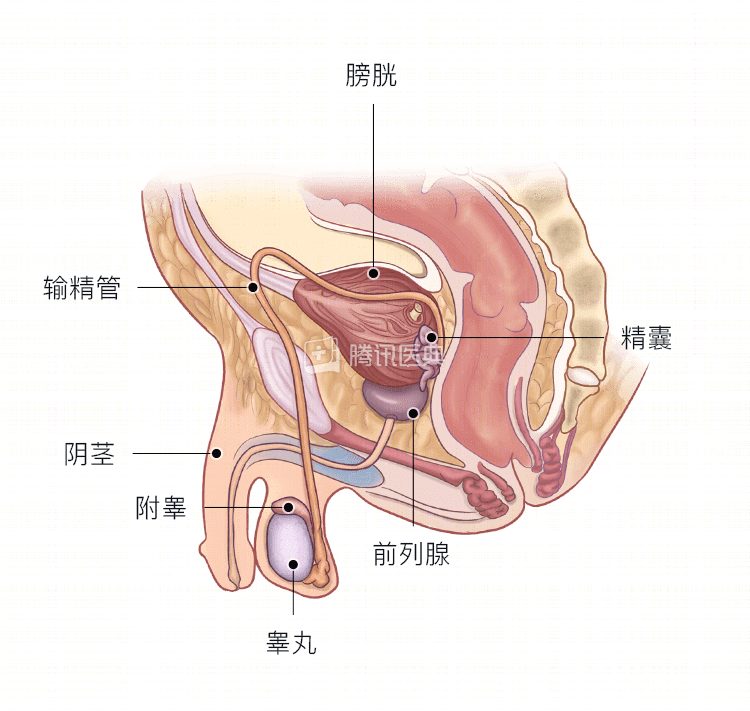
Today, transcrotal orchiectomy, performed under local or lumbar anesthesia, is generally used, and the procedure is relatively simple and much less expensive compared to the later methods described. However, this treatment is so psychologically overwhelming to the patient and demoralizes self-esteem that it is recommended that patients who are able to do so should first consider pharmacological debulking.
Deprescribing medication
The hypothalamus produces luteinizing hormone-releasing hormone (LHRH), which acts on the pituitary gland to produce luteinizing hormone (LH), which in turn acts on the testes to produce testosterone. LHRH analogs (LHRH-a), including LHRH agonists and LHRH antagonists, can be synthesized by replacing an amino acid at certain positions in natural LHRH.
These synthetic LHRH agonists and antagonists stimulate the pituitary gland not pulsatilely but continuously, ultimately causing a decrease in pituitary-synthesized luteinizing hormone LH levels.
The difference between the two is that LHRH agonists initially cause a large release of LH, which raises testosterone levels, whereas LHRH antagonists do not cause a large release of LH and testosterone. LHRH-a has now become one of the standard treatments for androgen removal.
Because of the transient rise in testosterone with the initial LHRH agonist injection, anti-androgens should be given 2 weeks before or on the day of injection until 2 weeks after the injection to counteract the flare-up caused by the transient rise in testosterone (flare-up). Testosterone levels then gradually decline to reach depressed levels by 3 to 4 weeks, but in 10% of patients testosterone does not reach depressed levels.
The products currently available in China are leuprolide, goserelin, and treprostinil. The extended-release formulations are 1, 2, 3, or 6 monthly injections.
LHRH antagonists have the advantage of avoiding the transient elevation of LH and testosterone, and have been approved in the United States for use in prostate cancer patients who are not candidates for other endocrine treatment options, but are still in clinical studies in China. The main side effect is severe metaplasia (pruritus, redness, etc.), which requires close observation within 30 minutes of administration.
You should be reminded that LHRH-a should be used with caution in patients with pre-existing spinal cord compression from bone metastases, with the option of surgical debulking that rapidly lowers testosterone levels.
Estrogens
The mechanisms by which estrogens act on the prostate include inhibition of LHRH secretion, inhibition of androgenic activity, direct inhibition of testosterone production by the testes, and direct toxicity to prostate cells. The most common estrogen is hexestrol, which can achieve the same effects as depot, but has a high incidence of cardiovascular adverse effects (mainly an increased incidence of coronary heart disease) and should therefore be applied with caution.
The tumor-related survival and progression-free survival rates of patients with the 3 treatment modalities of surgical debulking, pharmacologic debulking, or estrogen are essentially the same, but taking into account the efficacy and side effects of all approaches, pharmacologic debulking (LHRH agonists) is currently preferred, but it is also more costly. Bilateral orchiectomy and LHRH-a have now become the standard of care for depot treatment, and estrogen is no longer used as a first-line clinical agent because of its cardiovascular side effects.