Many older patients have the question, “Will my prostate enlargement become cancerous?” Objectively speaking, the medical community is still divided on this issue.
In fact, prostate enlargement and prostate cancer are two diseases of different nature, and although they both occur in the prostate, most scholars do not believe there is a causal relationship between the two.
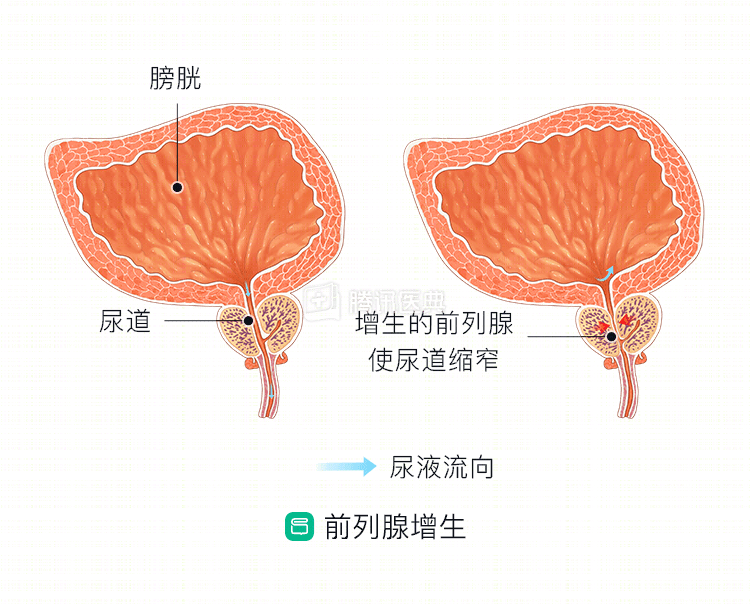
This is because:
- There is no evidence to date that the incidence and mortality of prostate cancer in people with prostate enlargement differs from those without prostate enlargement;
- There are also no experiments that can demonstrate that prostate enlargement can convert to prostate cancer;
- Also, there is a significant difference in the preferred sites of prostate hyperplasia and prostate cancer within the prostate: prostate hyperplasia most often originates in the migratory zone of the prostate, but prostate cancer is most often seen in the peripheral zone. The most important thing is that the prostate gland is a very important part of the body.
There is reason to believe that prostate enlargement does not usually turn into prostate cancer. The most important thing is to make sure that you have a good idea of what you’re doing.
However, prostate enlargement and prostate cancer can go hand in hand, and it is important not to assume that if you have benign prostate enlargement that you will not develop a tumor. A small percentage of prostate cancers (about 10%) occur in the migratory zone of the prostate, so sometimes prostate cancer can be found in specimens after prostate enlargement surgery.
So older men who have difficulty urinating should not take it for granted that it must be prostate enlargement, but should always go to a regular hospital urology department for an examination to rule out prostate cancer.
At present, the main early screening test for prostate cancer is the PSA (prostate-specific antigen) test, which is recommended for men over the age of 50 to be tested for PSA at least once every two years, preferably annually if possible, and for those with a family history of prostate cancer, the age of testing must be advanced to 45.
Related Questions and Answers: