China is a major liver cancer country, with more than half of the world’s liver cancer patients being Chinese, and nearly 7 out of 10 are found to be in advanced stages. Treatment of advanced liver cancer is tricky, with few drugs available. The recent introduction of immune checkpoint inhibitors, especially PD-1/PD-L1 monoclonal antibodies, has brought new hope to patients.
However, 85% of liver cancers in China are associated with “hepatitis B”, or Hepatitis B Virus (HBV) infection, and almost all of these patients also have liver dysfunction. Since rituximab (trade name: Meroval) triggered the hepatitis outbreak in hepatitis B patients, there has been concern among both doctors and patients that the drug, which affects the immune system, could lead to a “resurgence” of HBV infection.
So, can immune checkpoint inhibitors, which “wake up” the body’s immune system to attack tumor cells, be used by patients with HBV-infected liver cancer? The first thing you need to do is to take a look at the results. They can even deal with tumors, so can they also fight HBV “in one go”? Here we will cover each of them.
Several immune checkpoint inhibitors currently available for the treatment of liver cancer are shown in Table 1 below:
Table 1 Seven immune checkpoint inhibitors currently treating liver cancer
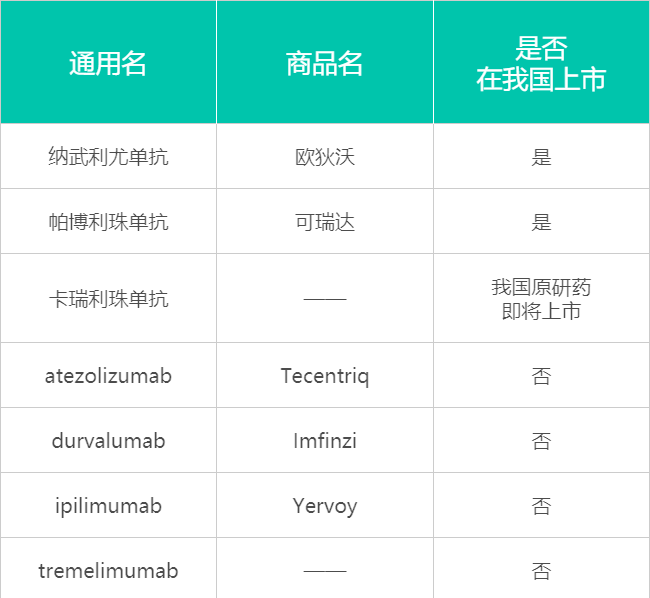
All of these immune drugs work, but with conditions
All 7 of the above immune checkpoint inhibitors can be used, for patients with HBV infection status and liver function requirements, as shown in Table 2 below:
Table 2 HBV infection status and liver function requirements for patients treated with immune checkpoint inhibitors

(Note: HCV, hepatitis C virus; Child-Pugh, an indicator used by doctors to assess liver function in patients with cirrhosis, which can be classified as A, B, or C, with A being the best, B the second best, and C the worst)
The above “jargon” may be a little difficult to understand, so I’ll “translate” it for you.
1.
1. HBV viral load<100 copies/mL still requires antiviral therapy
This is a medical indicator of hepatitis B infectivity, which is the number of copies of HBV viral DNA per milliliter of blood. Clinically, 100 copies/mL is a common reference value, below which the disease is very less infectious. But even so, in many clinical trials, patients are still required to receive antiviral therapy during immune checkpoint inhibitor therapy to prevent the hepatitis virus from “resurfacing”.
2.
2. Combination antiviral therapy first – nucleoside analogs
There are 2 main classes of drugs commonly used to treat hepatitis B – interferons and nucleoside analogs. However, interferon is also an immune-based drug, and when combined with an immune checkpoint inhibitor, the adverse effects may be excessive. Thus, when treating with immune checkpoint inhibitors, it is best to choose nucleoside analogs.
The common nucleoside analogs are lamivudine, adefovir, entecavir, tipifudine, and tenofovir, and the combination reduces the risk of viral “relapse” by about 17% (59% vs 42%) compared to immune checkpoint inhibitors alone.
3.
3. Excluding people with overlapping HBV and HCV infections
.
Overlap between HBV and HCV is about 7% in China, which not only increases the risk of liver cancer, but also promotes the development of liver cancer.
Treatment is also complicated, and doctors need to choose a treatment plan based on a patient’s HBV and HCV viral load and liver function. Also, they are at greater risk of viral rekindling than those with a single HBV infection. For all these reasons, they are currently excluded from clinical trials of immune checkpoint inhibitors.
4. A liver function Child-Pugh score of A is preferred
Immune checkpoint inhibitors are hepatotoxic. The incidence of liver-related adverse reactions after immune checkpoint inhibitor therapy is about 10%, with fewer serious adverse reactions (less than 5%). However, if the liver is in a state of prolonged adverse reactions, some patients may develop rapidly into fulminant hepatitis within a short period of time, and may even develop fatal liver failure directly without warning and in critical condition. Liver-related adverse reactions, therefore, are the second leading cause of death after immune checkpoint inhibitor therapy. In particular, the incidence of hepatic adverse reactions was more than 28% with the nabumab combined with ipilimumab regimen. Therefore, for patients with already poor liver function, the use of immune checkpoint inhibitors is likely to “add to the problem” and cause severe liver damage.
Research needs to continue to explore whether immune checkpoint inhibitors can fight HBV infection
.
You may ask, since immune checkpoint inhibitors enhance the body’s immune function and fight tumor cells, can they destroy HBV? There are indeed studies now in this area that have found some suppression of both HBV and HCV infection by PD-1 monoclonal antibodies in mouse models. But whether they are effective in humans needs to be proven in studies.