
Over the past decade, numerous clinical studies have confirmed that human epidermal growth factor receptor-2 (HER-2)-positive breast cancer patients treated with trastuzumab (Trastuzumab ) for 1 year can significantly reduce recurrence and mortality rates, which has established its absolute dominance in the treatment of this type of breast cancer. However, it was found through long-term follow-up that recurrence still occurred in 15% to 24% of patients applying trastuzumab, with a recurrence time of 8 to 11 years. It has been noted that the high-risk time for recurrence of HER-2-positive metastatic breast cancer is within 12 months after trastuzumab treatment.
For those whose disease has progressed despite trastuzumab treatment, it is recommended that anti HER-2 targeted therapy may be continued, and the following treatment strategies are currently available.
Lapatinib + Capecitabine
Lapatinib in combination with capecitabine significantly delays disease progression compared with capecitabine alone, so lapatinib in combination with capecitabine is one of the options for those who have progressed after trastuzumab therapy.
Continuation of trastuzumab with replacement of other chemotherapeutic agents
Continued trastuzumab is effective in inhibiting tumor proliferation, and inhibition of HER-2 expression helps control breast cancer cell growth. A series of studies have confirmed that trastuzumab discontinuation leads to the re-growth of HER-2 positive tumor cells at a rapid rate. Continuation of trastuzumab after disease progression significantly prolongs overall survival. Trastuzumab in combination with capecitabine was more advantageous than capecitabine alone in delaying tumor progression (prolonging progression-free survival, or PFS).
Lapatinib + trastuzumab
Lapatinib in combination with trastuzumab significantly prolongs progression-free survival (PFS) and survival time compared with lapatinib alone . For those who cannot tolerate chemotherapy, physicians may consider this dual-targeted drug regimen, but there is a lack of evidence that trastuzumab in combination with lapatinib is superior to trastuzumab in combination with chemotherapy.
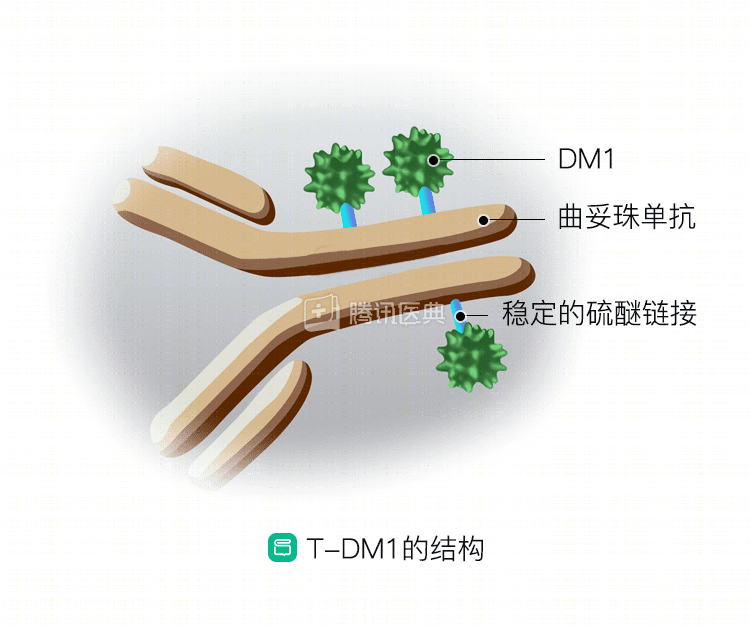
Trastuzumab-emtansine coupling (Trastuzumab emtansine, T-DM1) monotherapy
For trastuzumab-failed HER-2 positive metastatic breast cancer, T-DM1 monotherapy is more effective than lapatinib combined with capecitabine regimens. Therefore, T-DM1 monotherapy is currently the preferred treatment option internationally after failure of trastuzumab therapy.
For patients with HER-2 positive advanced breast cancer, there are a number of treatment options available despite the advanced stage of the disease. Researchers are also working on anti-HER-2 targeted drugs, and it is foreseeable that more and more drugs will be available in the near future. (Written by Yuqing Yang, Department of Nail and Breast Vascular Surgery, Xijing Hospital, Air Force Military Medical University)