The stomach is the first “storage room” in our digestive tract after food is introduced, and it also plays an important role in the initial processing and digestion of food. This article takes a look at our stomach.
The stomach, where is it?
The stomach, where is it?
The stomach, where is it?
In general terms, the stomach is located to the left of the upper abdomen of the body. In order to describe the exact location of the stomach, four lines have been artificially drawn across the abdomen, dividing the abdomen into nine regions, as if it were a “grid of nine”. The majority of the stomach is located in the upper left region, medically known as the left quadrant of the rib cage, and a small portion is located in the upper middle region, the upper abdomen. The stomach is actually in an “oblique” position in the abdominal cavity, with its long axis sloping from the left posterior to the anterior and inferior. Of course, the position of the stomach can change with body position, breathing movements, and the amount of stomach contents.
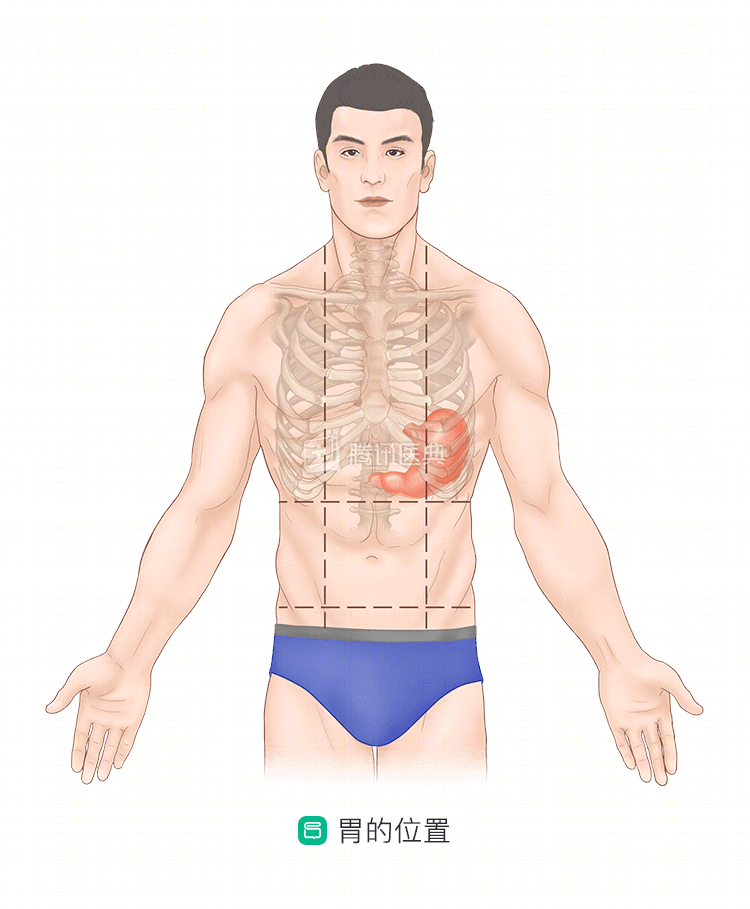
A little more about the stomach’s “neighbors” in the abdomen. The anterior wall of the stomach, part of which is covered by the liver on the right side and the upper part deep below the diaphragm, is also in direct contact with the anterior abdominal wall. The back of the stomach is the “omental sac”, which covers the “stomach bed” formed by the diaphragm, pancreas, left adrenal gland, and spleen, etc. Figuratively speaking, the omental sac is like a double sheet laid on the stomach bed.
The stomach, what are its structures?
The stomach has two main structures.
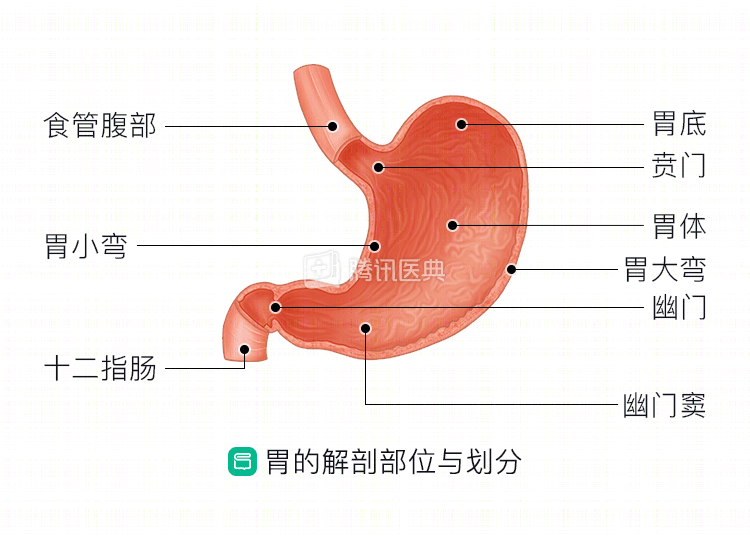
The stomach has two ports of entry and exit, the cardia, which connects to the esophagus, and the pylorus, which connects to the duodenum. The pylorus is usually larger than the cardia, in a ratio of about 3:2. The part of the stomach near the pylorus is the gastric sinus.
There are two other “curves” of the stomach: the short, concave “lesser curvature” at the right edge and the long, convex “greater curvature” at the left edge.
The fundus of the stomach, although called the “bottom,” is actually located above, and the part of the stomach above the cardia when a person is standing is called the fundus. The main part of the stomach is the body of the stomach.
The stomach, what are its functions?
The physiological functions of the stomach can be summarized in four areas: storage, secretion, digestion and absorption, and defense.
- Storage function After food enters the stomach, the stomach reflexively stretches and the pylorus closes, so food temporarily stays in the stomach. The volume of the empty gastric cavity is only 50 ml, but can reach 1000 ml in diastolic condition.
- Secretory function The pylorus closes after food enters the stomach.
- Secretory function The stomach can secrete gastric juice, gastrin, growth inhibitors, and so on. Among them, the main components of gastric juice are gastric acid, gastric enzymes, electrolytes, mucus and water. The amount of gastric juice secreted by a normal adult is about 1500-2500 ml per day.
- Digestion and absorption function The stomach grinds, stirs, and mixes food with gastric juice through peristalsis and secretion of gastric acid and pepsin for initial digestion, forming chyme and discharging it into the duodenum gradually and in stages.
- Defensive functions The gastric mucosa also has the function of absorbing certain substances as well as defensive functions. The barrier formed by the gastric mucosa, gastric acid, and some secreted immunoglobulins and lymphoid tissues prevent the invasion of some microorganisms or foreign bodies that can cause disease.
.