Is it too hard to “keep your mouth shut” and too tiring to “spread your legs”?
So, can weight loss surgery be the answer for people with diabetes?
Can bariatric surgery be the “backup” for 1 in 10 of our adults?
Can weight loss surgery be the “backup” for our 1/10th adult?
As society evolves, people are living sweeter lives, but unhealthy habits are also causing “sweet troubles,” and type 2 diabetes (hereafter referred to as diabetes) is a byproduct of this.
The most recent national diabetes epidemiology survey showed that on average, 1 in 10 adults in China has diabetes.
The treatment options for diabetes are not new to us, and the most familiar are oral hypoglycemic drugs and insulin injections; but have you heard of surgical weight loss surgery for diabetes?
A recent study published in the New England Journal of Medicine, one of the top international medical journals, explored the rationale and effectiveness of surgery for treating obesity combined with type 2 diabetes.
The researchers compared the difference in efficacy between weight loss surgery and diet control alone to understand whether the efficacy of surgery comes from weight loss or other metabolic factors.
History of surgery for diabetes
“Bariatric surgery,” also known as “metabolic surgery,” is surgery to reduce weight loss by reducing gastric volume, altering food passage, limiting food intake, and reducing absorption in the small intestine.
For example, it’s like a wallet that has been reduced in size to hold less cash and fewer bank cards.
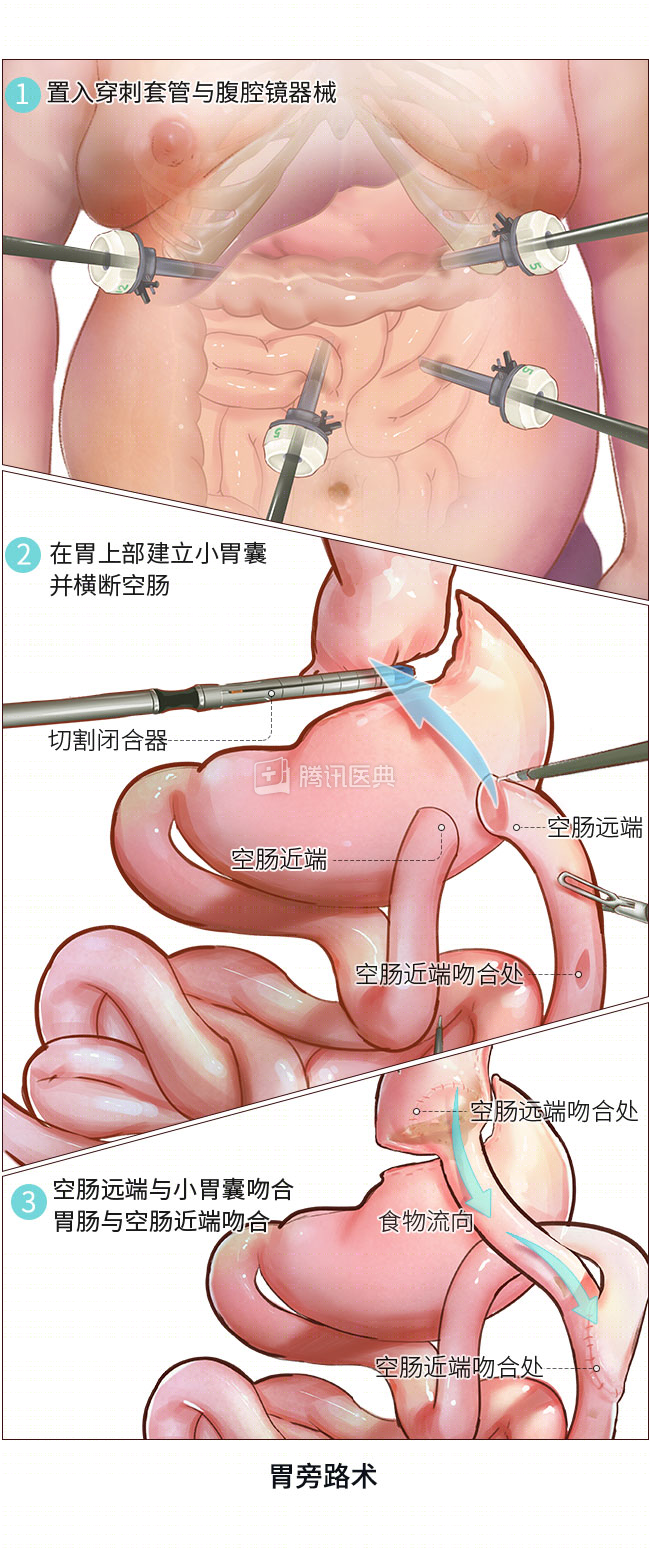
The history of weight loss surgery being introduced to treat diabetes dates back to 1982.
At that time, Pories, an American surgeon, and his colleagues, operated on patients with obesity. They found by chance that the patients not only lost significant weight after surgery, but their blood glucose returned to normal quickly and they no longer needed any subsequent glucose-lowering measures.
In 2009, the American Diabetes Association first recommended bariatric surgery as an important treatment for obesity with type 2 diabetes in its treatment guidelines.
On May 24, 2016, several international organizations, including the International Diabetes Federation, the American Diabetes Association, the British Diabetes Association, and the Chinese Medical Association’s Division of Diabetes, published joint guidelines based on 11 clinical outcomes that recommend bariatric surgery as a treatment strategy for diabetes.
However, because surgical treatment is a complete departure from traditional management strategies for diabetes and the surgery itself carries the risk of complications, the indications, benefits, and risks of surgery are not acceptable to, nor understood by, most physicians in clinical practice.
Not only that, but it is still unclear why weight loss surgery lowers blood glucose – is it an effect of weight loss or is it because the surgery not only changes the morphological structure of the gastrointestinal tract but also affects the way nutrients are metabolized at the same time?
What answers can a small trial of 22 people give?
To find the answer, we have a small trial of 22 people.
To find out, the researchers recruited 22 patients with obesity combined with diabetes for a group trial.
So let’s take a look at how the trial went.

The results of this trial highlight that weight loss is indeed effective in lowering blood sugar and suggest that the benefits of surgery for diabetes may well be entirely the result of weight loss.
However, as Professor Zheng Minhua of the Department of General Surgery at Ruijin Hospital, Shanghai Jiaotong University and others have pointed out, although the trial protocol was well designed, the results of this study do not clarify the exact mechanism by which surgery is effective in lowering blood glucose because of the small number of participants in the trial and the fact that it was not a randomized, blinded trial.
It appears from the current evidence that weight loss, whether dietary control or surgery, can be used as a treatment for diabetes as long as it is possible.
So, for us, “keep your mouth shut and your legs open” is still one of the safest and most effective ways to control diabetes.