For some patients with lung disease, a lobectomy (lobectomy) may be recommended.
The human lung is made up of five lobes. The right lung has three lobes and the left lung has two lobes. A lobectomy removes one of these lobes. After surgery, the healthy lobe compensates for the function of the removed lobe, and lung function can remain as good or better than before surgery.
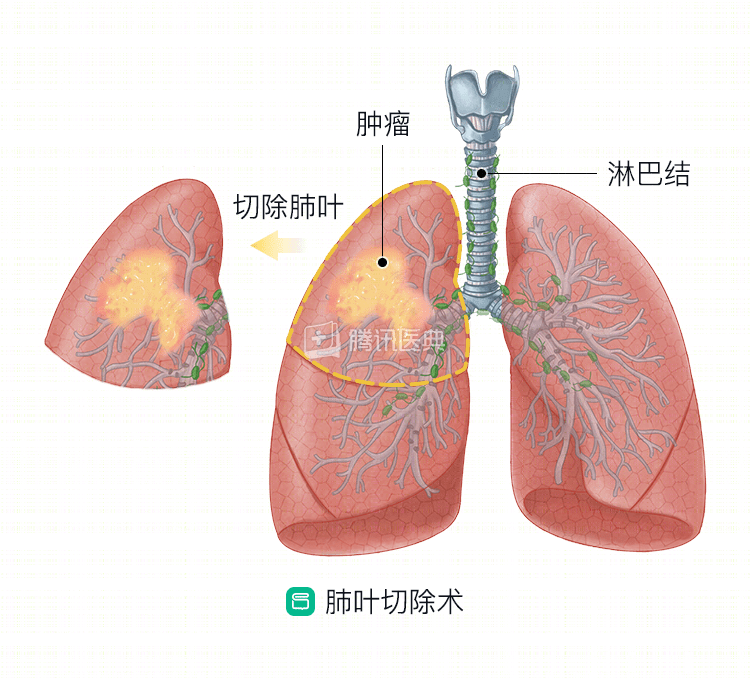
What conditions are suitable for lobectomy?
Some patients with early-stage lung cancer have tumors that are confined to one lobe above the lung. In this case, lobectomy is the best treatment option, and it may be possible to cure the patient by removing just this one “cancerous” lobe. But if the tumor has spread throughout the lung or metastasized to other parts of the body, surgery is not effective.
Lobectomy is also used for other single lobe diseases, such as:
- Tuberculosis
- emphysema
- Benign tumors
- Fungal infections
- Lung abscess, a purulent lesion of the lung tissue
After the diseased lobe is removed, the other lobes of the lung automatically expand to help the patient breathe more smoothly.
Does lobectomy require an “open chest”?
Does a lobectomy require an “open chest”?
There are several different types of lobectomies. The surgeon will decide on the procedure based on the specific type and location of the lung lesion and overall health status. Surgical options include:
- Open surgery, also known as open-chest surgery (thoracotomy). The surgeon makes a long incision along the lateral chest wall and typically uses a spreader to separate the ribs to more easily expose the lesion and remove the diseased lung lobe under direct vision.
- Video-assisted thoracic surgery (VATS). The surgeon makes one to four small incisions on the side of the patient’s chest, one of which is the main operating hole and the others are used as thoracic or secondary operating holes. The surgeon then inserts a catheter with a miniature camera to view the lung and guide the operation. Thoracoscopic surgery is minimally invasive, and patients will have less pain and a faster recovery.
- Robotic surgery. The surgeon sits at a console next to the patient and operates a robotic arm to perform the surgery. The surgery requires three to four small incisions of about 1.27 cm between the patient’s ribs, which results in less bleeding, less risk of infection, and a faster recovery.
What are the risks of lobectomy?
A lobectomy is considered a major surgery, and it can lead to a number of adverse outcomes, including:
- Infection
- Atrophy of the lung, which can prevent the patient from breathing adequately.
- Gas or fluid leakage into the chest cavity
- Pus forming between the lung and chest wall
The presence or absence of complications after lobectomy is related to the patient’s overall health and other factors. Before surgery, please communicate fully with your surgeon about the risks of the procedure.
What should I do before surgery?
The surgeon will ask the patient to check pulmonary function and other indicators. Based on the results, the doctor will give a plan to improve lung function (pulmonary rehabilitation) before surgery. The patient may also undergo more rehabilitation or physical therapy after surgery.
Preoperatively, the doctor will also ask the patient for a number of things:
- Stop smoking at least one month before surgery. If you continue to smoke, you will recover more slowly and be more likely to have complications after surgery.
- Exercise daily.
- Exercise daily. This is good for improving lung function.
- Stop taking antiplatelet medications, such as aspirin.
How long does it take to recover after surgery?
Lobectomy requires some recovery time. If the patient underwent an open-heart surgery, he or she may also need to stay in the hospital for a week. If it was thoracoscopic or robotic surgery, then they can be discharged quickly.
Postoperatively, you may also experience the following:
- Pain. Most patients will feel discomfort for several months after surgery. You will need to take pain medication with you when you leave the hospital. However, the pain will gradually decrease. If you feel muscle soreness, a warm bath is a good way to relieve it.
- Cough.
Cough. Associated with surgical anesthesia intubation and altered bronchial structure after removal of lobes of the lung, it can be improved by oral or nebulized some medications, and the symptoms usually go away within 3 months.
- Fatigue. It is normal for patients to feel tired and breathless at first, and this will improve in a few weeks.
- Constipation.
- Constipation. This is caused by pain medication and infrequent activity. It will improve once you stop taking pain medication. Be sure to take the laxatives prescribed by your doctor.
- Physical activity. Walking every day will restore your fitness and keep your lungs healthy and clean.
Related reading:
Co-reviewed by: Guangdong Provincial People’s Hospital Guangdong Lung Cancer Institute Dr. Dong Song Dr. Zeng Fanjun