What is lung cancer?
- Lung cancer originates from abnormal cells that grow out of control in the lungs. They invade the surrounding tissue and form tumors.
- Cancer cells can metastasize to lymph nodes or other areas such as the bone or liver.
- There are small cell lung cancers (SCLC) and non-small cell lung cancers (NSCLC). Small cell lung cancer usually grows more rapidly and is more likely to metastasize than non-small cell lung cancer.
- Lung cancer is the number one cause of cancer death worldwide. The American Cancer Society (ACS) estimates that in 2018, there were about 234,030 new cases of lung cancer and about 54,050 deaths from lung cancer across the United States.
Who is at risk for lung cancer?
- Most lung cancers are caused by smoking. People who smoke a pack of cigarettes a day for 40 years are 20 times more likely to develop or die from lung cancer compared to people who never smoke.
- Non-smokers can also get lung cancer. Inhalation of secondhand smoke may be the culprit, or lung cancer may develop due to genetic or environmental factors, such as prolonged exposure to asbestos at work or prolonged exposure to high levels of radon gas.
- Lung cancer is relatively uncommon in people younger than 45 years of age. The average age at diagnosis of lung cancer is about 70 years.
- Exposure to secondhand smoke, arsenic, asbestos, air pollution, radioactive dust or radon, or having received radiation therapy increases the chance of developing lung cancer. People who are exposed to radioactive materials, such as in the workplace, have a higher risk of developing lung cancer.

What are the symptoms of lung cancer?
First symptoms of lung cancer may include:
- Cough
- Shortness of breath
- Shortness of breath
- chest pain
- Blood in sputum
Because these symptoms are so common, many people don’t take them too seriously. By the time they get to the doctor, the cancer has often metastasized.
If the cancer has metastasized within or beyond the chest cavity, other symptoms may occur.
Can lung cancer be detected early?
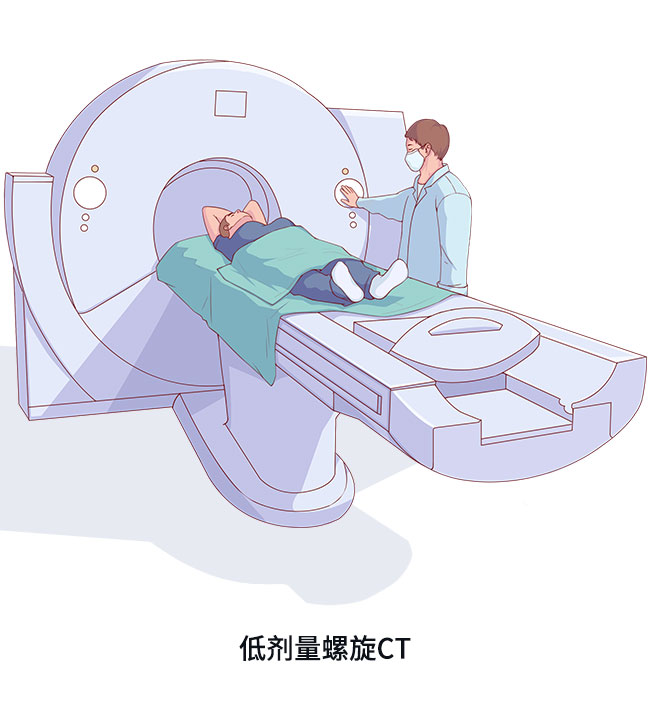
A test called spiral or helical low-dose CT scanning (LDCT) can be used in conjunction with other tests to help detect lung cancer early in people at high risk.
The U.S. Preventive Services Task Force recommends annual CT scans for adults aged 55 to 80 years who are heavy smokers or have not quit smoking for 15 years.
Remind you that a CT scan may require additional tests or even surgery after a CT scan that turns out not to be cancer. So weigh the pros and cons with your doctor before you get a scan.
How is lung cancer diagnosed?
- Ask about symptoms and medical history. Your doctor will use this information (especially if there is a family history of cancer) to determine the likelihood of lung cancer and whether tests are needed to confirm the diagnosis.
-
Examinations. A chest x-ray or CT scan is often the first to detect lung cancer, and your doctor will use additional tests to find out what type of lung cancer is present and whether there are extra-pulmonary metastases. These tests will help the doctor and patient clarify what stage (staging) the cancer is in. Staging is a measure of the size of the tumor and the location of metastases. Tests that may be used include CT scans of the chest and abdomen, PET scans, bone scans, CT or MRI of the brain, etc. After a lung mass is detected by the above imaging, the doctor will further recommend that the patient undergo a tissue biopsy, using techniques including fiberoptic bronchoscopy biopsy, lung puncture biopsy, biopsy of metastatic organs such as lymph nodes, liver, etc. The diagnosis of lung cancer is confirmed when cancer cells are found.
How is lung cancer treated?
Treatment for lung cancer includes surgery, chemotherapy, radiation therapy, or a combination of treatments. Newer treatments, including targeted therapies and immunotherapy, may be recommended by your doctor depending on the specific tumor type.
Early lung cancer is best treated, but early detection is rare. If the diagnosis is made before extrapulmonary metastases occur, about half of patients can live more than 5 years. If the diagnosis is made after the development of extrapulmonary metastases, survival time usually depends on the stage of the tumor at the time of diagnosis.
Supportive therapy can help.
Supportive treatment can help relieve symptoms, manage pain, and improve life as much as possible. During treatment, you should tell your doctor how you feel and how much pain you have.
Can lung cancer be prevented?
Lung cancer from smoking can be prevented, so be sure to quit smoking and stay away from secondhand smoke.
It’s never too late to quit smoking. Even if you have been smoking for a long time, quitting can reduce your risk of lung cancer. After 10 years of quitting, the incidence of lung cancer can be reduced by 30% to 50%. Even if lung cancer is diagnosed, quitting can improve treatment outcomes and extend life. In addition, quitting smoking is good for heart and general health.
Quitting is not easy. You can ask your doctor for help.
Does diet and nutrition affect the risk of lung cancer?
Some studies have shown that a healthy diet can reduce the risk.
However, high doses of vitamins or vitamin-like drugs do not appear to reduce the risk of lung cancer in smokers or those who quit smoking. One study showed that a nutrient associated with vitamin A, called beta-carotene, actually increased the incidence of lung cancer in smokers. Therefore, you should consult your doctor before starting supplements.
On lung cancer, these are the questions you may care about
Please read the related article: