Non-Small-Cell Lung Cancer (NSCLC) is the most common type of lung cancer. People who smoke or are passive smokers are most likely to develop NSCLC, and most patients are 65 years old or older.
What are the main types of NSCLC?
- Adenocarcinoma (adenocarcinoma), which arises from glandular-secreting epithelial cells on the alveoli, mostly in the peripheral areas of the lungs away from the main airways. It is the most common type of lung cancer in people younger than 45 years of age (whether they smoke or not). Adenocarcinoma usually grows more slowly than other types of lung cancer.
- Squamous cell carcinoma, or squamous carcinoma, arises from the cells lining the trachea. About 1 in 4 lung cancers are of this type.
- Large cell carcinoma, which grows and metastasizes more quickly, is also more difficult to treat. This type accounts for 10% of all lung cancers.
Doctors will choose treatment based on how far the cancer has metastasized.
What are the causes of NSCLC?
The etiology is unclear. Many patients have a history of smoking or have smoked secondhand smoke. Some patients also have a genetic predisposition. Other factors that can increase the risk of developing lung cancer are:
- Exposure to radon (a radioactive gas found in soil, rocks), asbestos, mineral and metal dust in the home or workplace;
- Air pollution in the place of residence;
- Has received radiation therapy to the chest or breast;
- Have AIDS or are infected with HIV (the scientific name for HIV).
What are the symptoms of NSCLC?
In the early stages, there may be no symptoms. Patients may mistake it for pneumonia or pneumothorax and delay going to the doctor.
Like other types of lung cancer, NSCLC can present with the following symptoms:
- Cough that is persistent or worsens; sometimes with hemoptysis or blood in the sputum
- Chest pain that worsens with coughing, laughing, or deep breathing
- Heartiness, or change in voice
- Hearing sounds when breathing
- Shortness of breath
- Weight loss, loss of appetite
- Shortness of breath
- Feeling tired and weak
- Long-standing bronchitis or pneumonia
If the cancer has metastasized, you may experience:
- Bone pain
- Headache
- Sense of vertigo or imbalance
- Weakness or numbness in the extremities
- Yellowing of the skin or eyes
How do doctors diagnose NSCLC?
At the time of the visit, the doctor will ask if the patient has symptoms such as coughing and wheezing, if he or she smokes, if the family member has lung cancer, and will check the patient’s body and do some tests to help diagnose:
Imaging tests (imaging tests) can help your doctor find tumors in the lungs and can also show if they have metastasized. Possible tests include: chest x-ray, MRI, ultrasound, CT, PET-CT, etc. 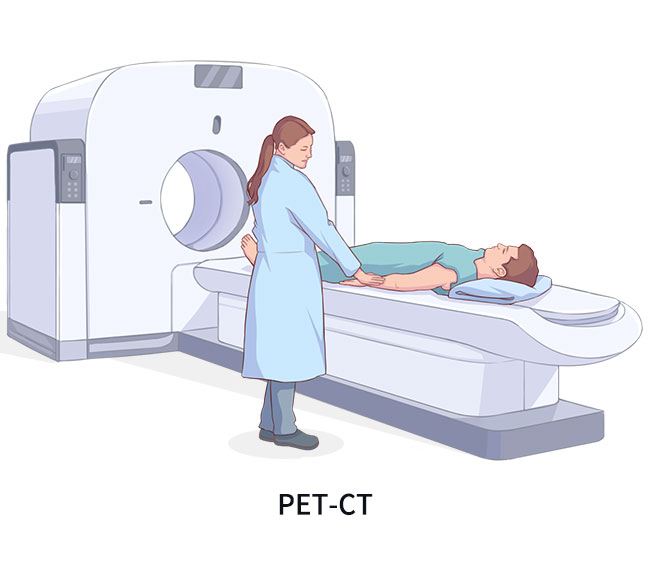
Sputum cytology, in which the pathologist looks for cancer cells in the sputum coughed up by the patient under a microscope.
Fine-needle aspiration biopsy, in which the doctor uses a fine needle to extract tissue or fluid from the lung through a small incision in the skin, and the pathologist examines the sample under a microscope to see if it contains cancer cells.
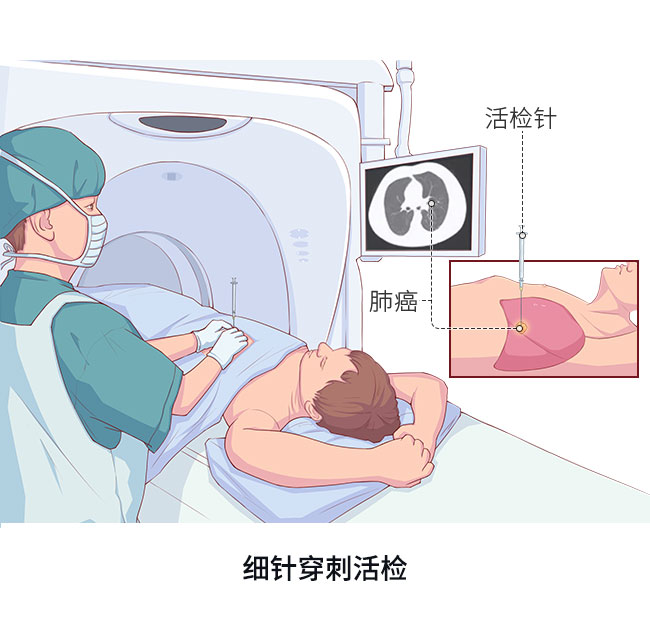
When abnormalities are found on imaging, or when sputum examination reveals suspected cancer cells, doctors can also use endoscopy to further observe changes in the trachea and bronchi and take samples, if necessary, to come in for cytologic or pathologic examination. For example:
Bronchoscopy (bronchoscopy), in which the physician uses a bronchoscope to look at the lesions by entering the bronchi through the nose or mouth. 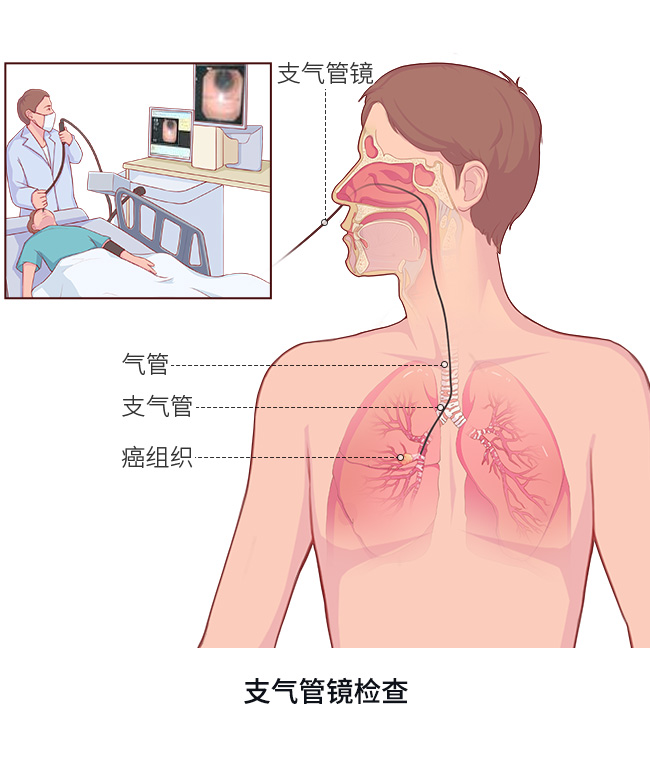
Endobronchial ultrasound (EBUS), which combines “bronchoscopy” and “ultrasound” to to visualize lymph nodes.
Endoscopic ultrasound is similar to EBUS, except that the doctor puts the endoscope through the patient’s throat and into the esophagus.
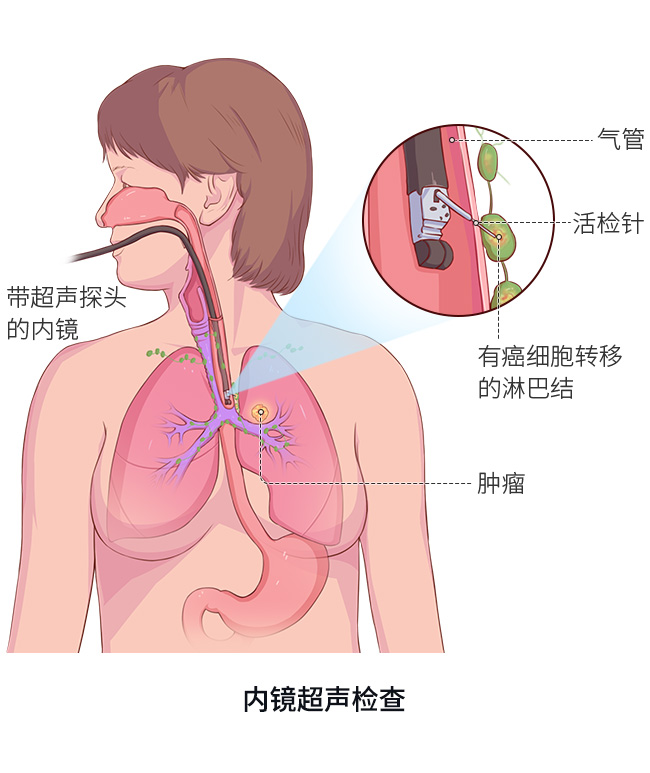
Thoracoscopy, in which the doctor looks at the lung tissue through several small incisions in the patient’s side of the chest.
Mediastinoscopy, in which the doctor makes a small incision in the patient’s sternum and extends a mediastinoscope to look at the mediastinal lesions.
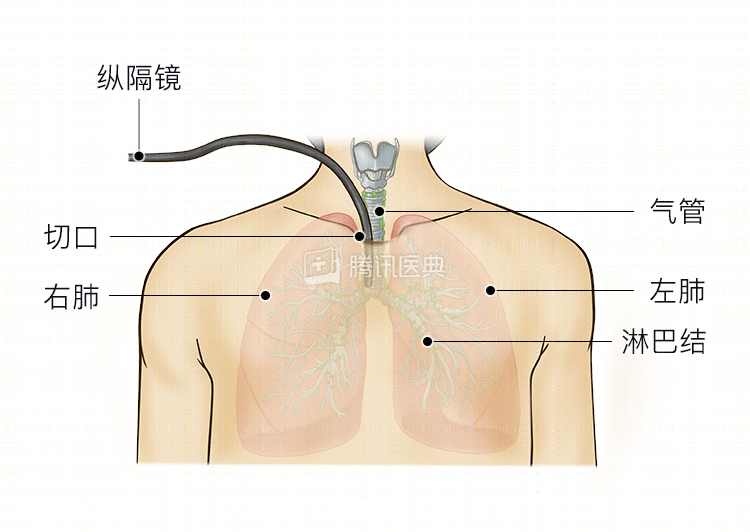
How many stages of NSCLC are there? What does each represent?
Doctors will stage the tumor based on the test results and describe where the tumor is located, which helps them choose the most appropriate treatment. The meaning of each stage is represented as follows:
- Incognito stage: “Incognito” means “hidden”. Cancer cells are detected in fluid or sputum, but doctors cannot determine where they are hiding in the lungs.
- Stage 0: The cancer cells are located in the lining of the trachea.
- Stage I: A single small tumor in one lung that has not metastasized to the lymph nodes.
- Stage II: A single large tumor in one lung, or a single small tumor in one lung that has metastasized to adjacent lymph nodes.
- Stage III: A single large tumor in one lung; or a single small tumor in the lung with a large number of adjacent metastatic lymph nodes, or a single lobe metastasis in one lung; or a tumor in one lung that has metastasized to a distant lymph node or adjacent tissue.
- Stage IV: The tumor has metastasized to both lungs, pleural effusion, or other sites, such as the brain or liver.
What questions can I ask my doctor?
Discovering that you have cancer can be overwhelming. You can ask a friend or relative to accompany you to the doctor for psychological comfort and to help understand what the doctor is saying. Here are a few questions to ask your doctor:
- How bad is my disease? How long do I usually live with the type of lung cancer I have?
- How bad is it?
- Has it metastasized? Where has it metastasized? What does it mean? What will happen if it continues to metastasize?
- What are the treatment options?
- What treatment options are available? How effective are they? What are the side effects?
- What options are available to improve symptoms?
- Do I need to stop working during treatment?
- Can I participate in a clinical trial? How do I participate?
What treatments are available for NSCLC?
Doctors will both treat the tumor and take steps to relieve symptoms and make the patient as comfortable as possible.
The doctor may also recommend a combination of therapies depending on the patient’s condition. Treatment options include:
Surgical treatment (surgery). If it’s still early, your doctor may recommend surgery to remove the tumor. The doctor may remove part of the lung, or all of it; or destroy the cancer cells by freezing, or using a heated probe or needle.
Radiotherapy (radiation). Radiotherapy kills cancer cells that remain after surgery and can also be used in cases where surgery is not possible. Radiation therapy is divided into “teletherapy” and “brachytherapy”, which uses gas pedals to produce high-energy radiation to kill cancer cells or radioactive material placed in or near the tumor to kill cancer cells, respectively.
Chemotherapy (chemotherapy). Chemotherapy drugs can be given orally and by injection (intravenously or intramuscularly) to kill cancer cells in various parts of the body. Doctors may inject the drug into the spinal fluid, a specific organ, or a part of the body to target and kill cancer cells in that area. Preoperative chemotherapy can shrink the tumor, as well as postoperative adjuvant chemotherapy, both pre- and postoperative chemotherapy, even without surgery.
Targeted therapy (targeting therapy). Targeted drugs and antibodies can precisely stop the growth and metastasis of cancer cells, causing less damage to normal cells than radiation and chemotherapy.
Immunotherapy. It kills tumor cells by activating the body’s own immune cells. There are not many immune loci inhibitors available in China, and most are still in clinical trials.
.
Clinical trials. Researchers are constantly working on new drugs or therapies to treat cancer. You can ask your doctor what clinical trials are available, whether you are eligible, and what to look for.
If caught in time enough, a cure may be possible. Even if not, there are supportive therapies that can help extend life, improve symptoms, and improve quality of life.
How do I take care of myself?
During treatment, be aware of the changes that are happening in your body and mind, and you can tell your doctor how you feel.
Sometimes you may have a poor appetite, but it is still important to keep your nutrition in order to maintain your strength and energy. Try eating smaller, more frequent meals and not eating too much at one time.
If you are having trouble breathing, an oxygen mask may help. You can also practice relaxation, such as meditation, listening to music, or imagining you are in a place of peace. Some complementary therapies, such as gentle massage and aromatherapy, can also soothe the body and mind. When you feel tired, sore, or out of breath, talk to your doctor about how to get relief.
Accepting the fact that you have cancer is not easy. It is normal to experience strong emotions such as fear, anger or sadness. Societies that offer supportive services specifically for people with cancer may be able to help. You can also seek support online or in your own community, or ask your doctor for advice.
Co-reviewed by: Dr. Xiaoyan Bai, Guangdong Provincial People’s Hospital Guangdong Provincial Lung Cancer Institute Dr. Mei Mei Zheng