What is a liquid biopsy?
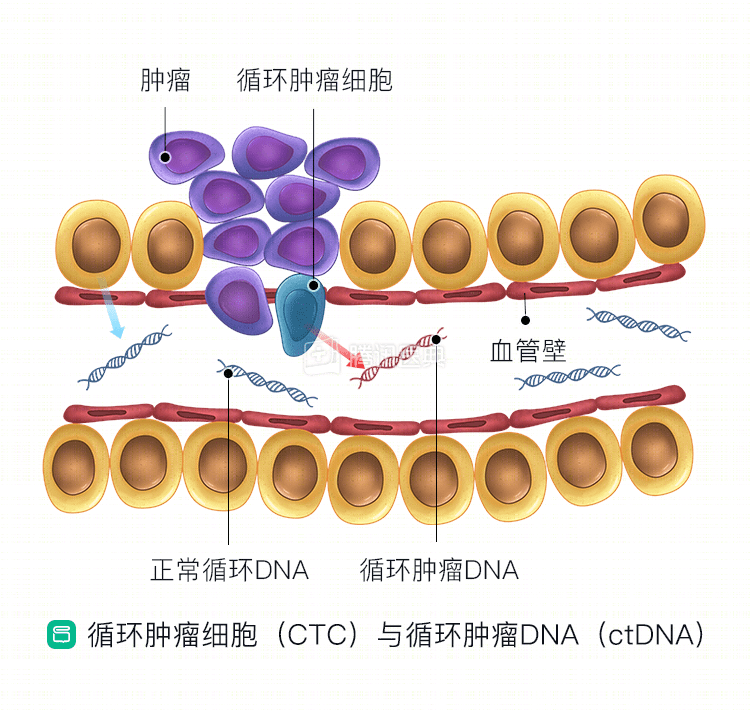
During tumor growth, some tumor cells break away from the tumor, enter the bloodstream, and subsequently circulate throughout the body. These tumor cells in the blood are called “circulating tumor cells” and are also referred to as CTCs in clinical practice because of the English name circulating tumor cell.
Tumor cell fragmentation is a process in which the tumor cells are broken down and the tumor cells are removed.
Also, when a tumor cell breaks down, it releases the genetic material in its nucleus, or DNA, into the bloodstream, and this circulating tumor cell DNA is called “circulating tumor DNA. These circulating tumor DNA are called “circulating tumor DNA”. Because the English name is circulating tumor DNA, doctors also refer to it as ctDNA.
CTC and ctDNA were discovered decades ago, but it is only in recent years that tests for them have come into clinical use. They provide molecular genetic information about tumors that is valuable for drug selection, tumor drug resistance, and monitoring of disease progression.
This method of taking a small amount of peripheral blood from a patient and analyzing it for CTC and ctDNA components to obtain a large amount of molecular genetic information about the tumor is known as a “liquid biopsy”. Currently, more liquid biopsies are performed for ctDNA.
Can liquid biopsies replace traditional biopsies for lung cancer diagnosis?
No.
If you have not been definitively diagnosed with lung cancer, then a liquid biopsy will not help you. There is no conclusive evidence to support a blood test to diagnose any type of lung cancer.
What is the use of a liquid biopsy in patients with lung cancer
What lung cancer patients might benefit from a liquid biopsy? The most common are patients with advanced disease using a targeted agent, an epidermal growth factor receptor (EGFR)-tyrosine kinase inhibitor (TKI).
Only patients with non-small cell lung cancer who have EGFR mutations in their tumor cells are likely to be effective with EGFR-TKI analogs. Also, because mutated genes in tumors can change and subsequently cause targeted therapy to fail, physicians need to be aware of the molecular genetics of the tumor at all times during drug use to adjust the drug.
Traditionally, this information has been obtained through surgery, puncture, and other means to obtain tumor tissue for testing. It has the advantage of being accurate, but the disadvantage of being invasive. Sometimes, doctors are sometimes unable to obtain tumor tissue because the patient is not physically able to tolerate it, or because the tumor location is restrictive. This is when a liquid biopsy can come in handy.
Our professional guidelines suggest that if tissue specimens are difficult to obtain, liquid biopsy techniques can be used to detect EGFR mutations and help physicians determine EGFR-TKI dosing and make timely adjustments.
There are many methods for detecting ctDNA that have a high specificity for finding EGFR mutations, but only 60% to 80% sensitivity. In other words, assuming 100 patients with lung cancer who have EGFR mutations, it is likely that 20-40 patients will not have EGFR mutations detected in their blood. Therefore, it is very important that the test is stable, reliable, and sensitive, and sometimes it may not be possible to draw a conclusion from just one test, and a medical professional needs to be consulted.
Currently, the ARMS assay (a test) is recommended in our guidelines to detect EGFR mutations in plasma free DNA. For other genes, such as ALK and ROS1, the technology is not yet mature, and tissue or cytology samples should still be obtained for testing whenever possible.
Two liquid biopsy technologies have been approved in the United States for EGFR mutation detection: the cobas EGFR Mutation Test, which detects common EGFR mutations, and the cobas EGFR Mutation Test v2, which specifically detects the T790M mutation in EGFR.
New technologies are constantly evolving, but your doctor’s clinical decisions are “tailored” to each patient’s situation, so you need to talk to your doctor to get a professional opinion on whether a tissue biopsy or a liquid biopsy is appropriate and which testing platform is best for you.
Co-reviewed by: Guangdong Provincial People’s Hospital Guangdong Lung Cancer Research Institute Dr. Pan Guo, Chief Physician Dr. Chen Zhiyong Dr. Zhang Jiatao