After lung cancer surgery, the natural “breathing” becomes a particularly important thing. This is because surgery can damage respiratory function. During open-heart surgery, the lung collapses and temporarily “stops working,” and the tracheal tube (connected to a ventilator) irritates the airway and increases sputum production, all of which can affect breathing after surgery. This is why your healthcare provider will instruct you to perform respiratory exercises when you are admitted to the hospital to improve your lung function and prepare you for a quick recovery after surgery.
Here’s a preoperative breathing “radio gymnastics” routine for you to follow.
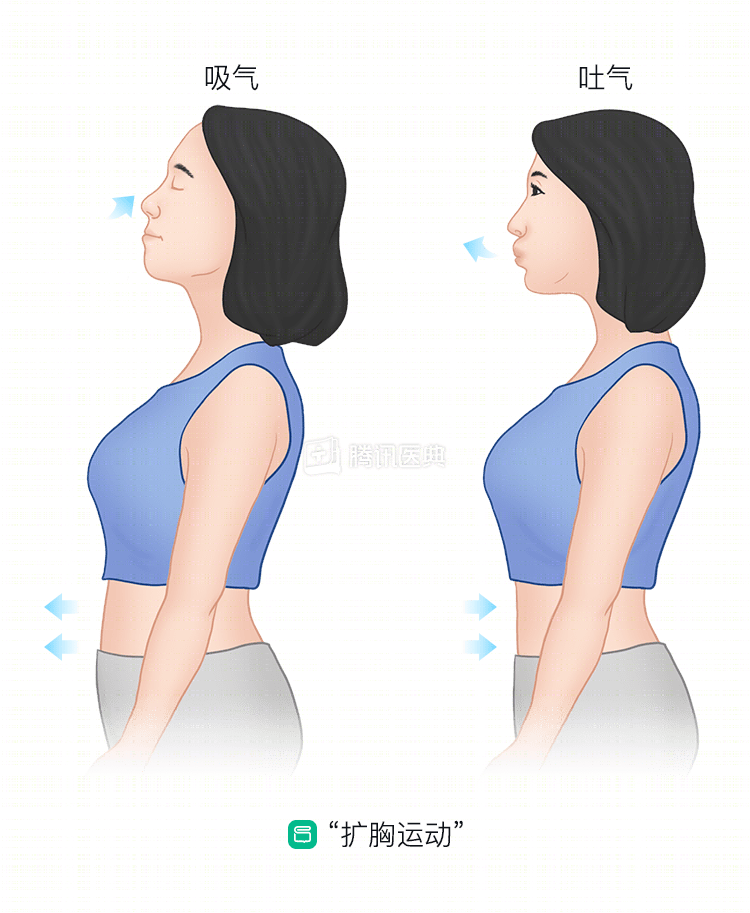
Section 1: “Chest expansion”. The most convenient and simple breathing exercise is the “deep breath”.
Essentials: Inhale evenly, while slowly puffing out your stomach, feeling the gas fill your chest and then suck it into your stomach, which is called “qi sinking into the dantian”. After inhaling enough air, hold it for a second or two, pout and blow, as if whistling, evenly and slowly, while slowly retracting the abdomen and chest, feeling all the gas exhale from the body, keeping the exhale time twice as long as the inhale time. Each “inhale and exhale” lasts about 10-15 seconds, and is done in 2-3 sets of 10 minutes each day.
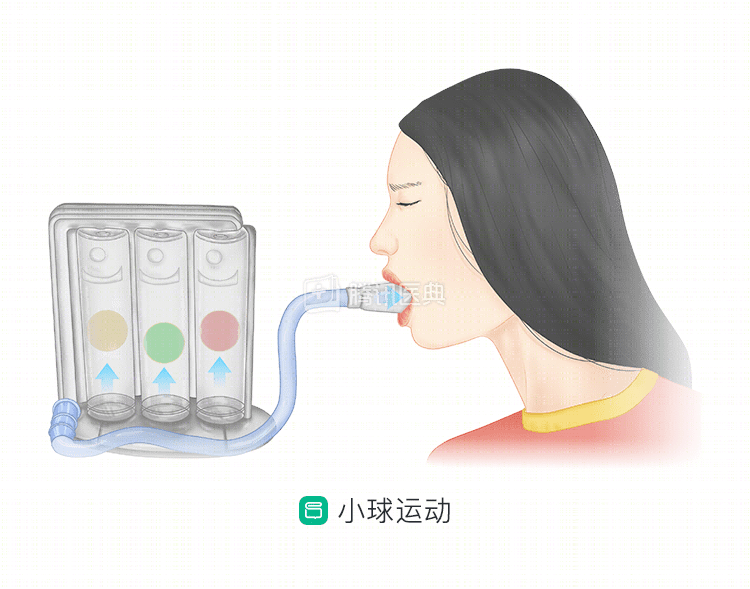
Section 2: “Small Ball Exercise”. The respiratory trainer is now widely used in the clinic. You just suck on the 3 little balls in the box and you can figure out how much air you’ve inhaled from that. It also helps to inhale deeply and improve lung capacity.
Movement essentials: First check that the mouthpiece is tightly attached, then bring the trainer to eye level. The first thing you need to do is exhale as much gas as possible from your chest, then hold the mouthpiece and inhale deeply and long while the ball rises, trying to keep the 3 balls floating, preferably for 3 seconds. You can do this in 4 to 5 sets of 20 reps per day.
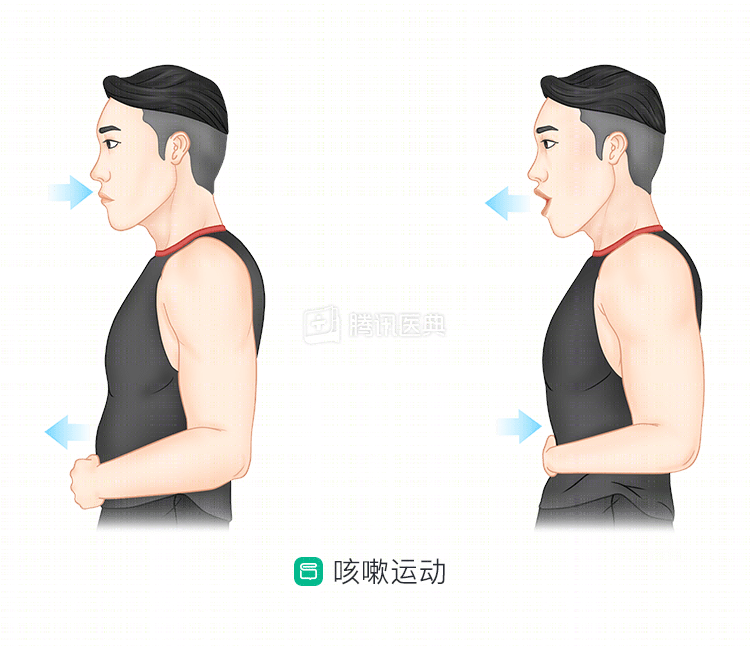
Section 3: “Coughing Exercises”. The “cough” here is not a shallow, high-pitched cough like the usual throat cough, but a deep breathing cough that comes from deep in the chest and should sound like a muffled, powerful breath.
Essentials: Hold your hands on your belly, inhale deeply, feel the gas sucked into your stomach, you can put your hands up and hold it for a second or two, then press your belly inward with both hands, the abdominal cavity and chest cavity retract with force at the same time, open your mouth to make a coughing motion, cough naturally and forcefully, feel all the turbulent gas being expelled from your body by this flooding force. The company’s main goal is to provide a comprehensive range of products and services to the market.
Section 4: “Total Body Exercise”. Pre-op, if you are in good health and your knees are functional, we recommend climbing the stairs a few times a day, deciding how many flights you want to climb depending on your condition. If you feel a little out of breath and slightly sweaty, then take a break, breathe steadily, and then climb a few more flights, three or four times a day, one in the morning and one in the afternoon. You can also record how many layers you can climb in one breath to observe your progress.
Note: Patients who are older, heavier, osteoporotic, or have bad knee joints should avoid climbing stairs to avoid greater damage to the knee joints. You can switch to a daily brisk walk with large arm swings and large steps, or low-intensity exercise such as gymnastics or dancing for 20 to 30 minutes, with a slight sweat, an increased heart rate of about 120 beats per minute (a bracelet that measures heart rate is a good help), and a slightly faster breathing rate.
After this full-body to partial-body “radio gymnastics” routine, you’ll be confident that you’re ready for surgery and ready to return to normal breathing as soon as possible afterwards.
Co-reviewed by Dr. Tang Wenfang, Deputy Chief Physician, Guangdong Provincial People’s Hospital, Guangdong Lung Cancer Institute
.
Co-Author: Dr. Wang Xing, Peking University Cancer Hospital