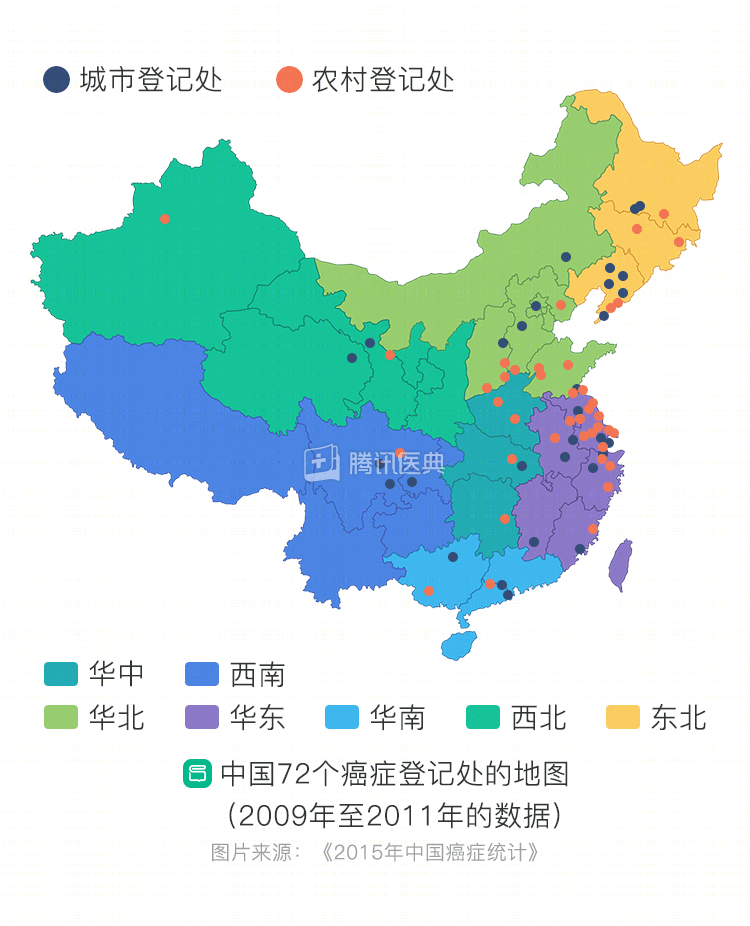
According to the 2015 China Cancer Statistics, lung cancer ranks first among all cancers and is the leading cause of death among cancer patients. Dozens of cancer registries are located in China to collect information on cancer incidence and mortality and other related data.
Onset characteristics of lung cancer
1. Incidence rates are significantly higher in men than in women
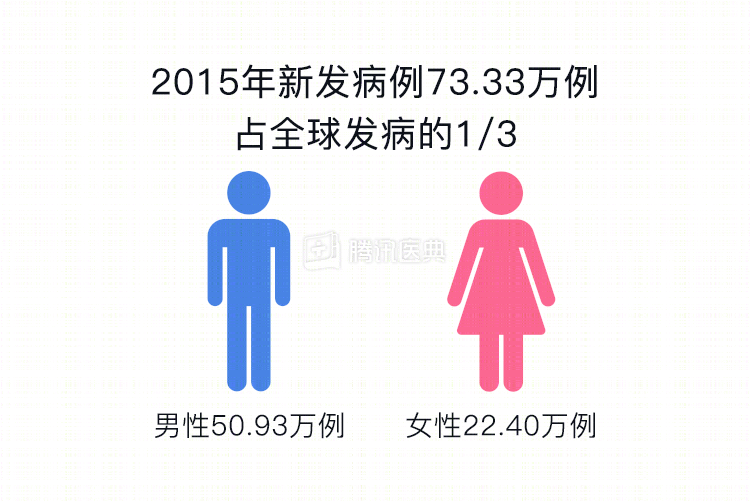
Significantly more new cases of lung cancer were reported in men than in women in the 2015 expected cancer incidence rate. After excluding the effect of factors such as age by age-specific standardized rate (ASR) the incidence rate remains significantly higher in men than in women.
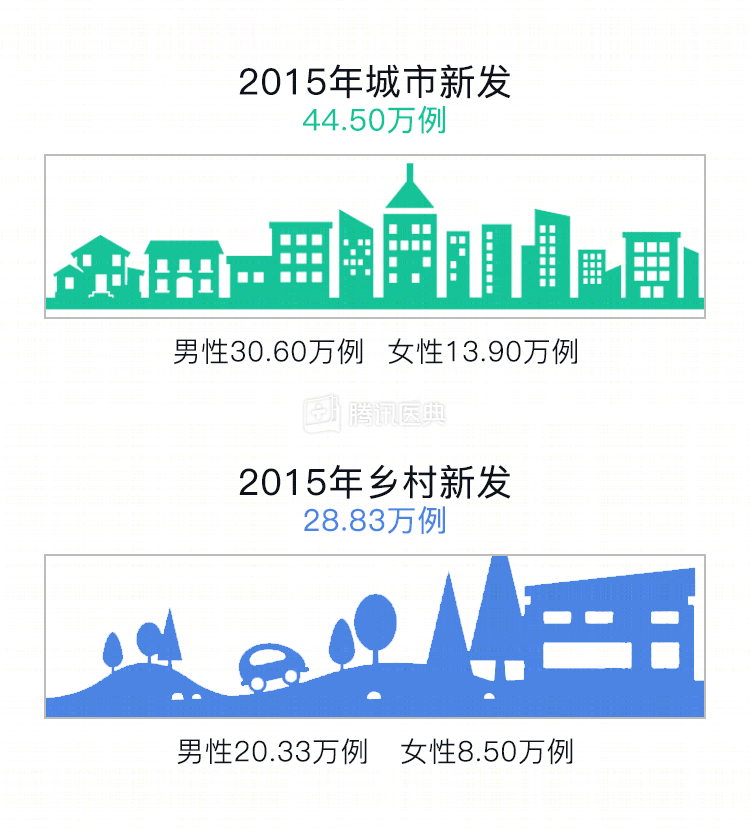
2. Urban prevalence is significantly higher than rural
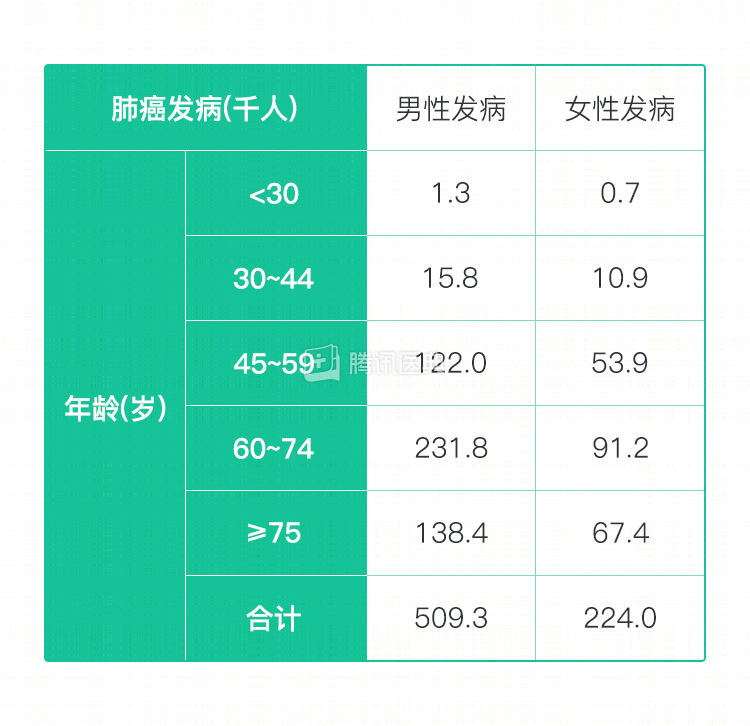
3. Significantly higher incidence in people 45 years of age and older
The incidence of lung cancer increases significantly after the age of 45 years in both men and women, with the greatest number of cases occurring in people aged 60 to 74 years.
4. There are geographical differences in onset
Lung cancer incidence is highest in the eastern, central, and southwestern regions of the country; the region with the highest incidence observed in the southwest is also where the 2002 survey showed the highest prevalence of smoking.
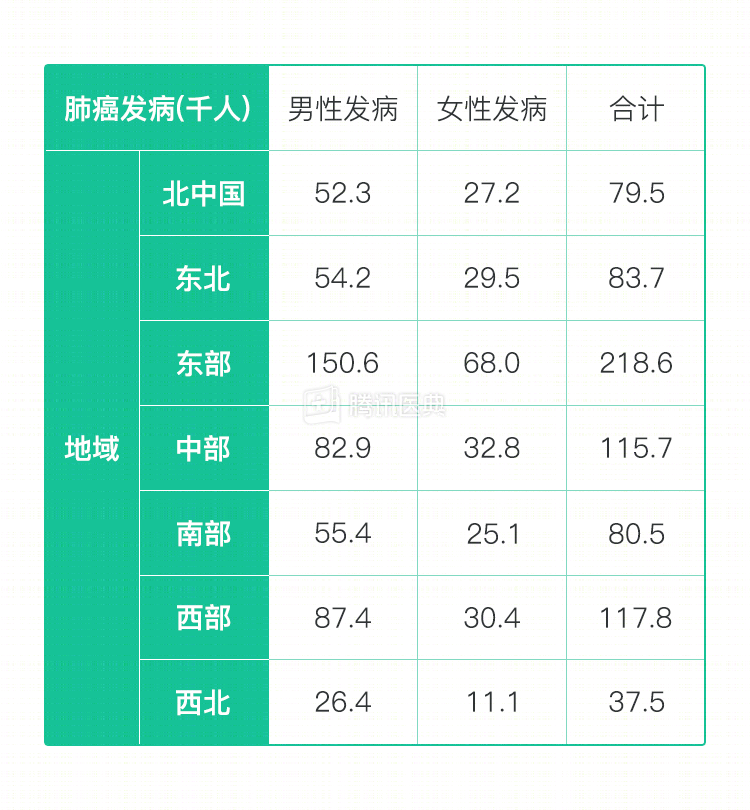
Lung cancer incidence trends
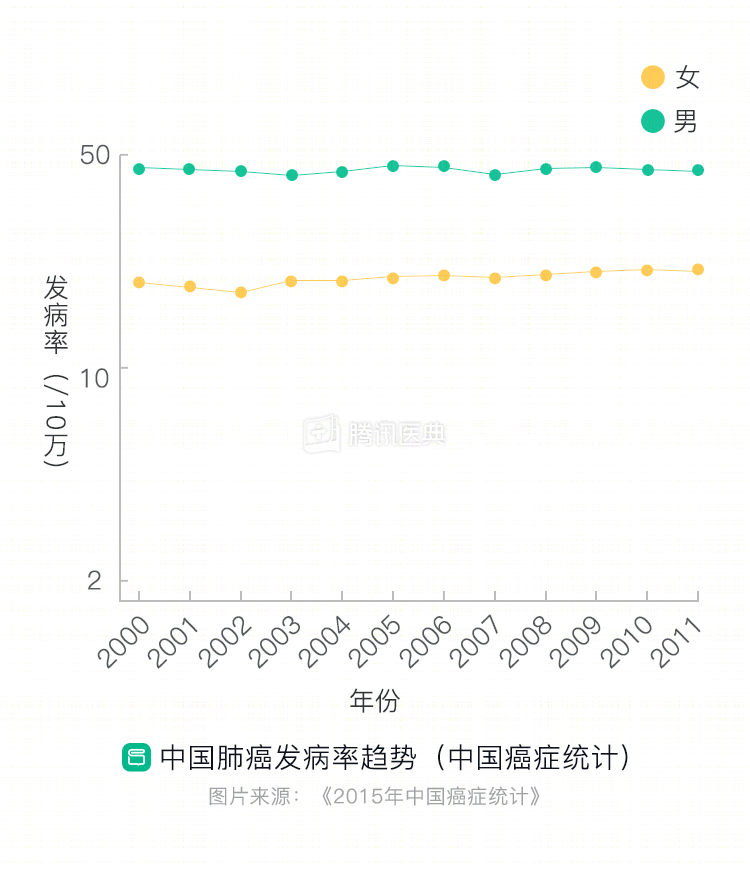
Lung cancer incidence rates have remained high for 10 years
Owing to the growth and aging of our population, the overall incidence of cancer in China has been on the rise between 2000 and 2011. In addition, the prevalence of unhealthy lifestyles, increased awareness of cancer, advances in detection methods, and improved data collection are all important influences on incidence rates. The incidence of lung cancer remains at a high level.
Lung cancer incidence may still be rising
Smoking is associated with 23% to 25% of cancer deaths in China. in 2010, more than 50% of adult males still smoked in China, and smoking rates among adolescent males are increasing, with an estimated 1 million smoking-related deaths per year, even if smoking rates remain unabated. By 2030, this rate will double. Most smoking-related diseases appear 20 to 30 years after smoking, and even with tobacco control, our cancer load continues to increase over the next decade.
It is foreseeable that the effects of smoking will become more evident over the next 20-30 years, with lung cancer rates struggling to decline and the disease burden increasing further.
Economic growth, urban expansion, and the spread of Western lifestyles have exacerbated environmental pollution. The country is considered to be one of the most polluted areas of the world in terms of air pollution. Just as it takes an average of 20 years for smoking to affect lung cancer, lung cancer associated with air pollution (haze, etc.) will manifest itself after about 20 years.
Environmental carcinogens from cooking fumes and exposure to heating with coal and other biofuels that our residents inhale are indoor pollutants that may contribute to the increased incidence of lung cancer.
Lung cancer-related deaths
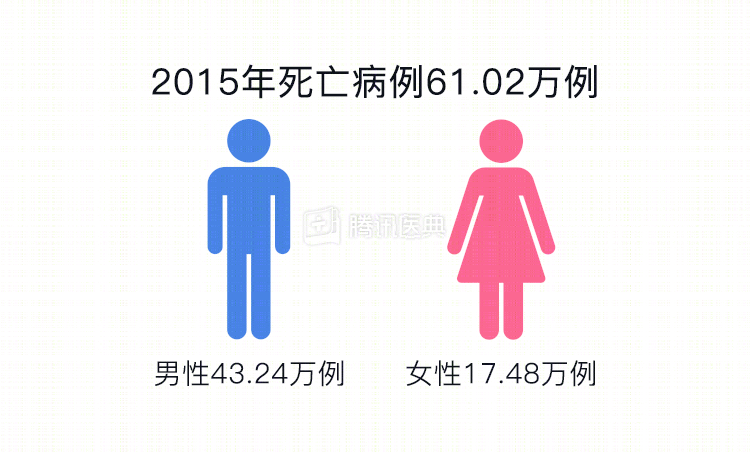
Similar to the incidence rate, the mortality rate of lung cancer is characterized by more men than women, more urban than rural areas, and a significant increase over the age of 45; regionally, it is most prevalent in the eastern, southwestern, and central regions of China.
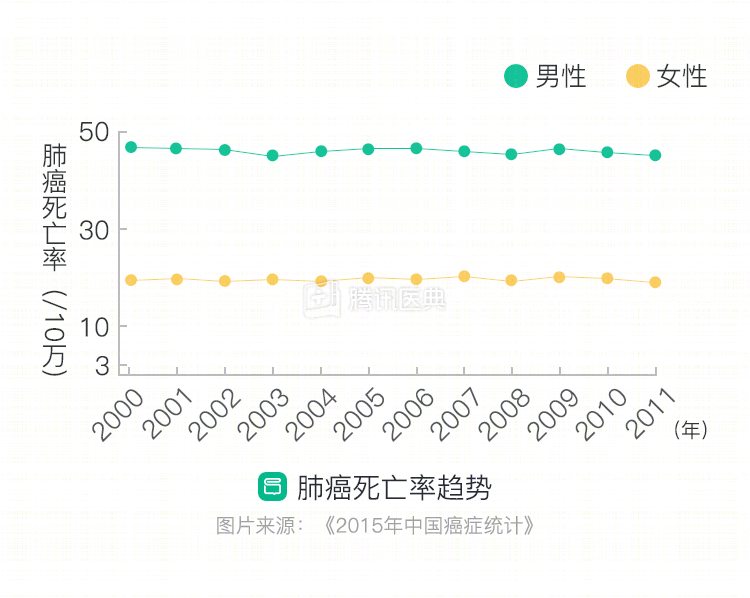
The mortality rate of lung cancer in China continues to be on a higher trend. Notably, in rural and less developed areas of the country, limited medical resources, inadequate screening facilities (many hospitals are unable to perform low-dose spiral CT screening and can only perform X-rays), and varying levels of treatment have led to more patients being detected at advanced stages, showing higher mortality rates.
I hope that in the future, based on our lung cancer statistics, we can target lung cancer prevention and control to reduce the incidence, mortality, and disease burden of lung cancer.
Co-reviewed by: Guangdong Provincial People’s Hospital Guangdong Lung Cancer Institute Associate Chief Physician Tu Haiyan Dr. Sun Yueli Dr. Cheng Jiangtao