Lung cancer ranks first in terms of incidence and mortality among cancer patients across the entire spectrum of demand. To better fight lung cancer, the International Association for Lung Cancer Research holds an annual World Lung Cancer Congress, where researchers from around the world are invited to share new drugs and therapies for lung cancer.
This year, the 20th World Conference on Lung Cancer (WCLC) was just held in Barcelona, Spain. Let’s take a look at what new and better treatments are available for lung cancer this year!
Targeted therapies
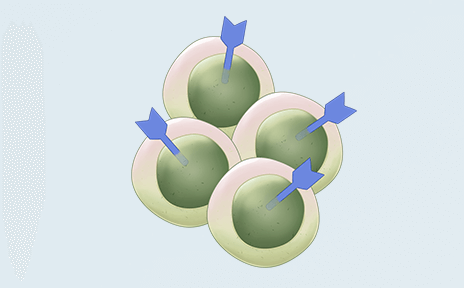
1. Non-small cell lung cancer with KRAS mutation, finally a new drug
RAS is an oncogene that is widespread in many cancers, including the 3 types of KRAS, NRAS, and HRAS. KRAS mutations are detected in more than half of all patients with non-small cell lung cancer, but until now, there has been no targeted drug for this mutation.
The and a new drug announced at this meeting, AMG510, is an oral drug that specifically targets KRAS mutations. In the study, the drug led to partial remission in 54% of patients and stable disease in 46%, with 100% disease control and tolerable adverse effects of treatment.
This result is good news for patients with KRAS mutations. However, the number of patients in the trial is small and larger studies are needed to validate drug efficacy.
2. Patients with non-small cell lung cancer with 20 exon insertion mutations are still better off with chemotherapy
EGFR mutations are common in patients with non-small cell lung cancer, and in the clinic, they can be treated with targeted agents like EGFR-TKI. However, there are many types of EGFR mutations, and among them, EGFR exon 20 insertion is a type of mutation that is not well treated with targeted drugs and is difficult to treat.
At the World Conference on Lung Cancer, a Japanese study enrolling patients with 20-exon insertion mutations (EGFR Ex20ins, HER2 Ex20ins, and EGFR/HER2 Ex20ins) compared the effectiveness of 4 different regimens: conventional platinum-containing chemotherapy, chemotherapy + targeted (docetaxel±remtuzumab), targeted agents (EGFR-TKI), and immunotherapy (PD-1 monoclonal antibody) with 4 different regimens and found that chemotherapy was still the most effective for this group of patients.
3.
3. Patients with non-small cell lung cancer with EGFR T790M mutation have a new targeted agent
Patients with EGFR T790M mutation are currently treated clinically mainly with the third-generation EGFR-TKI, oseltinib. A new drug, HS-10296, was announced in a Chinese study at this conference, and is also effective in this group of patients.
HS-10296 is a highly selective oral targeted agent. In the study, patients in China and Taiwan took the drug with an objective response rate of 66.1% and tolerable adverse effects. This fully demonstrates that this drug is effective for these patients. As to who is better with this drug compared to oxitinib, it is not clear.
4. Patients with EGFR-MET amplification in non-small cell lung cancer also have a new drug
For patients with EGFR mutations, drug resistance usually occurs after a period of treatment with EGFR-TKI. And MET expansion is one of the main reasons for drug resistance in patients. A Chinese study at this lung cancer conference found that the new drug, tepotinib + gefitinib (EGFR-TKI), is effective and safe for patients with MET mutations.
5. Relapsed extensive-stage small cell lung cancer treated with anti-tumor angiogenesis-targeting agents
.
Extensive-stage small cell lung cancer is highly malignant, and although it has a high response rate to first-line chemotherapy, it can develop rapid recurrence and resistance after second-line chemotherapy.
At this lung cancer conference, a Chinese study demonstrated that after resistance to first-line chemotherapy, treatment with the targeted drug apatinib (which inhibits tumor angiogenesis) is available.
And another study confirmed that patients with multiple relapses after treatment can be treated with anlotinib. Anrotinib is also a targeted agent against tumor angiogenesis.
Immunotherapy
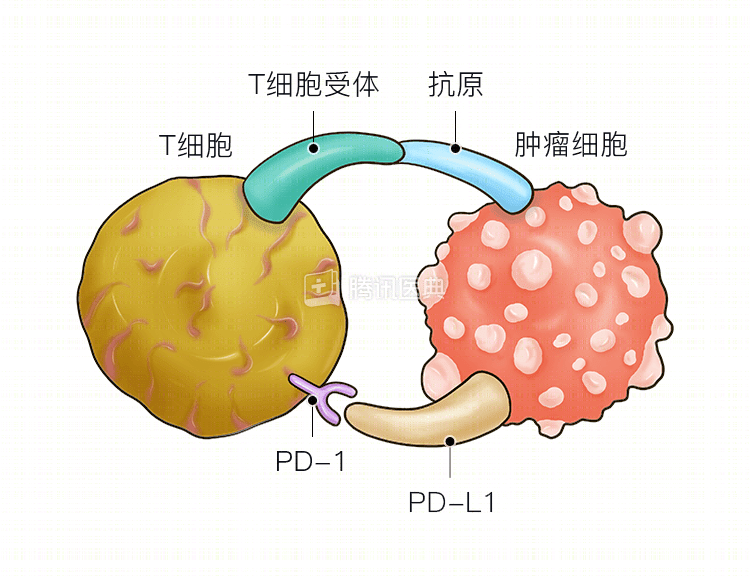
1. Long-term survival data for immunotherapy published, 5-year survival rate nearly 5 times that of chemotherapy
In recent years, immunotherapy has been called one of the most effective treatments for lung cancer. Multiple PD-1/ PD-L1 monoclonal antibodies have been approved for marketing by the FDA and recommended by guidelines for the treatment of non-small cell lung cancer.
Long-term survival data for patients with lung cancer treated with PD-1/ PD-L1 monoclonal antibodies were presented in 3 studies simultaneously at the Lung Cancer Conference. These data show that both PD-1 monoclonal antibodies, pablizumab, nabulizumab, and PD-L1 monoclonal antibodies, atezolizumab, provide significantly better long-term survival than chemotherapy. Among them, the 5-year overall survival rate of nabumetumab even exceeded that of chemotherapy by a factor of 5.
The results of these studies all suggest that for non-small cell lung cancer, the survival improvement with immunotherapy is better than chemotherapy.
2. Patients with non-small cell lung cancer with LKB1m, LKB1 / KRAS mutations have poor immunotherapy outcomes
Despite the effectiveness of immunotherapy, a subset of lung cancer patients are clinically ineffective or have poor outcomes with immunotherapy. At this meeting, data from a real-world study suggest that immunotherapy is ineffective in patients with non-small cell lung cancer with LKB1m or KRAS/LKB1 mutations.
The results of this study suggest limited improvement in survival with immunotherapy for patients with such mutations if genetic testing is performed prior to treatment, and that other, more effective treatments could be used.
3.
3. First-line treatment of non-small cell lung cancer with a new combination of immunologic agents
A new first-line treatment for non-small cell lung cancer, sintilimab + anlotinib, was announced in a Chinese study at the conference. sintilimab is a new PD-1 monoclonal antibody, and anlotinib is an anti-tumor angiogenesis targeted agent.
A similar drug combination approach, PD-1/PD-L1 monoclonal antibody + anti-angiogenesis-targeting agent, was approved by the FDA last year. The combination regimen approved at that time was atezolizumab + bevacizumab + chemotherapy.
In this study, sintilimab + anlotinib was effective and well-tolerated as first-line therapy. However, the study had a small sample. Whether this new regimen is universally effective in all lung cancer patients needs to be further explored.
Another study tried a combination of two classes of immune checkpoint inhibitors – nabulizumab (PD-1 monoclonal antibody) + Ipilimumab (CTLA-4 monoclonal antibody) – to treat advanced lung cancer. The results showed that this combination was also effective and safe.
.
4. For previously treated non-small cell lung cancer patients, a more efficient PD-1 monoclonal antibody is available
A study from China reported that for patients with non-small cell lung cancer whose disease progressed during or after two-drug chemotherapy, they could be treated with the new drug Camrelizumab (SHR -1210).
Camrelizumab is an immune checkpoint inhibitor that is a highly potent PD-1 monoclonal antibody. In the study, for patients with high PD-L1 expression, Camrelizumab treatment resulted in better outcomes.
5. Small cell lung cancer, more new options for first-line therapy
At last year’s Lung Cancer Conference, the PD-L1 monoclonal antibody Atezolizumab in combination with EP two-drug chemotherapy (etoposide + cisplatin or carboplatin) was recommended as first-line therapy for patients with extensive-stage small cell lung cancer because of its outstanding efficacy.
This year, for extensive-stage small cell lung cancer, another effective combination regimen was again announced – durvalumab (another PD-L1 monoclonal antibody) + EP two-drug chemotherapy (etoposide + cisplatin or carboplatin).
In the study, durvalumab + EP two-agent chemotherapy was significantly more effective than chemotherapy alone and had tolerable toxicity. Comparing the effect of durvalumab + EP two-drug chemotherapy to last year’s Atezolizumab combination regimen, the efficacy was similar.