Location of the lungs in the respiratory system
The lungs are an important organ of the respiratory system. Our respiratory system can be roughly divided into the upper and lower respiratory tracts. Air is inhaled from the upper respiratory tract – the nasal cavity or mouth and throat – and reaches the lower respiratory tract – the trachea, bronchi, fine bronchi, and alveoli – to complete gas exchange.
How many lobes of lung do we have?
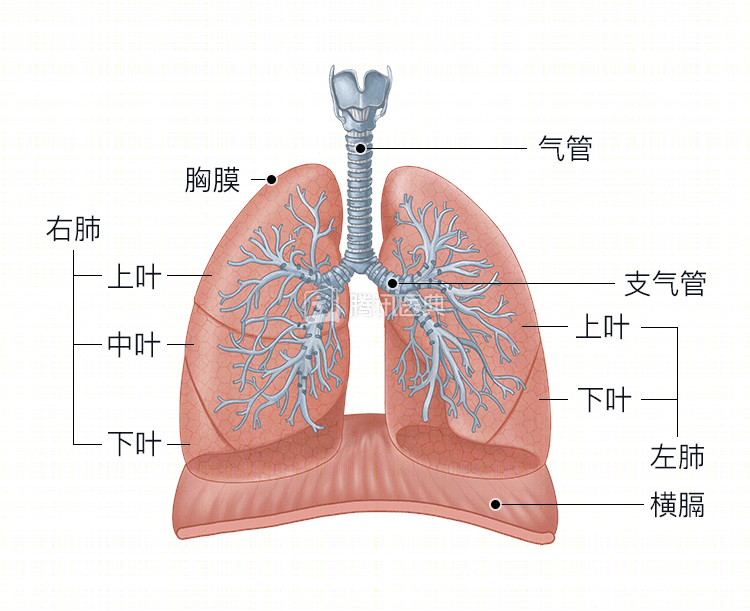
Our lungs, a pair of spongy, cone-shaped organs in the chest, one on each side. The right lung is divided into three lobes, upper, middle, and lower, and is wider and shorter in shape; the left lung is divided into two lobes, upper and lower, and is in the left side of the chest with the heart, and thus narrower in shape. The area between the two lungs is called the mediastinum.
The exterior of the lung is wrapped in a layer of plasma membrane (pleura). The pleura is divided into two layers: the first layer is located in the inner wall of the chest cavity and is called the wall pleura; the second layer adheres to the surface of the lung and is called the dirty pleura. The cavity between the two layers is called the “pleural cavity” and contains a lubricating fluid that protects the lungs from friction when breathing.
The alveoli and bronchioles make up the internal structure of the lung.
A “one-breath” journey: getting to know the trachea, bronchi, and alveoli
The trachea is the tube that connects the throat to the lungs, and the air we inhale enters the lungs through the trachea.
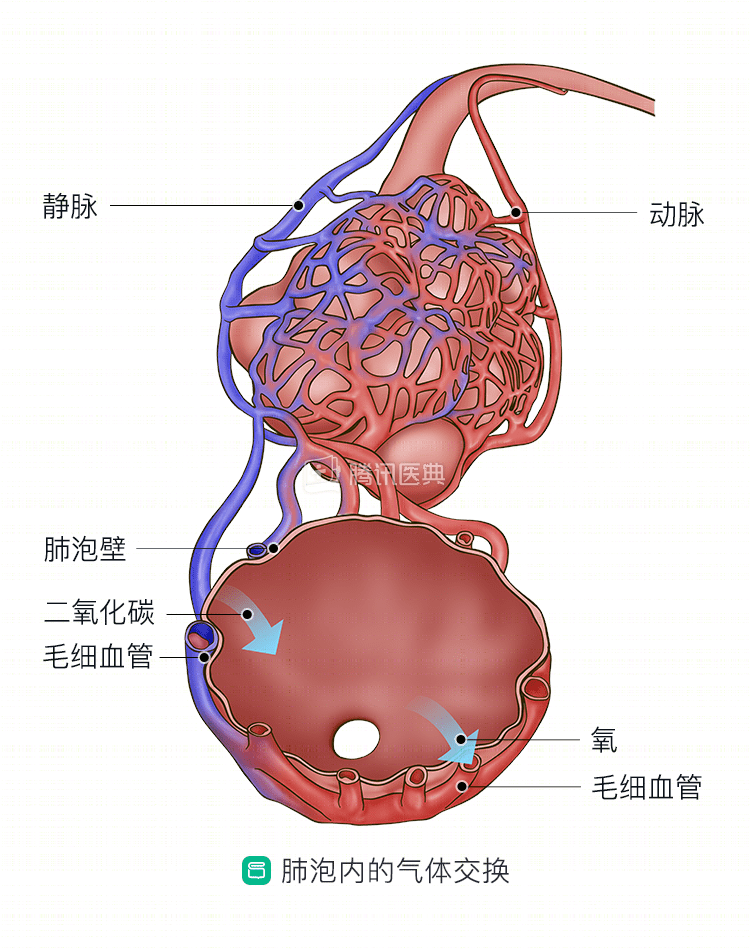
The trachea bifurcates downward and divides into two main bronchi, the left and the right. The main bronchus enters the lung through the “lung door” and bifurcates again and again to form smaller branching bronchial tubes called fine bronchial tubes. The bronchi bifurcate like branches in the lungs, which is called “bronchial tree”. At the end of the fine bronchi, there are very small and thin air sacs, which are familiarly known as alveoli. There are about 300 million alveoli in adults.
The air we breathe in through our nose or mouth travels through the trachea, bronchi, and bronchioles to the alveoli, which are rich in capillaries that allow for gas exchange: venous blood from the right ventricle travels through the pulmonary arteries and around the alveoli. The blood from the right ventricle, through the pulmonary artery, is exchanged around the alveoli, leaving oxygen behind, and the venous blood becomes oxygen-rich arterial blood, which returns to the left atrium through the pulmonary vein; at the same time, the carbon dioxide in the blood enters the alveoli and passes through the bronchi, bronchi, and trachea, and is expelled from our bodies, completing the journey.
Many lung cancers occur in the inner layer of the bronchi, hence the name bronchopulmonary cancer; but they can also occur elsewhere, such as in the trachea, fine bronchi, or alveoli.
Lymphatic system of the lungs
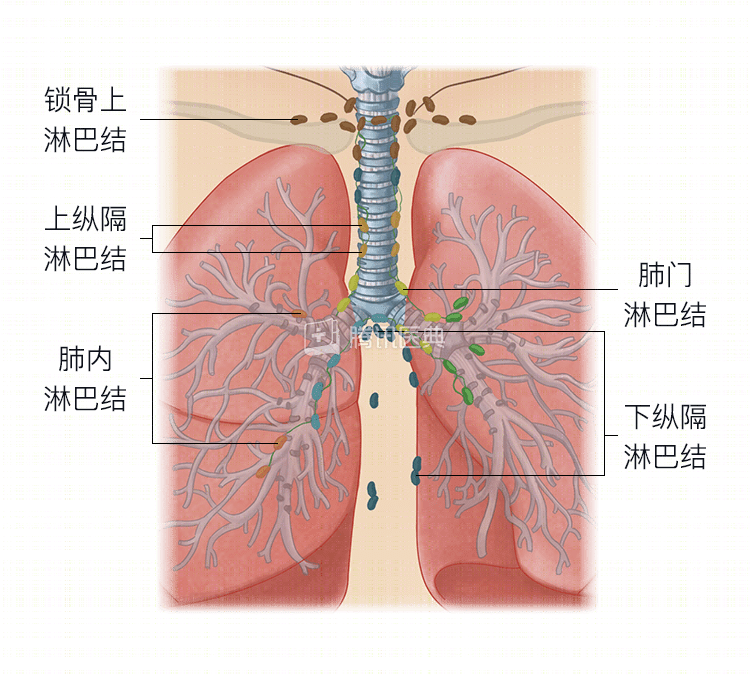
There are also many lymph nodes around the trachea, bronchi, and mediastinum, where the lymphatic vessels of the lungs converge. The lymph nodes are shaped like a bean, and their main function is to filter lymph fluid and participate in the body’s immune response. Lung cancer cells can “invade” along the lymphatic vessels, and if the lymph nodes don’t stop them, the cancer cells may continue to grow in the lymph nodes and spread along the lymphatic vessels to other organs in the body.
Co-reviewed by Dr. Bai Xiaoyan, Guangdong Provincial People’s Hospital Guangdong Provincial Lung Cancer Institute Dr. Gao Xin