What is shortness of breath? Why does lung cancer cause shortness of breath?
Patients with lung cancer may experience shortness of breath, feeling tightness in the chest, difficulty breathing, or even a sense of suffocation. Sometimes shortness of breath can happen just from going to the bathroom. Why is this?
We all know that the lungs are the organ responsible for the exchange of oxygen and carbon dioxide. After oxygen is inhaled from the nose, it is transported through the airways (trachea-bronchus-fine bronchus) to the lungs, where it is then exchanged for oxygen and blood carbon dioxide in the alveoli.
When suffering from lung cancer, the tumor adjacent to the airway or directly invades the airway, compressing or blocking the airway, affecting airflow in and out, insufficient oxygen and blood exchange, and carbon dioxide storage in the body, shortness of breath will occur. In addition to this, lung cancer also causes fluid accumulation in the chest cavity, which forces the lung to be unable to open completely and causes shortness of breath. In addition, oxygen is transported through the red blood cells in the body, and when lung cancer causes anemia, it affects oxygen transport, which may also lead to shortness of breath.
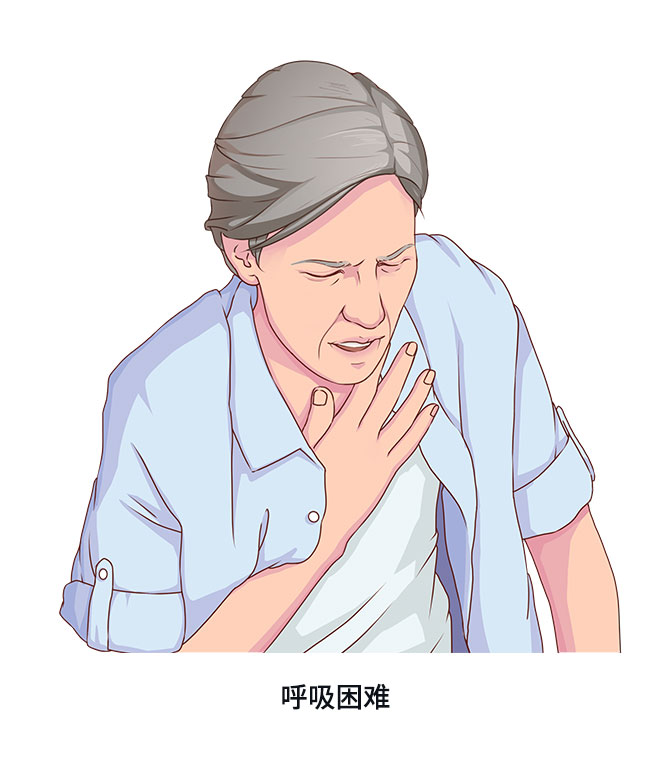
In addition to lung cancer itself, some treatments, such as surgery and radiation therapy, can cause lung damage and trigger shortness of breath.
It is important to emphasize that although shortness of breath is one of the common symptoms of lung cancer, it does not occur in all patients.
What are the characteristics of shortness of breath caused by lung cancer?
Many diseases can cause shortness of breath, including asthma, allergies, pneumonia, emphysema, chronic bronchitis, heart disease, anemia, and being overweight. When shortness of breath is accompanied by the following symptoms, such as chronic cough (mostly irritating dry cough), blood in sputum or bloody sputum, chest pain, fever, unexplained weight loss, etc., be alert to the possibility of lung cancer and seek prompt medical attention.
How to relieve shortness of breath?
Common methods used by physicians to manage shortness of breath include:
- Oxygen inhalation;
- Dilating the airway with medication;
- Opening the obstructed airway via bronchoscopy;
- Use of anti-anxiety medication to relieve emotional stress;
- If the shortness of breath is caused by pleural effusion, the pleural fluid can be aspirated to relieve it. If the shortness of breath is caused by tumor compression, kill the tumor cells and relieve the compression by treatment.
.
In addition, quitting smoking, avoiding secondhand smoke, drinking more water, eating a healthy diet, practicing deep inhalation, getting enough rest, and developing good habits will all help to prevent and relieve the onset of shortness of breath.
Co-reviewed by: Guangdong Provincial People’s Hospital Guangdong Lung Cancer Research Institute Dr. Pan Yao, Chief Physician Dr. Chen Zhiyong Dr. Zhang Jiatao