Approval Date:200612200612month22 span>day
Revision Date:2015< span style="font-family:equinox">Year05Month25day
Flurbiprofen Ester Injection Instructions< span style="font-family:italic">

Please read the instructions carefully and use under the guidance of your physician
Prohibited in patients with.
1. Patients with known hypersensitivity to this product.
2. Patients with induced asthma, urticaria, or allergic reactions after taking aspirin or other nonsteroidal anti-inflammatory drugs.
3. Contraindicated in the treatment of perioperative pain during coronary artery bypass graft surgery (CABG).
4. Patients with a history of gastrointestinal bleeding or perforation after administration of NSAIDs.
5. Patients with active peptic ulcers/bleeding, or previous recurrent ulcers/bleeding.
6. Patients with severe heart failure.
7. Patients with severe hypertension.
8. Patients with severe liver, kidney and hematologic dysfunction.
9. Patients who are using enoxacin, lomefloxacin, norfloxacin, or prulifloxacin.
10. For women in the second trimester, refer to the precautions in “Pregnancy, Maternal, Lactating Women, etc.”.
[Drug Name]
Generic Name: Flurbiprofen Ester Injection
Trade Name: Kefir®
English name:Flurbiprofen Axetil Injection
Hanyu Pinyin:Fubiluofenzhi Zhusheye
[Ingredients]
The main ingredient of this product is flurbiprofen ester, whose chemical name is: (±)2-(2-fluoro-4-biphenylyl)propionic acid-1-acetoxyethyl ester< span style="font-family:Arial">
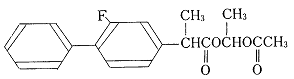 whose structural formula is:
Molecular Formula: C19H19FO4
Molecular weight: 330.36
Excipients:refined soybean oil, refined lecithin, concentrated glycerol, disodium hydrogen phosphate, citric acid, water for injection
[Properties]
This product is a white emulsion, slightly viscous, with an idiosyncratic odor.
[Indications]
Postoperative and cancer analgesia.
[Specifications]
5ml:50mg
[dosage
Usually adults are given flurbiprofen ester 50 mg intravenously at a time, administered as slowly as possible (over 1 minute), with an analgesic pump as needed, and repeated as necessary. The dosage should also be increased or decreased appropriately according to age and symptoms. In general, this product should be applied when oral medication cannot be taken or when oral medication is not effective.
[Adverse Reactions].
1. Serious adverse reactions: rare shock, acute renal failure, nephrotic syndrome, gastrointestinal bleeding, convulsions with impaired consciousness, toxic epidermal necrolysis (Lyell syndrome), cutaneous mucocutaneous ophthalmic syndrome (Stevens-Johnson syndrome), and exfoliative dermatitis, should be observed and administration should be stopped and appropriate measures taken in the event of abnormalities.
2. The following serious adverse reactions have also been observed in studies with other formulations of flurbiprofen: rare aplastic anemia.
3. General adverse reactions.
(1) Injection site: occasional pain at the injection site and subcutaneous bleeding.
(2) Digestive system: occasional nausea, vomiting, elevated transaminases, elevated glutamyl transpeptidase, occasional diarrhea, rare gastrointestinal bleeding.
(3) Mental and neurological: occasional headache, fever, lethargy, drowsiness, chills.
(4) Circulatory system: occasional rise in blood pressure, palpitations.
(5) Skin: occasional itching, rash, and other allergic reactions.
(6) Hematologic: rare thrombocytopenia, platelet hypofunction, and very rare hyperfibrinolysis.
(7) Respiratory system: very rare asthma, discontinue medication at the onset of initial symptoms such as wheezing and a sense of dyspnea.
[Contraindicated]
1. Patients with known hypersensitivity to this product.
2. Patients with induced asthma, urticaria, or allergic reactions after taking aspirin or other nonsteroidal anti-inflammatory drugs.
3. Contraindicated in the treatment of perioperative pain during coronary artery bypass graft surgery (CABG).
4. Patients with a history of gastrointestinal bleeding or perforation after administration of NSAIDs.
5. Patients with active peptic ulcers/bleeding, or previous recurrent ulcers/bleeding.
6. Patients with severe heart failure.
7. Patients with severe hypertension.
8. Patients with severe hepatic, renal and hematologic dysfunction.
9. Patients who are using enoxacin, lomefloxacin, norfloxacin, and prulifloxacin.
10. For women in the second trimester, refer to the precautions in “Pregnancy, Maternal, Lactating Women, etc.”.
[Precautions]
-
Avoid contact with other NSAIDs, including selectiveCOX-2inhibitors in combination with other NSAIDs, including selectiveinhibitors.
-
The use of the lowest effective dose for the shortest treatment time, as needed for symptom control, allows for the use of the lowest effective dose for the shortest treatment time. The use of the lowest effective dose within the shortest treatment time as needed for symptom control can minimize adverse effects.
-
At any time during treatment with all NSAIDs At any time, the risk of adverse reactions of gastrointestinal bleeding, ulceration, and perforation may be fatal. These adverse reactions may or may not be accompanied by warning signs and symptoms, and regardless of whether the patient has a history of gastrointestinal adverse reactions or a history of serious gastrointestinal events. NSAIDs should be used with caution in patients with a prior history of gastrointestinal disease (ulcerative colitis, Crohn’s disease) to avoid worsening the condition. When a patient experiences gastrointestinal bleeding or ulceration while taking the drug, it should be discontinued. Elderly patients have an increased frequency of adverse reactions with NSAIDs, particularly gastrointestinal bleeding and perforation, the risk of which can be fatal.
-
For multipleCOX-2selective or non-selective NSAIDsdrug duration up to 3 years of clinical trials have shown that this product may cause an increased risk of serious cardiovascular thrombotic adverse events, myocardial infarction, and stroke, and that the risk may be fatal. All NSAIDs, including COX-2selective or non-selective agents that may have similar risks. Patients with cardiovascular disease or risk factors for cardiovascular disease are at greater risk. Physicians and patients should be alert to the occurrence of such events, even in the absence of prior cardiovascular symptoms. Patients should be informed of the symptoms and/ or signs of serious cardiovascular safety and the steps to take if they occur.
Patients should be alert for signs and symptoms such as chest pain, shortness of breath, weakness, slurred speech, and They should seek medical help as soon as any of these signs or symptoms occur.
-
and all NSAIDs (< span style="font-family:Times New Roman">NSAIDs), this product may cause new-onset hypertension or worsen the symptoms of existing hypertension, either of which can lead to an increased incidence of cardiovascular events. The efficacy of nonsteroidal anti-inflammatory drugs (NSAIDs) may be compromised in patients taking thiazide or medullary diuretics when these drugs are administered. Non-steroidal anti-inflammatory drugs (NSAIDs), including this product, should be used with caution in patients with hypertension. Blood pressure should be monitored closely during initiation and throughout the course of treatment with this product.
-
With hypertension and/or a history of heart failure (e.g., fluid retention and edema) should be used with caution.
-
NSAIDs , including that this product may cause fatal and serious adverse skin reactions such as exfoliative dermatitis,Stevens Johnsonsyndrome (SJS) and toxic epidermal necrolysis lysis (TEN). These severe events can occur without signs and symptoms. Patients should be informed of the signs and symptoms of a serious skin reaction and the product should be discontinued at the first appearance of a skin rash or other signs of an allergic reaction.
-
Use this drug with caution in the following patients< span style="font-family:Arial">
(1) Patients with a prior history of peptic ulcer.
(2) Patients with bleeding tendency, hematologic abnormalities, or prior history of such;
(3) Patients with hepatic or renal insufficiency or a prior history of such.
(4) Patients with a history of allergy.
(5) Patients with bronchial asthma.
-
Not for fever relief in patients with fever and analgesia in patients with lumbago.
-
The route of administration for this product is intravenous, not intramuscular.
-
Patients who cannot take the drug by mouth should discontinue intravenous administration and switch to oral administration if they can take the drug by mouth.
-
This product should be avoided for long term use, and when long-term use is necessary, regular monitoring of blood and urine routine and liver function should be performed to detect abnormalities in a timely manner. The product should be monitored regularly.
-
During the course of medication administration, pay close attention to the patient’s condition. Identify adverse reactions in a timely manner and manage them appropriately.
[For Pregnant and Lactating Women]
1. The safety of application in pregnant women has not been established and women who are pregnant or at risk of pregnancy must be treated when the benefit of treatment outweighs the risk.
2. Minimize use in late gestation (animal studies have found delayed labor and fetal ductus arteriosus in rats administered in late gestation).
3. Avoid breastfeeding during application of this product (possible transfer to breast milk).
[For Children]
The safety of pediatric use has not been established and therefore should not be used in children.
[Geriatric use]
Be especially wary of adverse reactions in elderly patients and start cautiously with small doses.
[Drug Interactions]
1. Combination with lomefloxacin, norfloxacin, and enoxacin is prohibited and has the potential to cause convulsions to occur.
2. Combine with dicoumarin anticoagulants (warfarin, etc.), methotrexate, lithium, thiazide diuretics (hydrochlorothiazide), medullary diuretics (tachyphylaxis), neoquinolone antimicrobials (ofloxacin, etc.), and adrenocorticosteroids (methylprednisolone, etc.) with caution.
[Drug overdose]
Unspecified.
[Clinical Trials]
A total of 200 subjects with moderate post-surgical pain were enrolled. cases, controlled by a randomized double-blind trial method versus placebo, with slow intravenous injection during pain1. family:isoline”>branches (5ml). The judgment indexes were pain intensity, pain intensity difference, pain relief rate and efficiency rate. The analgesic effect of flurbiprofen ester was98%. Adverse reactions were 2 cases of nausea and palpitations.
[Pharmacology and Toxicology].
1. Pharmacological effects
This product is a non-steroidal analgesic with lipid microspheres as the drug carrier. It is a non-steroidal analgesic with lipid microspheres as the drug carrier. After the drug enters the body for targeted distribution to trauma and tumor sites, flurbiprofen ester is released from the lipid microspheres and rapidly hydrolyzed by carboxyl esterase to produce flurbiprofen, which exerts analgesic effects by inhibiting prostaglandin synthesis through flurbiprofen.
2. Toxicological studies
Reproductive toxicity: 5 mg/kg/day given intravenously to rats before and during early gestation showed reduced ovulation and implantation; 10 μg/kg/day given intravenously during organogenesis day, there was delayed fetal development accompanied by deterioration of maternal systemic status, increased fetal mortality, reduced ability to lactate and suppression of fetal development at birth. Rabbits given 80 mg/kg/day intravenously showed increased abortion and preterm delivery with maternal systemic deterioration and increased fetal mortality.
[Pharmacokinetics].
A single intravenous dose of 5 ml (50 mg) of this product in healthy men resulted in the complete hydrolysis of flurbiprofen ester to flurbiprofen within 5 minutes, with a maximum flurbiprofen blood concentration (8.9 μg/ml) after 6-7 minutes and a half-life of 5.8 hours. About 50% of the product is excreted in the urine 24 hours after dosing, and the main metabolites are 2-(4′-hydroxy-2-fluoro-4-biphenylyl)propionic acid and its polymer.
[Storage]
0-20C and store airtight to avoid freezing.
[Packaging]
Colorless ampoule. 5sticks/box,1branch/branch :Arial”>/box.
[Expiration date]
24months.
[Executive Standard]
State Food and Drug Administration National Drug Standard YBH15412004-2014Z
[approval number]
State Pharmacopoeial CodeH20041508
[Manufacturer]
Company Name: Beijing Tide Pharmaceutical Co.
Manufacturing Address: Rongjing East Street, Beijing Economic and Technological Development Zone, Beijing8No.
Postal Code:100176
Phone Number: (010) 67880648
Fax Number:(010) 67860459
Net
at:http://www.tidepharm.com