What is lung cancer?
Lung cancer (lung cancer) is a malignant tumor that occurs in the lungs, including primary lung cancer and metastatic lung cancer, and what we often call lung cancer refers to primary lung cancer, most of which originates in the bronchi or alveoli.
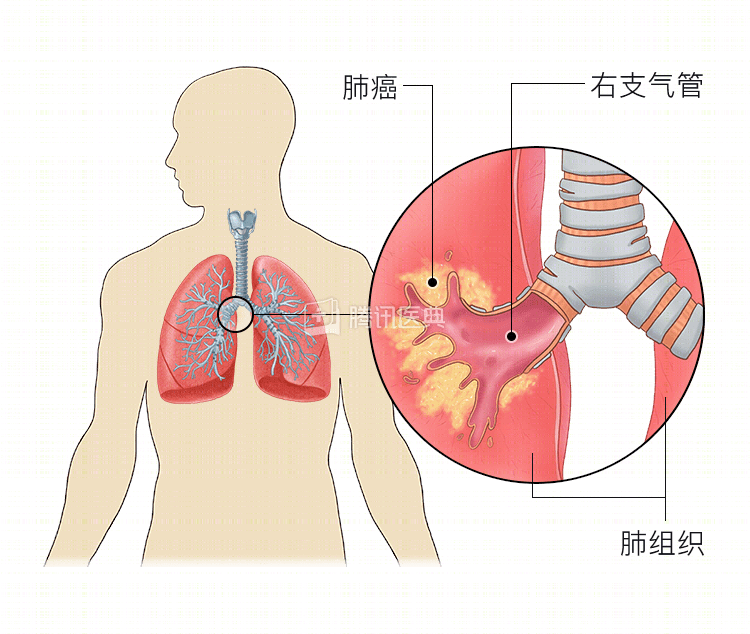
Normal lung tissue cells, under the influence of multiple factors, undergo genetic mutations and grow uncontrollably “like crazy” into clumps of cells that metastasize and “invade” other tissues and organs of the body, such as the brain, liver, and bone. The “territory”.
The other organs that are “invaded” by the cancer are called “metastatic lesions” that kill normal cells and eventually kill the body.
Factors that cause lung cancer
Smoking is the number one cause of cancer deaths worldwide, and smoking is the number one risk factor for lung cancer. 85% of lung cancers are related to smoking, and the risk of lung cancer is 20% to 30% higher than for people living in smoke-free environments, even if they are passive smokers.
In addition, radon, asbestos, and air pollution are also risk factors for lung cancer, and some people are born with certain genetic defects that can also increase the risk of lung cancer.
The prognosis for lung cancer varies from person to person and is related to the type of cancer suffered, the stage (degree of metastasis) at the time of diagnosis, physical health status, and many other factors.
How many types of lung cancer are there?
“Cancer” usually refers to malignant tumors of epithelial origin, which account for the majority of all lung malignancies, and there are about 20 types of primary lung cancer.
Lung cancer is divided into adenocarcinoma, squamous cell carcinoma, large~cell carcinomas, and small cell lung cancer (SCLC) based on the type of epithelial cells (histologic typing), SCLC).
The first 3 types of tumor cells differ in their microscopic appearance and treatment from small cell lung cancer and are collectively referred to as non~small cell lung cancer (NSCLC).
Non-small cell lung cancer is the most common, accounting for about 85% of all lung cancers.
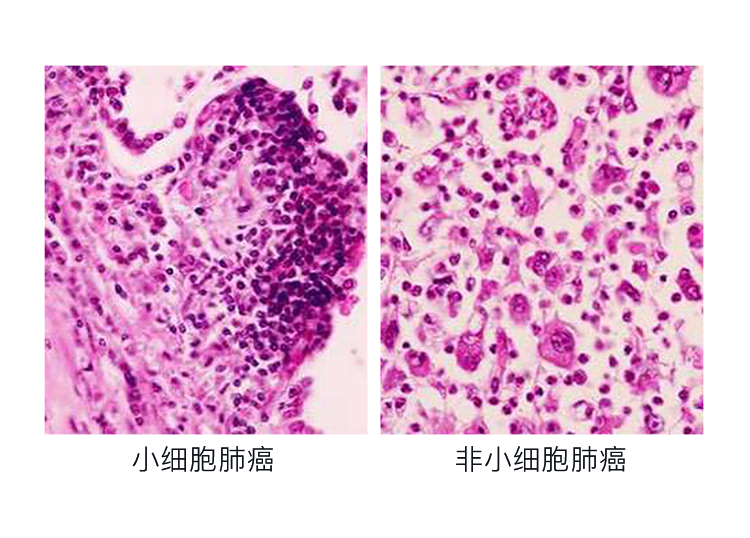
Non-small cell lung cancer
Compared with small cell lung cancer, non-small cell lung cancer grows more slowly and metastasizes later, and it can be divided into stages I to IV. In general, early and intermediate stages are treated primarily with surgery, and after surgery, the surgeon determines whether radiotherapy or chemotherapy is needed in combination, depending on the pathologic stage.
Later stages are dominated by chemotherapy, targeted therapy, or immunotherapy, with targeted therapy being considered by physicians in older and frailer patients to reduce side effects.
Non-small cell lung cancer is divided into the following 3 main categories.
- Adenocarcinoma
- The most common type of non-small cell lung cancer in the United States, accounting for about 40% of all lung cancers. Adenocarcinoma is associated with smoking, but can also occur in nonsmokers (especially women).
- Most adenocarcinomas originate in the peripheral parts of the lung and can metastasize to organs such as lymph nodes, bone, or the liver.
- adenocarcinoma in situ
- Formerly known as fine bronchoalveolar carcinoma, this is a subtype of adenocarcinoma that often occurs at multiple sites in the lung and metastasizes along the alveolar wall.
- Appears similar to pneumonia on chest x-ray and is increasing in incidence, more common in women.
- Patients with this type of lung cancer tend to have a better prognosis than patients with other types of lung cancer, and those who develop it are usually younger than those with other types.
- Squamous cell carcinoma
- Squamous cell carcinoma, which accounts for about 25% to 30% of all lung cancers and is also called epidermoid carcinoma, usually originates in the “central bronchus” (main bronchus) of the lung.
- Squamous carcinomas tend to “stay” in the lung and can metastasize to the lymph nodes, and are often large enough to form a cavity inside.
- It grows more slowly than other types of non-small cell lung cancer, tends to occur in men and smokers, and may present as hemoptysis.
- Large cell carcinoma.
- Also known as undifferentiated carcinomas, they are rare and account for about 10%-15% of all lung cancers. They usually start at the outer edges of the lung and grow rapidly, usually to a large size by the time they are detected.
Small-cell lung cancer
Comprising about 15% of all lung cancers, it usually originates in the main bronchus and is the most aggressive type of lung cancer, spreading rapidly and often metastasizing to other parts of the body, such as the liver, bone, and brain, by the time it is detected.
Almost all patients with small cell lung cancer smoke, so treatment is based on systemic chemotherapy and radiation therapy.
Small cell lung cancer can be divided into two types, depending on whether the lesion is confined to one side of the chest:
- Limited stage. The tumor is present only in one side of the lung, interstitial lung tissue, and nearby lymph nodes.
- Extensive stage. The tumor has spread beyond the unilateral lung and nearby lymph nodes, or a pleural effusion has developed.
.
.
Rare types
Other types of cancer can also occur in the lung, but are less common than non-small cell lung cancer and small cell lung cancer, which together account for 5% to 10% of all lung cancers.
For example, bronchial carcinoids, which account for 5% of all lung cancers, tend to be small (3-4 cm or less) at diagnosis and are most common in people younger than 40 years old.
- Carcinoid tumors are not associated with smoking, are metastatic, and a small percentage of them secrete hormone-like substances. They usually grow and spread more slowly than bronchial carcinoid tumors, and many can be detected early and therefore surgically removed.
- Supporting tissues of the lung, such as smooth muscle, blood vessels, or cells involved in the immune response, are less likely to become cancerous.
Metastatic lung cancer
In addition, metastases from other primary tumors in the body often metastasize to the lungs, and they may do so through the bloodstream, the lymphatic system, or directly from nearby organs.
Most metastases are multiple tumors that can spread throughout the lung, concentrating mainly in the outer part of the lung and rarely occurring in the central part of the lung.
Co-reviewed by Dr. Bai Xiaoyan and Dr. Gao Xin of Guangdong Provincial People’s Hospital and Guangdong Lung Cancer Institute.