Non-small cell lung cancer (NSCLC) recurs after treatment, called a recurrence, and can occur in the lungs, brain, bone, or other parts of the body.
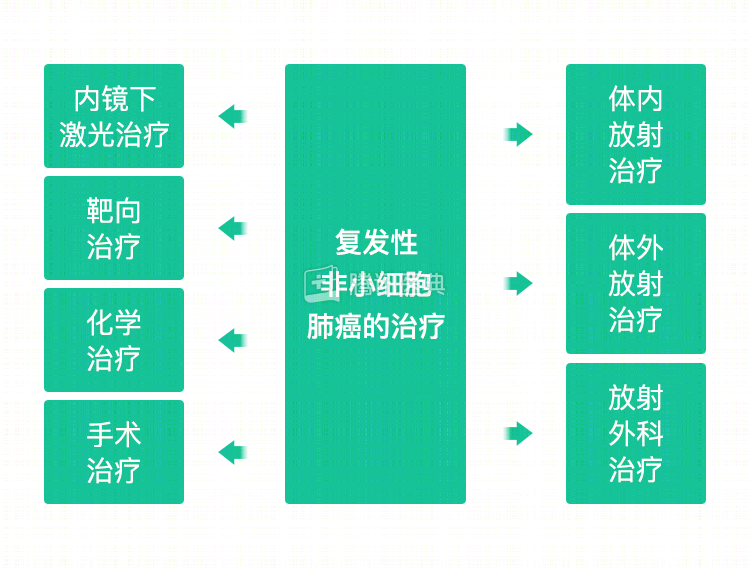
After a recurrence, the following treatments may be needed:
- External radiation therapy: to relieve pain and other symptoms and to improve the patient’s quality of life.
- Chemotherapy.
- Targeted therapies: Small molecule tyrosine kinase inhibitors (TKI) that block the signaling needed for cancer cell growth, such as erlotinib and crizotinib.
- Endoscopic laser or in vivo radiation therapy.
- Patients with local recurrence who cannot undergo surgery may try radiosurgery. Instead of “surgery,” radiosurgery “focuses” the radiation directly on the tumor, destroying the cancer cells with only minor damage to surrounding healthy tissue.
- Tumors that have metastasized may also sometimes require local surgical resection. For example, isolated brain metastases from lung cancer that cause severe headaches and vomiting, or localized bone metastases that compress nerves and cause impaired movement of the limbs, may require palliative surgery to relieve symptoms after surgical evaluation if local radiation therapy or systemic targeted therapy cannot quickly relieve the nerve compression.
Lung cancer recurrence is a complex and difficult situation, and the choice of treatment plan should be based on medical advice. The doctor will choose the appropriate therapy based on the patient’s actual situation and the conditions available at the medical institution.
Co-reviewed by: Guangdong Provincial People’s Hospital Guangdong Lung Cancer Institute Dr. Sun Yueli Dr. Zhang Mingfeng