We say that love only exists in people or animals, but nowadays, I’m afraid this rule of thumb is about to be broken.
In the mysterious world of medicine, there are actually many, many diseases that are extremely close to each other – some of them two by two, like a sweet couple in this world.
They spend their days “together” and they encourage each other, help each other, and work together, setting up camp in the body, enjoying and destroying it.
Medical research in recent decades has found that diabetes and periodontal disease have a “very good” relationship, influencing each other and promoting each other, a full-blown “honeymoon” in the disease world.
These findings tell us that periodontal disease is more widespread and more severe in people with diabetes compared to healthy people.
But when periodontal disease was treated and controlled, diabetics also experienced significant improvements in blood sugar.
Now that the relationship has been exposed to the public, how exactly do they fall in love? No, we should be curious, how exactly do they promote each other and coordinate to destroy our health?
Before we can reveal this “honeymoon”, we need to understand the background of each of these “couples”.
The “background” of periodontitis and diabetes
First, the most familiar stranger to the general public – periodontitis.
Periodontitis is one of the oldest diseases in humans, but most of us don’t know anything about it.
Periodontitis is an infectious chronic inflammation caused by bacteria in the mouth, which mainly destroys the periodontal tissue, the red gums around the teeth and the alveolar bone underneath, which is invisible to the naked eye.
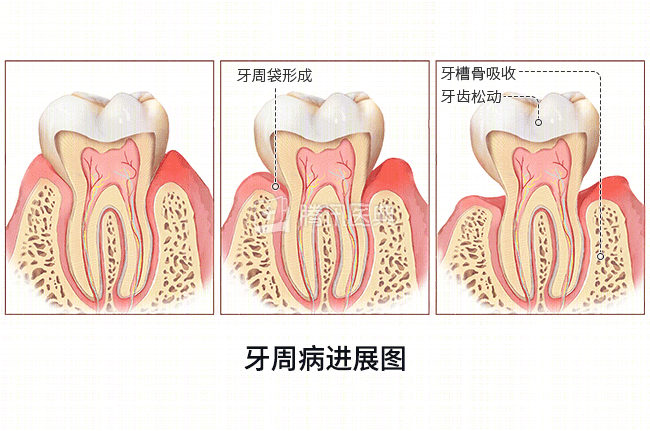
Periodontitis begins as a result of incomplete oral hygiene cleaning and retention of food debris, causing disease-causing bacteria from it to collect around the teeth.
Coincidentally, the people’s favorite perfunctory thing is to brush their teeth, and it is precisely because of the lack of careful brushing that bacteria are able to grow and multiply on the periodontal tissues at ease and wreak havoc at any time.
At this point, the body’s immune army against bacteria fights alone for a long time, becomes weaker and weaker, and eventually loses the battle.
So as long as the oral hygiene is poor, periodontitis will not be controlled and teeth will fall out sooner or later.
Second is diabetes. It’s a household name and undoubtedly one of the most successfully advertised chronic diseases in the medical community.
The square dancers are probably the ones who can give you the lowdown on diabetes if you ask them about it.
In fact, simply understood, diabetes is when the body’s central system for controlling blood sugar breaks down, and when the patient’s blood sugar rises, the body can’t regulate to lower it.
Some people with diabetes are characterized by the “three more, one less” features of eating more, drinking more, urinating more, and losing weight, while some are not.
One of the most important characteristics of diabetic patients is that their autoimmunity is greatly reduced, and this is an opportunity for diabetes to fall in love with periodontal disease.
The relationship between periodontitis and diabetes
This is pretty much the background of periodontal disease and diabetes. So, isn’t it time to reveal the “secrets of love” between them?
In fact, it’s the scientists who are to blame for the details of their relationship “interactions”, which are grouped into 3 specific points:
- People with diabetes have abnormal blood glucose levels, and abnormal blood glucose levels directly lead to a series of changes in the blood, such as “crunchy” capillary walls throughout the body, including in the periodontal tissue.
.
Not only that, but it also leads to higher levels of fat in the blood, and as a result, the blood becomes a pool of stagnant water, sticky and difficult to flow.
Not to mention the capillaries in the periodontal tissues, which are not spared either, and it is easy to understand the aggravation of periodontal disease at this time.
- Periodontal disease may cause elevated levels of our body’s “pro-inflammatory factors,” which in turn contribute to the development of type 2 diabetes through a complex process.
- The body is an interconnected whole, and when diabetes causes the body’s immune system to be depressed, that is, its ability to fight infection, then the periodontal tissues may also be less resistant to pathogenic bacteria.
Treatment of diabetes and periodontitis
In fact, the interaction between diabetes and periodontal disease, such as the one above, is simply too much.
Finally, the point is to consider what we can do about it. The answer to this is to treat diabetes and periodontitis together!
First of all, the treatment of diabetes requires that patients visit their endocrinologist regularly, take regular medications to control their blood sugar as prescribed, exercise more, and eat a light diet that is not high in sugar.
The treatment of periodontitis is described below:
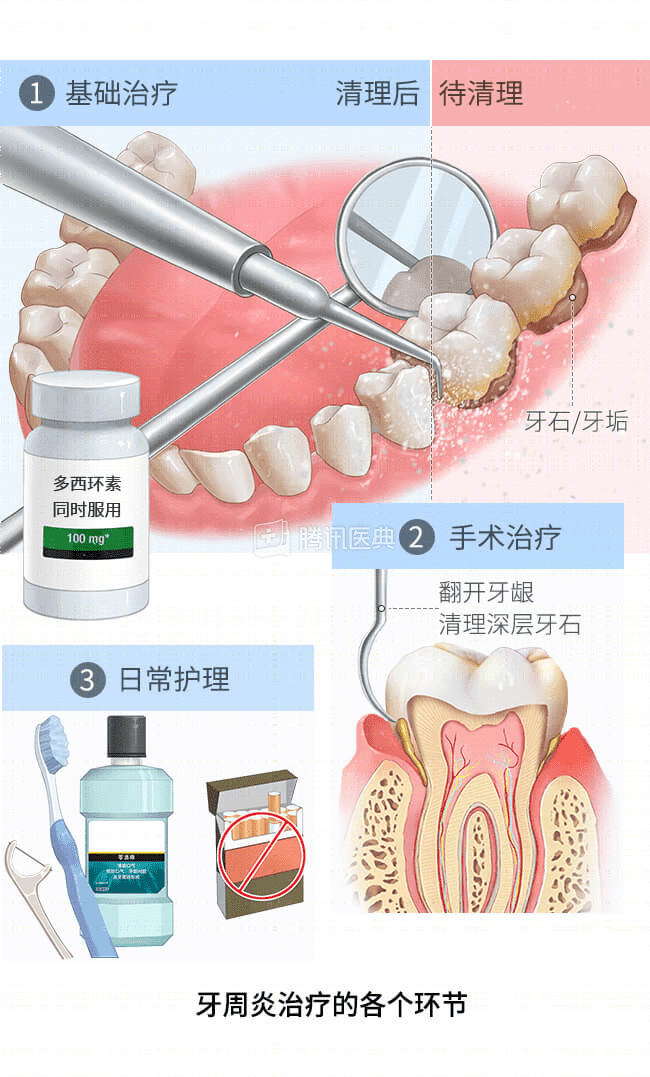
Basic periodontal therapy and surgical treatment
Basic periodontal therapy, in which antibiotics are given to control infection in acute and severe infections; basic periodontal therapy is the use of specialized tools in the dentist’s office to remove surface deposits, which include, among other things, bacteria, calculus, and pigment. Periodontal surgery is not used for diabetic patients as much as possible, and only when necessary is the timing and timing of surgery determined by the patient’s level and stability of blood glucose control. In addition, patients need ongoing compliance and regular follow-up for periodontal maintenance treatment to control periodontitis.
Daily oral hygiene maintenance and preservation
- Learn the proper way to brush your teeth with the Modified Pap Method and brush for 3 minutes in the morning and 3 minutes in the evening.
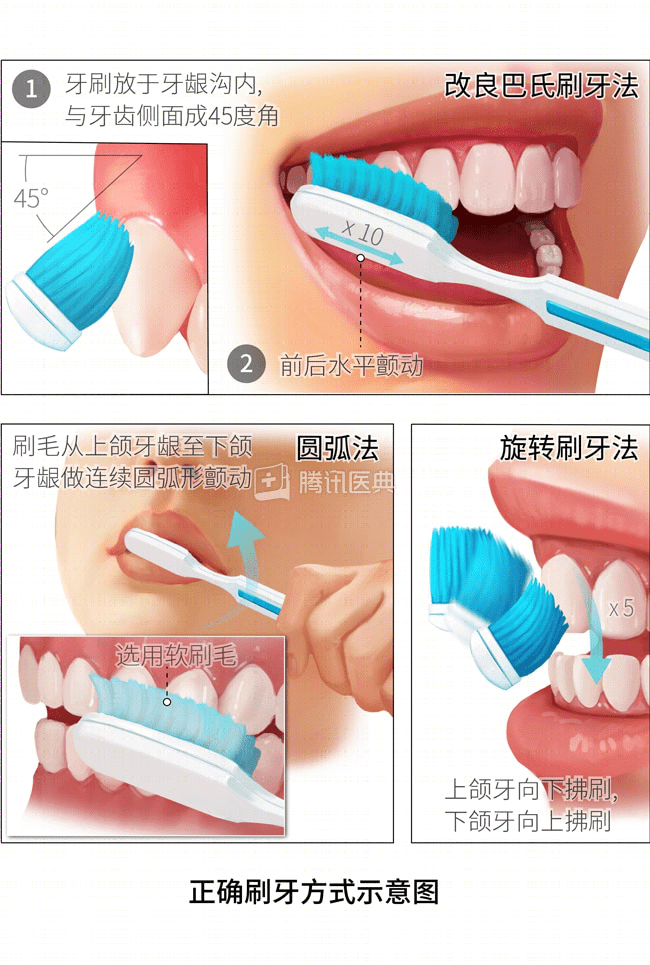
- Insist on flossing your teeth before and after brushing, because you can’t brush your teeth to clean the gaps.
- Rinse your mouth often after meals and do not eat after brushing.
- Quit smoking. Studies have shown that smoking is an important risk factor for periodontal disease, aggravating or causing periodontitis by suppressing the body’s immune response and other aspects.
Summary
The relationship between diabetes and periodontal disease has been slowly clarified by the rapid development of medical research and the various aspects of periodontitis treatment, but there are still many blind spots waiting for scientists to find solutions, and the only way we can better defend ourselves against the disease and thus reduce all kinds of bad “honeymoon” is to discipline ourselves and enhance our health defense awareness. The first of these is the “honeymoon”.