
Radiotherapy is an important breast cancer treatment, but there are two sides to the coin, and radiotherapy may also bring about some adverse effects, which are closely related to the specific site of irradiation and the dose of irradiation. Overall, it appears that radiation therapy for breast cancer patients causes relatively mild adverse effects compared to tumors at other sites (e.g., head and neck tumors, lung cancer, esophageal cancer). Learn more about this.
Local breast reactions
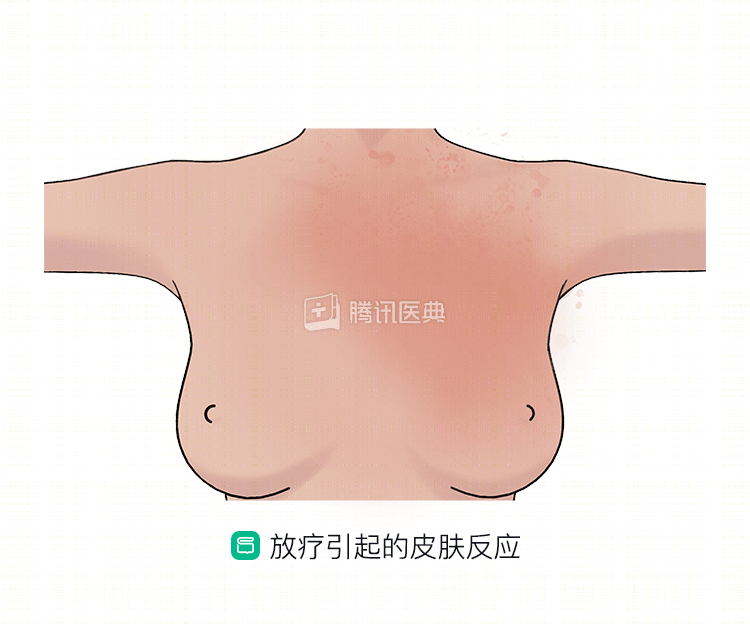
Patients with breast-conserving surgery, where only the breast is irradiated during postoperative radiotherapy, have the fewest adverse reactions from radiotherapy. The most significant reaction throughout the course of radiotherapy is a skin reaction, which is characterized by post-radiation skin heating, darkening and reddening of the skin, small dry patches of peeling skin, darkening of the hair follicles, and swelling of the breast tissue with pain.
In terms of severity, these reactions are mild for most patients and do not interfere with daily activities and rest. However, a small number of patients may have relatively pronounced reactions due to inadequate care or individual differences. Wet desquamation of the breast skin may occur near the end of the late phase of radiation therapy, manifesting as small peeling and breaking of the skin and localized superficial ulcers with painful oozing, especially around the nipples. A very small number of patients may also experience significant redness, swelling, and pain throughout the breast, even requiring oral pain medication.
The incidence of distant breast reactions after the end of radiation therapy is low, and only a small percentage of patients may experience localized hardening and fibrosis of the breast, but there is little change in the overall appearance of the breast.
Systemic reactions
Some patients may experience systemic reactions, such as mild nausea, general malaise, drowsiness, and abnormal blood work. The main blood work abnormalities are decreased white blood cells, decreased lymphocytes, and anemia, which usually do not interfere with the continuation of radiation therapy.
Impact on vital organ function
Because the lung is behind the breast, the lung on the same side is exposed to some radiation during radiation therapy. Usually this level of dose is well tolerated by the lung, so it is almost rare for patients to develop respiratory symptoms such as coughing and shortness of breath as a result of breast radiation therapy. However, a very small number of patients may experience coughing and shortness of breath after radiation therapy, which may sometimes require treatment, and it is important to seek prompt medical attention and follow your doctor’s advice when this occurs.
It is important to note that during follow-up after radiation therapy, a chest CT or chest x-ray may show a description such as “fibrous streaks in the lungs, post-radiation changes”.

Patients with left-sided breast cancer may also be concerned about whether they will experience cardiac side effects after radiation therapy. Since the amount of irradiation received by the heart during radiotherapy is also very low and is a completely tolerable dose for the heart, there is usually no arrhythmia or myocardial ischemia caused by radiation exposure during radiotherapy, and no symptoms such as palpitations or precordial pain will occur. However, there may be some effects in the long term, and the risk of heart disease, mainly ischemic heart disease, such as coronary heart disease, may increase several years after the end of radiotherapy.
People with pacemakers should always inform their doctor before radiation therapy. Radiotherapy can affect the pacemaker, and the severity of the effect is related to the distance of the pacemaker from the radiotherapy exposure, in effect, to the dose of radiation to which the pacemaker is exposed. Patients have been reported abroad to have died as a result of pacemaker arrest due to radiation exposure to the pacemaker. Therefore, again, it is important that those with pacemakers inform their physicians of this condition in advance.
Some patients whose postoperative radiotherapy will include the neck may experience transient pharyngeal pain during radiotherapy, especially more pronounced when swallowing. This is due to the fact that during neck radiotherapy, the irradiation area is immediately adjacent to the pharynx and there is some scattered dose to the mucosa in these areas, causing mucosal erosion and inflammation, resulting in pain. This symptom usually starts to appear around the 3rd week of radiotherapy and will last for 1~2 weeks to heal on its own. There is no effect on the long term.
Although radiation therapy may have these effects, the risk of them occurring is not high after all, and the doctor will weigh the pros and cons and make a decision on a case-by-case basis.