
Breast cancer patients often ask why they should continue to receive treatment when the surgery has already cut out the tumor. In fact, breast cancer is a malignant tumor that requires comprehensive treatment. In order to completely remove the remaining tumor cells from the body, adjuvant therapy is still needed after surgery to reduce the risk of metastasis and recurrence. So, what are the methods of adjuvant treatment after breast cancer surgery?
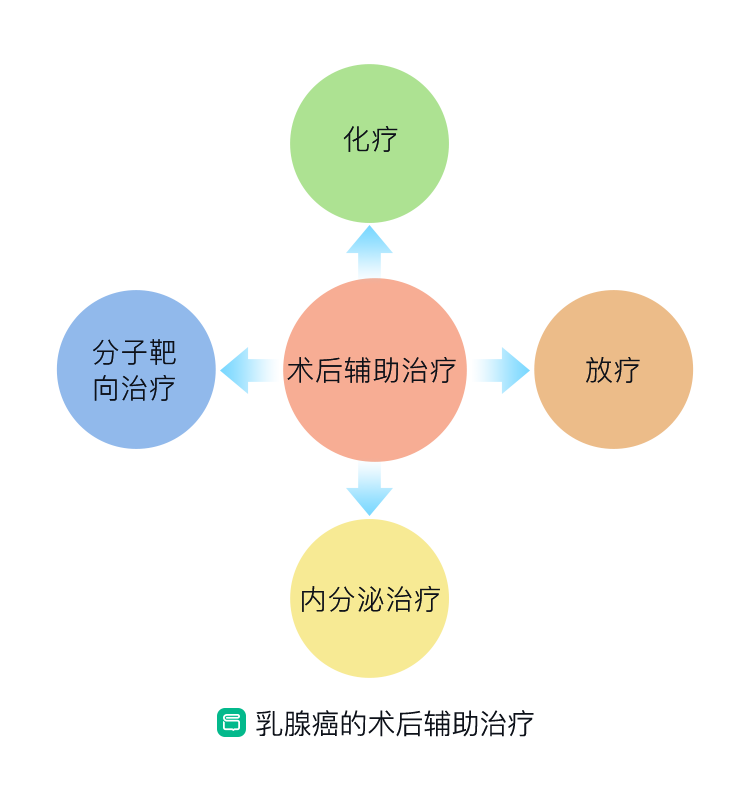
Chemotherapy
Chemotherapy is one of the most important adjuvant treatments for postoperative breast cancer, and the therapeutic effect is relatively clear. It is generally accepted that adjuvant chemotherapy should be started within 1 month after surgery, with longer intervals compromising treatment outcomes. Adjuvant chemotherapy regimens are generally tailored to the risk of recurrence, the effectiveness of adjuvant chemotherapy drugs, and the patient’s specific situation with adequate drug dose intensity. Four to six courses of chemotherapy are usually administered for those with a low or intermediate risk of recurrence, and six to eight courses are usually treated for those with an intermediate or high risk of recurrence.
Radiotherapy
Radiotherapy for breast cancer consists primarily of irradiation of the breast and chest wall and irradiation of the surrounding lymph nodes. For patients undergoing breast-conserving surgery, postoperative radiotherapy has been shown to be beneficial in reducing local recurrence rates. Radiation therapy after radical breast cancer surgery is primarily used to evaluate patients who are considered to be at high risk for recurrence of peri-mammary lymph nodes, usually those with ≥4 positive T3 or axillary lymph nodes, or those with 1 to 3 positive lymph nodes but incomplete axillary lymph node testing.
If breast reconstruction is to be performed, for those who are going to have implants and require radiation therapy, the surgeon will usually recommend immediate breast reconstruction, which is performed at the same time as the breast cancer surgery. If breast reconstruction is performed with autologous tissue, radiation therapy can be administered before or after reconstruction. Delayed-immediate breast reconstruction, in which a tissue expander is placed during total mastectomy and then replaced with a prosthesis after chemotherapy, is also available, usually 4 weeks after resection, to help mitigate the adverse effects of postoperative radiation therapy.
Endocrine therapy
About 2/3 of breast cancer patients have tumor tissue with some estrogen receptor (ER) and 40% to 50% have tumor tissue with progesterone receptor (PR), which is sensitive to hormone therapy and is an appropriate population for endocrine therapy.
Commonly used drugs for endocrine therapy of breast cancer include tamoxifen, toremifene, fulvestrant, anastrozole, letrozole, exemestane, and sometimes special drugs are needed such as Goserelin, Leuprorelin, or surgical ovarian debulking, which is the rapid reduction of estrogen levels in the body to very low levels using the methods described above.
Doctors usually choose the medication and timing of treatment based on the patient’s age, menstrual status, hormone levels, etc.
Targeted therapy
Human epidermal growth factor receptor-2 (HER-2) is strongly associated with breast cancer outcomes, with overexpression of the gene detectable in 20% to 30% of breast cancers, and is thought to be a factor associated with poor breast cancer outcomes. Drugs targeting HER-2 are thought to have an important role in the treatment of both early and advanced breast cancer, and commonly targeted drugs include trastuzumab (Trastuzumab ), lapatinib (Lapatinib), and pertuzumab (Pertuzumab).
In summary, depending on the patient’s condition, different adjuvant therapies may be required after surgery, and treatment recommendations will be made by the physician after a comprehensive evaluation.