HER2, or Human Epidermalgrowth Factor Receptor 2 (HER2). For HER2 positive breast cancer, trastuzumab is now more widely used. If it is a HER2 positive small tumor, must trastuzumab be used?
Patients at high risk of recurrence may benefit
The St. Gallen poll on adjuvant therapy for “T1a- b -c” small tumor breast cancer gave a more positive answer for patients with T1b and T1c while treatment for patients with T1a is controversial. There is still controversy. For “HER2-positive T1aN0M0 patients to avoid chemotherapy options” this issue, 78% of experts believe that chemotherapy is not required, while there are 62.5% of experts believe that anti HER2 therapy is not required. nbsp;treatment.
The National Comprehensive Cancer Network (NCCN) guidelines also provide recommendations for treatment of this group of patients, and given the uncertainty of outcomes in patients with T1a small tumors, there are not enough studies to demonstrate a benefit of anti HER2 therapy in this group of patients. nbsp; treatment can be beneficial, therefore NCCN guidelines for breast cancer T1a small tumor patients to perform anti HER2 treatment to give 2b type of evidence to support the need to fully assess the cardiotoxicity, the patient’s risk of recurrence and the value of the benefit before considering whether to apply it.
The answer from the European Society for Medical Oncology (ESMO) is relatively clear: anti HER2 therapy is not needed, given that T1a is in a low risk of recurrence population.
In summary, as the indication for anti HER2 therapy gradually extends to patients with small tumors, especially those with T1a more randomized controlled clinical studies are expected to find a population of benefit for anti HER2 therapy in T1a small tumors.
There is indeed a subset of patients with T1a small tumors who may benefit from anti HER2 therapy. From various guidelines, anti HER2 therapy is needed for patients with vascular cancer thrombosis, hormone receptor-negative, young women, and high pathologic grade. There is also a lot of expert support for the use of 21 genetic testing to determine the risk of recurrence in patients with T1a small tumors, and the ONCOTARGET study showed that only 5% to 12% of patients with T1a small tumors with low pathologic grade patients had high recurrence scores. Although the overall risk of recurrence in T1a patients is small, patients with a high risk of recurrence among them still objectively exist, and more detailed clinical studies are needed to screen out this small group for more precise indications for anti HER2 therapy.
Delayed trastuzumab (Trastuzumab ) may still be beneficial
In the HEAR study, there were 885 patients (representing 65% of the overall population) who did not receive trastuzumab adjuvant therapy at the beginning of their disease and subsequently crossed over to trastuzumab therapy for 1 year, compared with other patients who did not cross over to trastuzumab therapy for 813 patients, the former had a significantly lower risk of recurrence compared to the other patients who did not cross-apply trastuzumab. It is evident that there is still a survival benefit from delayed application of trastuzumab therapy.
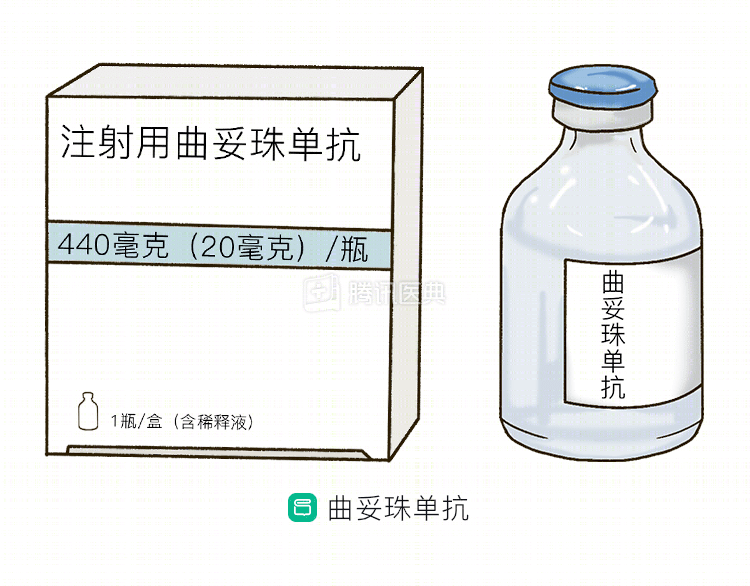
So, how long do patients who delay trastuzumab still benefit?
Further analysis by HEAR showed that those who delayed trastuzumab for 22.8 months could still benefit. Based on the results of such studies, there is a clear provision in the CDCA Guidelines and Specifications for the Diagnosis and Treatment of Breast Cancer that for those not previously treated with trastuzumab, there is still benefit from delaying trastuzumab treatment for up to 2 years in the absence of recurrence and metastasis. In summary, there is still value in delaying trastuzumab treatment within 2 years for breast cancer patients.
Can trastuzumab be used for small tumors that are negative for axillary lymph nodes?
The majority of patients included in studies on adjuvant trastuzumab had a primary focus greater than 1 cm in diameter or positive axillary lymph nodes (the recommended level of evidence is 1 level). In patients with small tumors with negative axillary lymph nodes (T1a or T1b), it has been controversial whether to apply trastuzumab if HER2 is positive.
Some findings suggest that for T1b (0.6 to 1.0 cm) breast cancer, HER2 positivity remains a predictor of poor outcome, and that trastuzumab may be considered, with a recommended evidence level of 2A grade. And 2016 year NCCN guidelines recommend that trastuzumab can be considered even in patients with T1a (0.1 to 0.5 cm) or microinfiltrates (<0.1 cm), with a recommended level of evidence of 2A or level of evidence, depending on the presence of lymph node micrometastases nbsp;2B level. Of course, in the context of domestic realities, physicians will also choose the appropriate treatment based on the patient's financial situation.
So, whether to receive trastuzumab for small HER2 -positive tumors requires individualized judgment by the physician after taking into account the patient’s situation. (Contributed by Yang Yuqing, Department of Nail and Breast Vascular Surgery, Xijing Hospital, Air Force Military Medical University)