
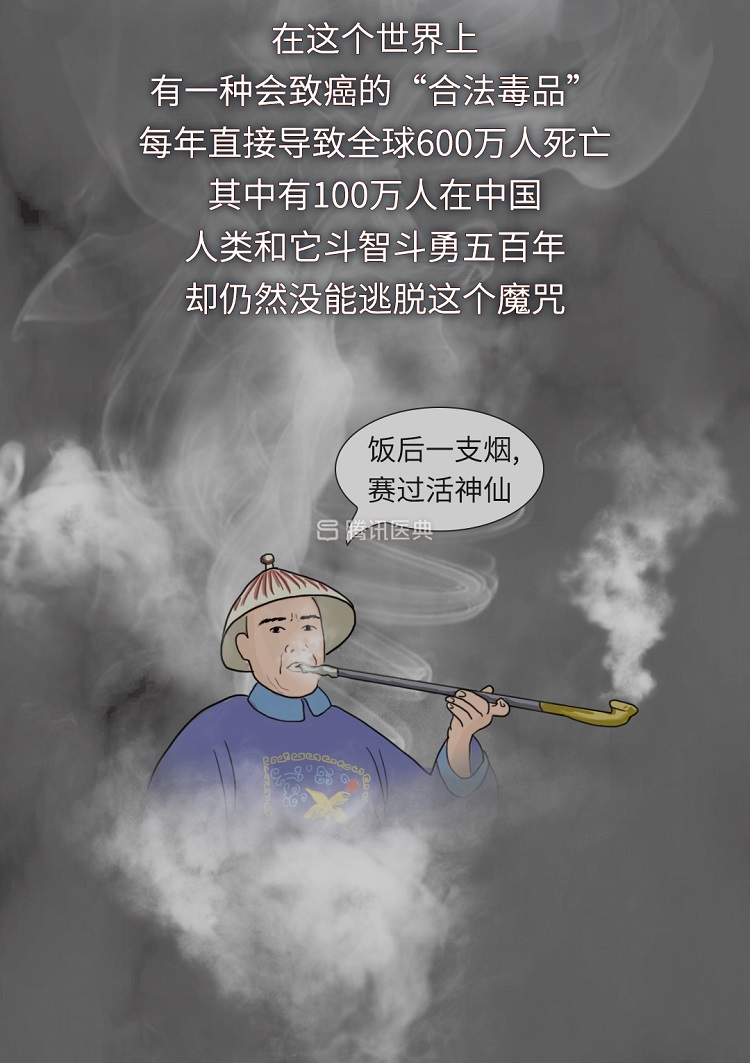


Uncle Deng answers questions after class:
1. Why do some people live to be 90 years old even though they have always smoked?
1.
This is a probability question.
It’s a question of probability. There is survivorship bias in everything, and just because you see it as an example doesn’t mean it’s the same in the big data.
What is known:
For every 100,000 people who smoke in China, 150 die of lung cancer.
And for every 100,000 people who don’t smoke, only 50 die from lung cancer.
You only see the 90,000 or so remaining smokers who don’t die from lung cancer, but you miss a more obvious pattern –
Smokers are three times more likely to die from lung cancer than nonsmokers.
There’s not enough of that number to go around? And that’s just the death rate. If you count the prevalence, it’s 13 to 23 times greater.
And 8 out of 10 men who die of lung cancer smoke, and 4 out of 10 women smoke.
This rate is much higher than the Chinese male smoking rate of 52.1% and the Chinese female smoking rate of 2.7%.
Other tobacco-related diseases are similar.
Is smoking really “doing good for the country”?
In 2014, for example, China’s tobacco tax revenue was 105.176 billion yuan.
But according to the World Health Organization, the total economic cost of tobacco use in China in 2014 was about 350 billion yuan.
Among these, the direct loss from treating tobacco-related diseases was 53 billion yuan, while the indirect loss (including lost productivity from smoking-related diseases) was about 297 billion yuan, more than five times the direct loss and 0.55% of that year’s GDP.
Also, this report predicts that if smoking rates in China remain high, the number of people dying from tobacco will increase to 2 million by 2030 and 3 million by 2050, and 200 million Chinese will die from tobacco-related diseases within this century!
Are you clear on this long-term calculation?
What to do when the process of quitting feels hard?
Withdrawal symptoms such as dizziness, headache, anxiety, hunger and thirst, and depression can occur at 2 weeks of quitting, and are the most dangerous time to relapse.
This is the time to hold steady, try to go to non-smoking places like movie theaters and malls, and seek support from friends and family.
If necessary, you can also call the National Quitline at 400-888-5531 or the Public Health Service at 12320. reading more books about quitting smoking can also help.
An excerpt from an online user’s real feeling after quitting smoking:
I feel that quitting smoking has brought me only one thing: freedom! A freedom I haven’t experienced in 20 years!
I’m no longer anxious about how many cigarettes are left in the box! I’m no longer anxious about how long it will take for the plane to land! I’m no longer anxious about why the movie isn’t over! I’m no longer anxious about why the night is so long! I’m no longer anxious that the convenience store downstairs is closed!
And how did I quit smoking? It was because one day I suddenly realized that I wasn’t just addicted to cigarettes, I was giving tobacco the keys to the cage that held me captive! (via Lao Qiang)
I hope you can find such freedom again too.