Post-operative rehabilitation exercise instructions
After breast cancer surgery, especially after axillary clearance, the movement of the affected arm and shoulder is not as free as before, and many patients respond with muscle stiffness, limited shoulder movement, arm tension due to scar contraction, and even swelling of the arm, shoulder and neck due to lymphedema, etc. In order to improve overall health and restore normal motor function, postoperative rehabilitation exercises.
When to start exercising
Ideally, you can start exercising on the first day after surgery, and if you have pain, you can take pain medication 20 to 30 minutes before each exercise to help relieve the pain. It is best to perform each exercise with deep breathing and to use as much as you can, not all of the exercises must be done.
What are some tips for exercise?
Start and finish your workout progressively, with warm-up and cool-down exercises to give your body a chance to adapt. Exercise not too fast to avoid injuries caused by fast high-frequency exercise, it is recommended to repeat each exercise 10 times, 3 to 5 times a day. The exercise process, together with deep breathing, can effectively relieve the uncomfortable feeling. The exercise will feel like stretching, but should not feel painful, and if there is significant pain or swelling, promptly communicate with your healthcare provider or rehabilitator to ensure reasonable post-operative rehabilitation exercises.
When to stop exercising
When fluid builds up at the surgical site, when the wound becomes infected, when pain increases during practice, or when you still feel pain after finishing exercise, stop exercising and talk to your healthcare provider or rehabilitation staff as soon as possible to see if you need to adjust the amount of exercise or suspend exercise.
Tips
1. During exercise, there may be slight discomfort, which is normal, but if there is pain, you need to talk to your healthcare provider or rehabilitator as soon as possible to see if you need to reduce the amount or range of motion, or stop exercising
.
2. It takes about 6 to 8 weeks to regain full arm movement with consistent practice. If after 8 weeks it is still difficult to regain full arm and shoulder movement, please talk to your healthcare provider or rehabilitation counselor
3. If you have had a mastectomy with breast reconstruction, do not lift your arm over your shoulder until the drainage tube is removed
.
Preparation for exercise
A deep breathing exercise before exercise can help relax the body and relieve discomfort and tightness around the surgical incision. Likewise during formal exercise, deep breathing exercises are needed to relieve discomfort.
How exactly do you do this? Choose a comfortable chair to sit in or lie on your back, inhale slowly and deeply through your nose, feel your chest and abdomen expand, hold for 2 seconds, then exhale slowly and let out the gas. Repeat this 4 to 5 times.

Exercises starting on the first day post-op
The following exercises are repeated 10 times per exercise, 3-5 times per day. The amount of exercise needs to be adjusted according to your physical ability and should not be forced.
1. Bend your fingers
Straighten the arm on the affected side and repeat “fist-straighten-fist” with the fingers
.

2. Bend your arm
Hand lightly clench your fist, then repeat “bend-straight-bend” for the small arm

3. Shrugging exercise
Standing or sitting with shoulders relaxed, inhale and shrug close to the ears – exhale and put back – inhale and shrug close to the ears again, and repeat

4. Shoulder drawing
Step 1: Stand or sit with shoulders relaxed and arms at sides of body
Step 2: Shrug your shoulders upward, then draw circles forward-down-backward-upward, repeat 5 times, then do it 5 more times in the opposite direction
Step 3: If there is some tightness in the incision or chest, start with smaller circles, and as the tightness decreases, the circles can get larger
Tip: During this process, the shoulders may feel tighter when they are backward than when they are forward, and this will get better with practice

5. Arms up
Step 1: Cross your arms in front of your chest, palms facing inward, elbows up, and slowly lift your arms upward until you feel a slight stretch, but no pain
Step 2: Hold for 5 to 10 seconds, then slowly return to the starting position and repeat 5 to 10 times

6. Squeeze the scapula
Step 1: Standing or sitting position with arms at sides of body
Step 2: Move your arms backwards, driving your shoulder blades backwards to squeeze gently
Step 3: Hold for 5 to 10 seconds and slowly return to the original position

Exercises added from the second postoperative week
The following exercises are repeated 10 times per exercise, 3-5 times per day. The amount of exercise needs to be adjusted according to your physical ability and should not be forced.
7. Arm raises
Step 1: Lie on your back, cross your arms in fists, keep your elbows straight, and slowly raise your hands above your head until you feel a stretch
Step 2: Hold for 5 seconds, then gently lower your arms
Tip: After a period of time, you can switch to a seated position, and your hands can change from crossed fists to holding a long stick in your hands, and the distance between your hands can change from shoulder-width to later slightly wider than shoulder-width

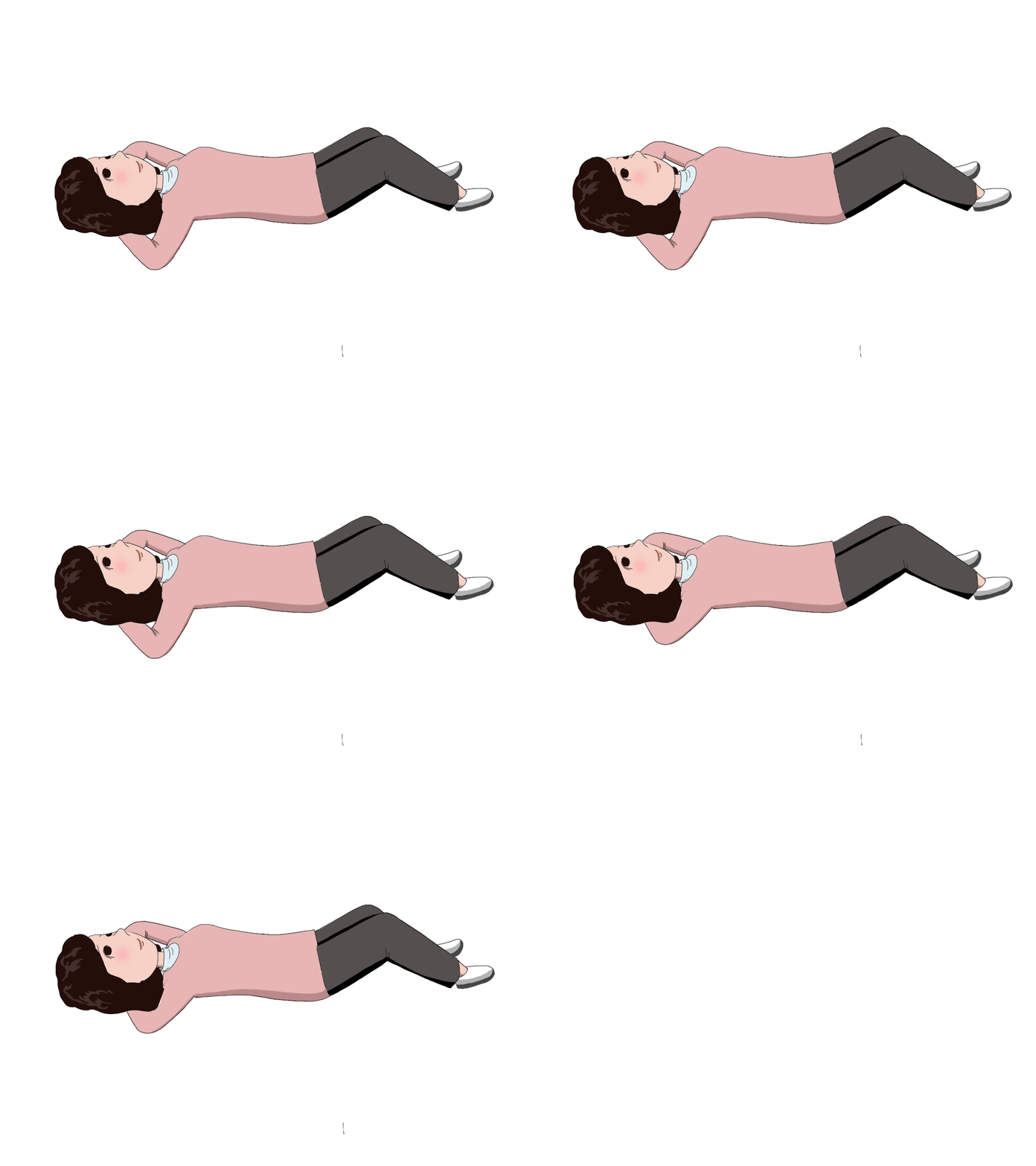
8. Supine chest expansion
Step 1: Lie on your back with your hands behind your head and your elbows pointing to the ceiling
Step 2: Open both elbows to the sides, press them against the bed until you feel a stretch, hold for 5-10 seconds, then slowly return to the starting position

9. Elbow thrusts
Step 1: Lie on your back with your hands behind your head and your elbows naturally open
Step 2: Gently press your elbows to the floor or bed until you stop when you start to feel discomfort
Step 3: Hold for 10 seconds, then relax
10. Slowly swing your arms
Step 1: Lie on your back with your arms at your sides and your elbows straight
Step 2: Move your arms up until they are above your head, then slowly return along the same path

11. arm climbing wall
Wall climbing with both hands: face the wall, touch the palms of your hands to the wall, and “climb” as far up as you can with your arms until you feel a stretch but no pain (the affected arm may not be as high as the healthy side), hold for 5 to 10 seconds, then “back” down. Back
One-handed wall climbing: stand sideways, with the affected side near the wall, and “climb” the affected arm as far up as possible until there is a stretch but no pain, hold for 5-10 seconds, then “back” down
Tip: Be sure to move slowly throughout the exercise

12. Back Climbing Exercises
Step 1: Sit or stand with your hand behind your back and hold the affected hand with the other hand, or if both breasts have been operated on, use the arm that moves easiest to hold the other
Step 2: Slowly slide your hand upward, moving it as far as possible to the center of your back. If you feel tension around the incision, stop in this position and do a deep breathing exercise. If the tension decreases, slowly slide your hand upward, if it does not decrease, do not slide it upward again
Step 3: Hold the highest position possible, at which point there is a slight stretch in the shoulder area, and slowly lower your hand after 1 minute

13. Side-bending exercise
Step 1: Sit in a chair with your hands clasped on your knees
Step 2: Slowly raise your arms above your head
Step 3: Bend your waist to the right and move your body to the right, at which point you can use your right hand to gently pull your left arm to the right
Part 4: Hold for 5 seconds, then slowly return to the starting position
Part 5: Repeat this stretch to the left side, using your left hand to bring your right arm to the left

Scar Massage
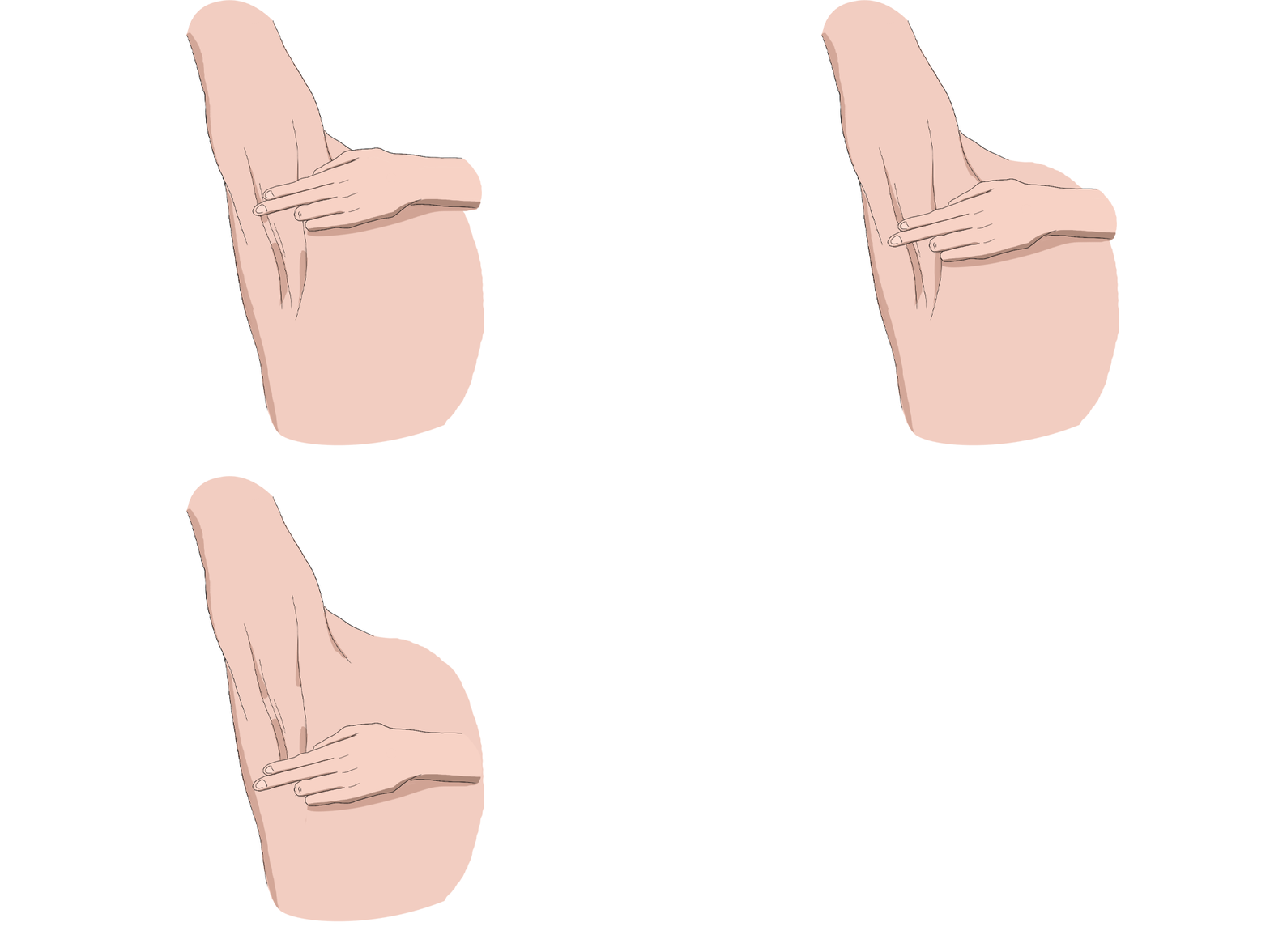
Massage begins with 2-3 fingers on the scar, gently moving the skin in all directions, then move the fingers to the area around the scar and repeat the massage. Massage once a day for 5-10 minutes each time, taking care not to squeeze the fatty tissue during the massage.