
A breast exam performed by a physician is called a breast clinical exam and is usually the first step experienced after a mammography visit and can also be part of a routine physical exam. Women who have breast implants should also have a routine breast exam.
Why should I have a mammogram?
The purpose of a mammogram is to: detect in a timely manner possible lumps or abnormal changes in the breast, such as breast cancer, mastitis or fibroids, and other breast conditions that may require treatment.
What do I need to do to prepare for the exam?
A visit for a breast exam is usually recommended 1 to 2 weeks after your period, when pressure on the breast is less likely to be painful. Before the exam, tell the provider if you have:
- A new lump or abnormal change in the breast, including a change in the appearance of the nipple, fluid spillage, or sudden nipple invagination. Some women have nipples that were originally sunken into the breast, which is called nipple invagination, and for these women, this is normal.
- Pain in one breast, especially if the pain is not related to menstruation.
- Pregnancy or possible pregnancy.
- Breastfeeding.
- Breast implants.
- Breast implants.
- Has had a breast biopsy.
- Menopausal.
- Are receiving hormone therapy.
- Has had breast cancer or has a relative with breast cancer.
How does your doctor perform a mammogram?
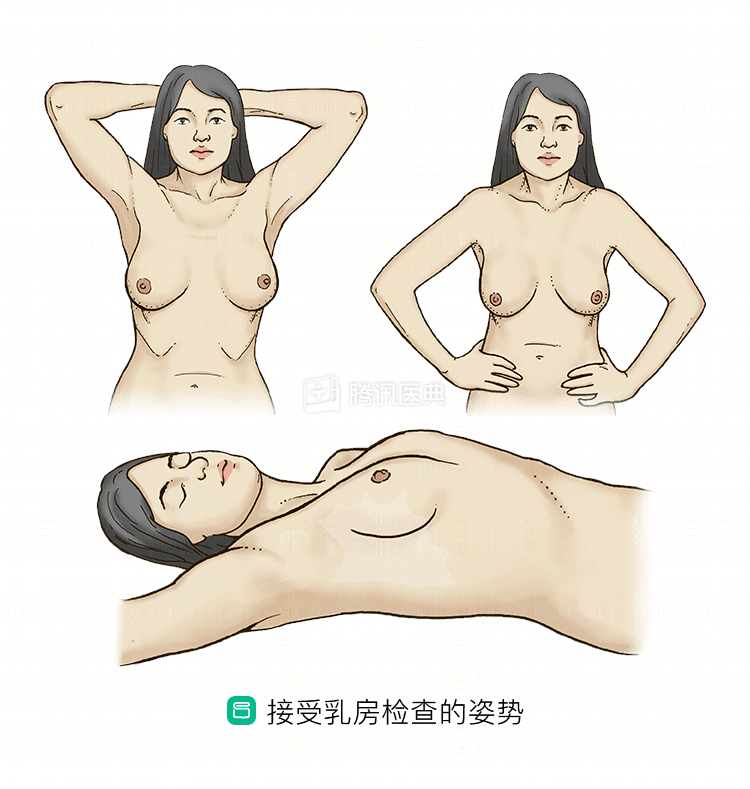
The doctor will first ask a number of questions, including symptoms and the presence of other diseases. During the exam, the person will need to remove clothing above the waist and may be asked to raise their arms above their head, place their hands on their hips, or lean forward to press their hands against each other, holding these positions to keep the deep breast muscles tense during the exam. It may also be necessary to lie on the examination bed with the arms behind the head.
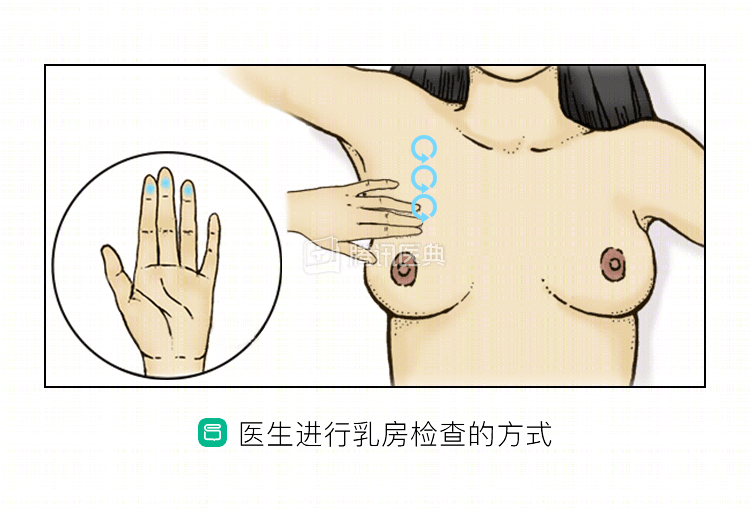
The doctor will examine each side of the breast, looking for breast size, skin changes, etc. He or she will also gently press on the breast to look for abnormalities such as lumps and areas of pain, and gently press on the nipple to see if there is fluid. The doctor will also examine the area around the armpits and collarbone for abnormal lumps, which may be enlarged lymph nodes.
Clinical breast exams themselves usually do not cause any discomfort and are not risky.
What conditions need to be taken seriously?
During a clinical breast exam, your doctor may recommend further testing if the following are found:
- A hard lump or thickened area in one breast;
- Change in breast or nipple color or change in feel, including a fold, indentation, thickening, or crinkling, or a granular, linear, or thickened area felt when pressed;
- A nipple that is indented into the breast, with a rash or pain;
- A lump is found that is painful to touch and has a red or warm surface;
- Spilling of bloody or milky fluid even without nipple stimulation.
When an abnormality is found, your doctor will decide whether to do X-rays, ultrasound, magnetic resonance imaging (MRI), breast biopsy, etc., taking into account age and any family history of breast cancer.
Knowing the above will help you cooperate with your doctor during the exam, but breast exams are not set in stone, and following your doctor’s orders and cooperating with the process is the key to keeping your breasts healthy.