The famous businesswoman is on fire again for claiming that her rice cooker cooks rice that is “open to eat and does not raise blood sugar”.
The rice cooker she is promoting, known as the low-sugar rice cooker or sugar-reducing rice cooker, first started in Korea and is popular in China, Japan and Korea.
In the propaganda, eating rice cooked in this rice cooker can achieve the miraculous effect of controlling diabetes, losing weight and slimming, is it really so effective, or is it another round of IQ tax? Let’s analyze it.
What exactly is “leached/deoxygenated” rice?
What is “drained” rice?
It’s really just rice.
In the promotional materials of these sugar-reducing rice cookers, the rice they produce is called “drained/deoxygenated” rice.
According to the working principle of these rice cookers, it is very simple to cook drained/deoxygenated rice, which is half-cooked rice, drain the rice soup, pick up the half-cooked rice and steam it further. The total starch content of the rice made this way will be reduced because some of the starch in the rice is dissolved in the rice broth and drained off.
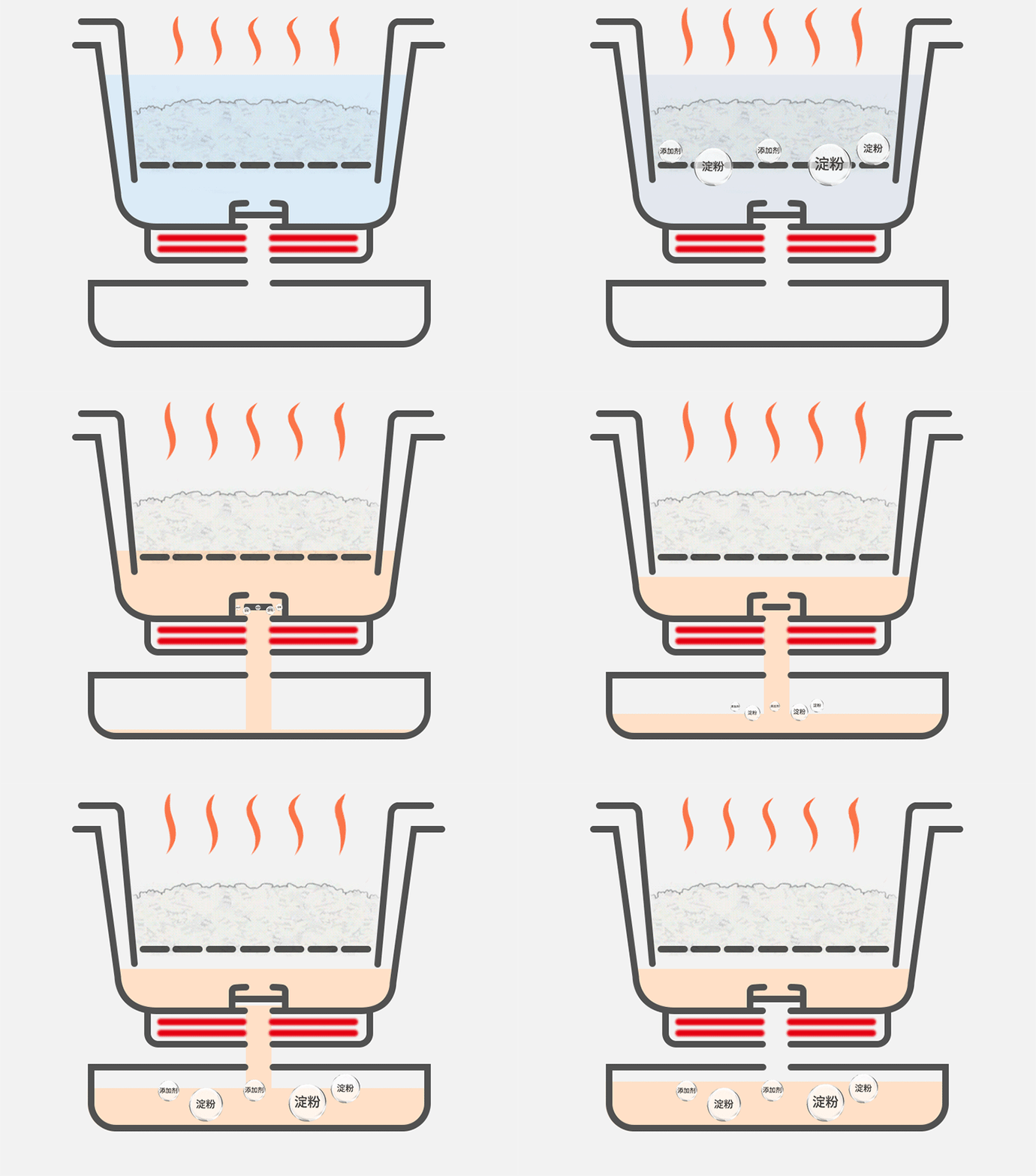
(A description of how a brand of sugar-reducing rice cooker works, source: Internet)
Actually, this method is not new. It’s the equivalent of allowing someone to eat the same amount of rice while consuming less starch, but still having almost the same feeling of fullness, thus providing blood sugar control.
In many parts of China, rice is made in this way on a daily basis, and people call this method “steaming rice” or “fishing rice”, or “leaching rice” or “
In many parts of China, this is how rice is made on a daily basis.
What is the sugar that is being leached or stripped?
What is taken off is part of the branched chain starch in the rice.
The main component of rice is starch, and starch is a polysaccharide made up of glucose as a unit, so imagine a bunch of glucose held together.
There are two types of starch, depending on how these glucose are connected, that is, how they hold each other together:
- One is straight-chain starch, which is relatively slow to digest and has a slow and low rise in blood sugar after eating it;
- The other type is branched chain starch, which is relatively fast to digest and results in a rapid and high rise in blood sugar after eating.
So rice with low branched-chain starch content is better for maintaining stable blood sugar after a meal than rice with high branched-chain starch content, and thus for sugar control.
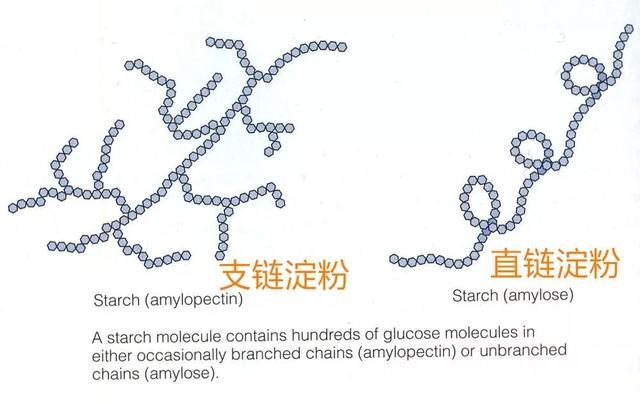
(Starch is divided into branched chain starch and straight chain starch depending on how glucose is polymerized, source: internet)
During the rice steaming process, the branched starch will keep dissolving in the water as the water temperature rises. When rice soup separation is performed at this time, it allows the branched chain starch to go with the soup, thus reducing the amount of branched chain starch in the rice and weakening the rice’s ability to raise blood sugar.
Whether it’s the folk method of “steaming rice, fishing rice, draining rice, or rice in a retort” or the “desugarized rice” steamed in a sugar-reducing rice cooker, this principle is utilized.
Can a sugar-reducing rice cooker really lower blood sugar?
Can a sugar cooker really lower blood sugar?
It does help in controlling elevated blood sugar. However, the effect is not as invincible as advertised. On the contrary, eating too much can still cause a significant increase in blood sugar.
First of all, there is no such thing as a food that lowers blood sugar. If you eat foods that break down glucose like glucose and starch, your blood sugar will rise, just to a greater or lesser degree. The lower the GI value, the more stable the blood sugar; the higher the GI value, the more likely it is to trigger a significant increase in blood sugar.
The sugar-reducing rice cooker does lower the GI of rice, but we need to question whether this reduction alone is clinically meaningful for diabetics, because after all, the amount of branched-chain starch that the cooker can reduce is very limited, and the amount of straight-chain starch and branched-chain starch varies by category of rice.
In a nutshell, even if all branched-chain starch is removed, straight-chain starch can be digested and broken down into glucose, causing a rise in blood sugar.
No matter what the food is, even if it’s labeled “low GI” and diabetic-friendly, once the “seal” is lifted from the intake restriction, excessive intake can cause an uncontrollable rise in blood sugar.
So, we can say that the sugar cooker can help control sugar for a little bit, but the key to a diabetic’s diet is still to control the total amount of carbohydrates consumed in a single meal, based on their blood sugar and medications.
As mentioned earlier, the main component of rice is starch, and starch is made up of glucose held together. Straight-chain starch makes up about 30% of total starch, and branched-chain starch makes up about 70% (but the amount of straight-chain and branched-chain starch varies quite a bit between different kinds of rice, for example, japonica and indica rice are different, with japonica rice having slightly more straight-chain starch, almost 30+%, indica rice having less than 30%, and glutinous rice having no straight-chain starch).
According to current propaganda from major brands of sugar-reducing rice cookers, they are able to reduce branched-chain starch by about 20% during the cooking process. So for rice, the total starch content, or sugar content, is really reduced.
Reducing branched-chain starch does help control blood sugar, but it doesn’t lower it. When starch is eaten, it is digested and hydrolyzed by the body’s amylase enzymes, and the starch (whether straight-chain or branched-chain) is broken down into glucose and absorbed by the body, and blood sugar rises.
The only good thing is that because there are relatively fewer branched-chain starches, compared to regular rice, leached-sugar desugarized rice raises blood sugar more gently when eaten, which is beneficial for people with diabetes who need to control their blood sugar levels smoothly.
So, as long as the rice is eaten, blood sugar will rise. Rice that can be eaten openly without raising blood sugar, and a rice cooker that can cook this anti-science rice, does not exist.
Is there any harm in drained/deoxygenated rice?
Not bad, probably just bad and cumbersome.
If the sugar-reduced rice cooker drains off the branched-chain starch, the rice loses some of its bulk and stickiness and becomes grainy, hard and flexible, but no longer soft.
But there are other cost-effective ways to control the rate of starch digestion in our staple foods.
For example, in replacing as much refined rice as possible with coarse grains, such as brown rice, buckwheat, mixed beans, corn, etc. The company’s main goal is to provide a better solution to the problem by reducing the number of people in the marketplace who are not only interested in the product, but also in the product.
In general, the current so-called sugar-reducing rice cooker itself has a scientific basis, and also has a positive effect on sugar control. But some, such as TV shopping, merchant customer service, and well-known entrepreneurs, like to blow the product toward all kinds of metaphysics.
This is also a common problem in China, where every time a new product comes out, businesses like to blow the whistle on the market. The company’s main focus is on the development of a new product, the blender, which is a new product that can break down the cell walls of plants and break down nutrients at the molecular level, but in fact, as soon as the juice comes out, the cell walls are broken.
Returning to the topic of sugar reduction rice cooker, steaming rice, fishing rice, draining rice, retort rice is really not so complicated tools, traditional cooking utensils to understand? 39 yuan to send rice spoons, soup spoons, steaming cloth also 包邮 oh pro.
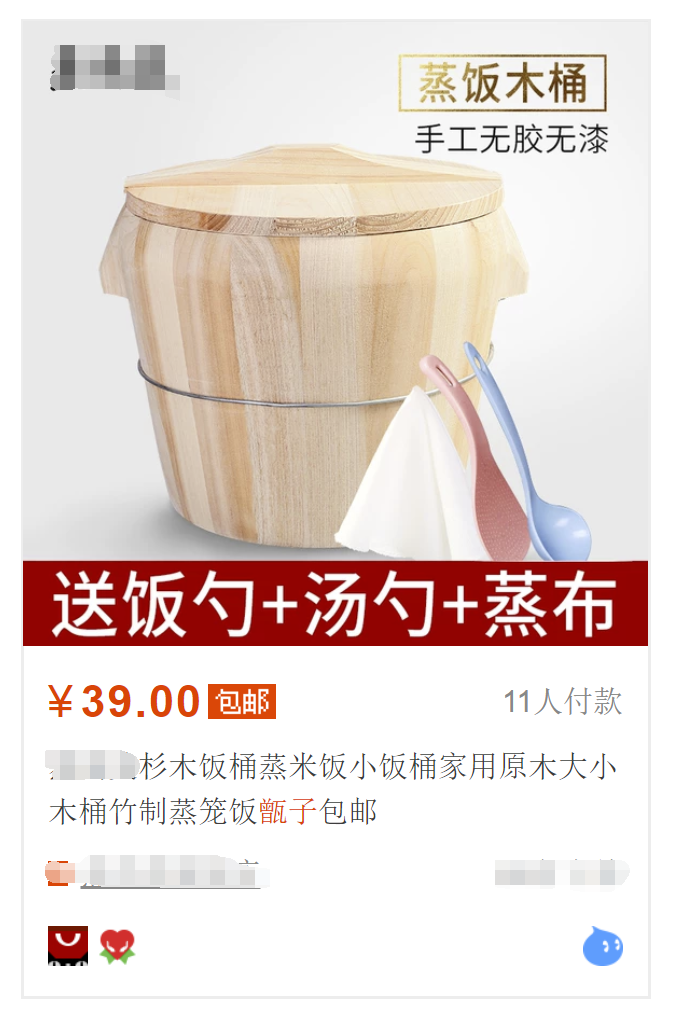
(Source: web)
I believe that as the public becomes more scientifically literate, the promotion and publicity of these products will slowly return to their roots.