
What is a prophylactic mastectomy?
Preventive mastectomy is a procedure to reduce the risk of cancer by removing one or all of the breast, most commonly in the form of a bilateral mastectomy, where the skin of the breast may be preserved, as well as the nipple. Breast reconstruction is also an option after surgery to maintain the good shape of the breast.
Although prophylactic mastectomy was discussed as early as the 1920s, it was not common until the 1960s and 1970s, when breast prosthesis reconstruction became feasible and the medical community had a clearer understanding of the risk of breast cancer in some families, before it became more common.
Who needs to consider prophylactic mastectomy?
The important thing to say first is that only people at high risk for hereditary breast cancer need to consider prophylactic mastectomy. About 5% to 10% of breast cancers are thought to be hereditary, resulting from inheriting a genetic variation (mutation) in a gene from a parent, called a tumor susceptibility gene. The earliest genes identified for hereditary breast cancer were BRCA1 and BRCA2, and together, positive mutations in both explain about 45% of hereditary breast cancers, but only 1.5% to 3% of overall breast cancers.
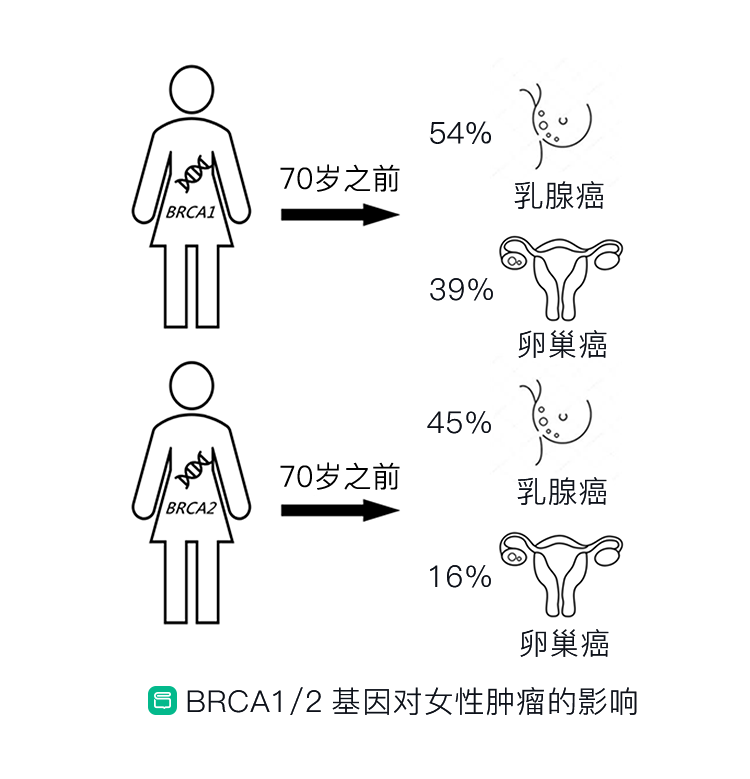
According to US data, women who carry a mutation in the BRCA1 gene are about 54% likely to develop breast cancer and 39% likely to develop ovarian cancer by age 70, and women who carry a mutation in the BRCA2 gene are about 45% likely to develop breast cancer and 16% likely to develop ovarian cancer by age 70. However, no large-scale population statistics are available in China. It is important to note that not every member of a family with these mutations will inherit them, and only family members with a known mutation detected will have an increased risk of breast cancer.
Women who carry the BRCA1 and BRCA2 mutations can reduce their risk of breast cancer through regular screening, prophylactic surgical excision, and chemoprevention.
- Earlier, more frequent, and more careful screening is the most important tool. These women should begin to build awareness of breast health at 18 years of age and begin to have annual or semiannual breast exams as well as B-ultrasound and mammograms at age 25. Some experts also recommend the use of breast magnetic resonance imaging (MRI) to improve the sensitivity of breast cancer screening.
- Chemoprevention is the use of drugs to reduce the risk of breast cancer or breast cancer recurrence. For example, one study found that tamoxifen may reduce the risk of breast cancer in women who carry the BRCA1/BRCA2 mutation.
- Prophylactic mastectomy is a more aggressive preventive measure, a procedure that has received a lot of attention for being used by Angelina Jolie.
Preventive mastectomy, what are the risks and benefits?
Foreign studies have shown that bilateral prophylactic mastectomy is highly effective in reducing the risk of breast cancer, reducing the risk of death from breast cancer by 56%. In 214 high-risk women with bilateral prophylactic mastectomy followed by US researchers, only 3 breast cancers occurred in 14 years, compared with 30 in high-risk women in this time period empirically. This shows that prophylactic mastectomy reduced the risk of breast cancer by 90% and also significantly reduced the number of deaths from breast cancer. Other studies have found that for women who have had breast cancer and are at risk of developing cancer in the other breast, contralateral prophylactic mastectomy significantly reduces the risk of recurring breast cancer. In men who carry the BRCA1/BRCA2 mutation, there are no studies that demonstrate that prophylactic mastectomy reduces the risk of breast cancer.
Even so, it should be noted that prophylactic mastectomy is not necessary for all women with BRCA1/BRCA2 mutations, and prophylactic excision does not completely prevent breast cancer. Because it is not practical to remove all breast tissue, breast cancer may still develop in the small amount of remaining breast tissue. And prophylactic mastectomy itself may pose potential risks of surgery and general anesthesia, and the possible psychological and social effects need to be considered. Patients may need to communicate fully with their physicians and carefully consider the possible benefits and risks associated with surgery before making a decision.
The decision to undergo prophylactic excision of breast cancer is a major and complex one, even for women with a clear family history, who carry the BRCA1/BRCA2 mutation, or who have already had breast cancer on one side, and is a matter of thoughtful consideration.