Approval Date:20072007Year01Month :Arial”>29day
Revision Date:2007Year10Month04day,20082008year06month2727 day,2010year04month3030monthmonthday,2010year 09month23day,2013year0505month02day

Nifedipine Controlled Release Tablets Instructions
Please read the instructions carefully and Use under the guidance of a physician.
Do not bite, chew or break the tablets. After its active ingredient is absorbed, the empty tablet is excreted intact through the intestinal tract.
[
Drug Name
]
Generic Name: Nifedipine Controlled Release Tablets
Trade name: Bexinom® (Adalat®)
English Name:Nifedipine Controlled-release Tablets
Hanyu Pinyin:Xiaobendiping Kongshi Pian
[
Component
]
Main Ingredient: Nifedipine
Chemical name:
2,6-dimethyl-4-(2-nitrophenyl)nitrophenyl family:Arial”>-1,4-dihydro< -3,5Dimethyl pyridinedicarboxylate
Chemical structure formula:
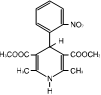
Molecular Formula:C17 H18N2O6
Molecular weight: 346.34
[
Traits
]
This product is a round, biconvex, hard, rose-red film-coated tablet.
[
Indications
]
1. Hypertension
2. Coronary heart disease
Chronic stable angina pectoris(Exertional angina)
[
Specifications
]
30mg
60mg
[
Dosage
]
Treatment should be administered on an individual basis whenever possible. Depending on the patient’s clinical condition, different basal doses of medication should be given.
The following doses are recommended for adults unless specifically prescribed by the physician:
1. Hypertension:
Baisin Tong® 30mgtablet once30mg(once1piece), one day1 times
Baisin Tong® 60mgtablet once60mg(once1piece), one day1 times
2. Coronary artery disease:
Chronic stable angina pectoris(Exertional angina)
Baisinto® 30mgtablet once30mg(once1piece), one day1 times
Baisin Tong® 60mgtablet once60mg(once1piece), one day1 times
The usual initial dose of treatment is daily30mg.
withCYP 3A4inhibitors orCYP 3A4inducers may require Adjust the dose of nifedipine or do not use nifedipine (see [Drug Interactions]).
Course of therapy: The duration of dosing should be determined by the physician.
Dosing: Usually the entire tablet is swallowed with a small amount of liquid and the duration of dosing is not limited by meal times. Grapefruit juice should be avoided (see [Drug Interactions]).
Special Populations
Patients with hepatic impairment
based on Dosing in patients with mild, moderate, or severe hepatic impairment based on Child Pughscore should be carefully monitored and may require dose reduction. The pharmacokinetics of nifedipine have not been studied in patients with severe hepatic impairment (see[Cautions]and[Pharmacokinetics ]).
[
Adverse effects
]
According to Frequency of CIOMSIIIcategory (placebo-controlled study: nifedipineN=2661; placeboN=1486; as of2006year2month22days;ACTIONstudy: nifedipineN=3825; placebo N=3840), based on clinical studies with the following adverse drug reactions:
The frequency of adverse reactions under “common” is lower than3%, except for edema (9.9%) and headache (3.9%) outside.
The following table summarizes the incidence of adverse reactions based on reported drugs containing nifedipine. Within each incidence grouping, adverse reactions are listed in descending order of severity. Incidence was defined as common (≥1/100to& lt; 1/10), rare (≥ 1/1,000to< 1/100< span style="font-family:isoline">)
and rare (≥1/10,),000to< 1/1,000). Adverse reactions that were identified only during ongoing post-marketing surveillance and for which the incidence could not be estimated are listed in the “unknown” column.
|
Clinical Description |
Common |
rare |
Rare |
unknown |
|
Abnormalities of the blood and lymphatic system |
Granulocyte deficiency Leukopenia |
|||
|
Immune system disorders |
Pathological reactions Metaplastic edema/Angioedema (including laryngeal edema1) |
Itching Hives Rash |
Allergies/type of allergic reaction |
|
|
Mental Disorders |
Anxiety Sleep abnormalities |
|||
|
Metabolic and nutritional abnormalities |
High blood sugar |
|||
|
Neurological disorders < /td> |
Headache |
Glare Migraines Dizziness Tremors |
(Bilateral) sensory retardation |
Sensory retardation Drowsiness |
|
eye abnormalities |
Visual anomalies |
eye pain |
||
|
< span style="color:black; font-family:equine; font-size:9pt">Heart abnormalities |
Tachycardia Palpitations |
Chest pain (angina) |
||
|
Vascular abnormalities |
Oedema Dilated blood vessels |
Low blood pressure Fainting |
||
|
respiratory, thoracic and mediastinal abnormalities |
Epistaxis Nasal congestion |
Hard to breathe |
||
|
Constipation |
Gastrointestinal and abdominal pain Nausea Indigestion Bloating Dry mouth |
Gum hyperplasia |
Gastric Stones Difficulty swallowing Intestinal obstruction Intestinal ulcer Vomiting Gastroesophageal sphincter dysfunction |
|
|
Increased transient liver enzymes |
Jaundice |
|||
|
Skin and subcutaneous tissue Symptoms |
erythema |
Toxic epidermolysis bullosa Photosensitive metaplasia Palpable purpura |
||
|
Musculoskeletal and connective tissue abnormalities |
Muscle spasms< span style="font-family:Arial"> Joint enlargement |
Joint pain Myalgia |
||
|
Kidney and urinary tract abnormalities |
Polyuria Difficulty urinating |
|||
|
Reproductive System Abnormalities |
Erectile dysfunction |
|||
|
General discomfort and administration site symptoms< /p> |
Feeling uncomfortable |
Non-specific pain Chills |
1 Possibly life-threatening
In dialysis patients with malignant hypertension and hypovolemia, a significant drop in blood pressure can be caused by vasodilation.
[
Taboo
]
–This product is contraindicated in persons with known hypersensitivity to nifedipine or any of the ingredients in this product.
–Nifedipine is contraindicated in cardiogenic shock.
–is contraindicated in patients withKOCKsmall sacs(Ileostomy after rectal colectomy)).
–Nifedipine does not achieve effective blood levels when combined with rifampin due to enzyme induction. Thus, it should not be used in combination with rifampin.
–Nifedipine is contraindicated in women during 20weeks of pregnancy and during lactation.
[
Note
】
1.For patients with heart failure and severe aortic stenosis, when blood pressure is very low(systolic blood pressure<90mmHg of severe hypotension), this product should be taken with great caution.
2.This product There are non-deformable substances, so caution should be exercised when using this product in patients with severe gastrointestinal strictures because of the possibility of obstructive symptoms. The occurrence of gastric calculi is very rare, and if they do occur they may require surgical treatment.
3.There have been case reports of patients without gastrointestinal disorders who presented with symptoms of obstruction.
4.Line /span>Xline barium meal angiography, this product can cause false positive results (mistaken for polyps due to filling defects).
5. Based on Child Pughscores in patients with mild, moderate, or severe hepatic impairment should be carefully monitored and may require dose reduction. The pharmacokinetics of nifedipine have not been studied in patients with severe hepatic impairment (see[Dosage]and[Pharmacokinetics ]). Therefore, nifedipine should be used with caution in patients with severe hepatic impairment.
6. Nifedipine is metabolized and eliminated by the cytochromeP450 3A4system. Therefore drugs that inhibit or induce effects on the cytochromeP450 3A4system may alter the first-pass effect or clearance of nifedipine (see [Drug Interactions] for details). Therefore weak to moderate inhibitors of the cytochromeP450 3A4system may increase the plasma concentration of nifedipine, for example:
– macrolide antibiotics (e.g., erythromycin)
-anti-HIVprotease inhibitors (e.g. ritonavir)
– Pyrrole antifungals (e.g., ketoconazole)
-antidepressants nefazodone and fluoxetine =”font-family:Arial”>
-Quinupristin/Dafoputin
-valproic acid
– Cimetidine
Nifedipine should be monitored when combined with the above drugs and a reduction in the dose of nifedipine should be considered if necessary.
7.Effect on Effects on the ability to drive and operate machinery: The response to medications varies from person to person and therefore may affect the ability to drive and operate machinery, this effect is particularly noticeable at the beginning of treatment, when changing medications and when drinking alcohol.
8.This product has a non-absorbable shell, which allows the drug to be slowly released into the body for absorption. When this process is complete, intact empty tablets can be found in the stool.
9. Nifedipine controlled release tablets contain photosensitive active ingredients, therefore this product should be stored away from light. The tablets should be protected from moisture and should be taken immediately after removal from the Aliplast.
[
For pregnant and lactating women
]
Pregnancy and Fertility
Pregnancy20weeks pregnant is contraindicated.
Insufficient studies are available for pregnant women.
Animal studies have shown embryotoxicity, fetal toxicity and teratogenicity.
Although an increased incidence of perinatal asphyxia, cesarean section, preterm delivery, and intrauterine growth retardation has been reported, the available clinical evidence does not suggest a specific prenatal risk. It is unclear whether these reports are caused by underlying hypertension and its therapeutic or specific pharmacologic effects.
The available information is not sufficient to exclude adverse effects on the fetus and newborn. Therefore, it should be carefully weighed when used in women who are more than 20weeks pregnant and should be considered only when other treatments are not indicated or are not effective.
When nifedipine is given to a pregnant woman with concomitant sedation of magnesium sulfate, blood pressure may be too low to affect the mother and fetus and should be closely The blood pressure should be monitored closely.
In individual cases of in vitro fertilization, calcium antagonists of the nifedipine class have been associated with reversible biochemical alterations in the sperm head, thereby impairing sperm function. Those men who undergo repeated unsuccessful in vitro fertilization should consider nifedipine calcium antagonists as a possible cause when no other cause can be found.
Lactating women
Nifedipine can pass into breast milk. Because there are no reports of what effects this may have on the infant, when nifedipine must be taken during breastfeeding, it is important to first stop breastfeeding.
[
Medication for Children
]
No safety and efficacy data are available for pediatric use.
[
Medication for the Elderly
]
No information is available on the use of this product in elderly patients.
[
Drug Interactions
]
Medications affecting nifedipine:
Nifedipine passes through cytochromes located in the intestinal mucosa and liver style=”font-family:Arial”>P450 3A4system for metabolic elimination. Thus drugs that inhibit or induce effects on the cytochromeP450 3A4system may alter the first-pass effect (after oral administration) or clearance of nifedipine.
The extent and duration of interaction should be considered when combining nifedipine with:
Rifampicin
Has a strong induction of cytochromeP450 3A4system, and if combined with it, the bioavailability of nifedipine will be reduced and its efficacy will be affected. Therefore, the combination of nifedipine with rifampicin is prohibited.
Nifedipine is associated with the following cytochromesP450 3A4A weak to moderately potent inhibitor of the system should be combined with blood pressure monitoring and consideration should be given to reducing the dose of nifedipine if necessary:
Macrolide antibiotics (e.g., erythromycin)
No studies have been conducted on the interaction of nifedipine with macrolide antibiotics, and it is known that some Macrolide antibiotics are known to inhibit cytochromeP450 3A4mediated metabolism of other drugs. Therefore, a potential effect that could increase nifedipine blood levels when combined with nifedipine cannot yet be ruled out.
Although azithromycin is structurally a macrolide antibiotic, it has an effect on cytochrome style=”font-family:Arial”>P450 3A4system is not inhibited.
Anti--HIVprotease inhibitors (e.g. ritonavir)
Nifedipine has not yet been performed with anti-HIVclinical studies of possible drug interactions between nifedipine and antiprotease inhibitors. Such drugs are known to inhibit the cytochromeP450 3A4system. In addition, such drugs inhibit cytochromeP450 3A4mediated metabolism of nifedipine in vitro. Therefore, the possibility of increased nifedipine blood levels due to reduced first-pass effects and reduced exclusion when such drugs are used concomitantly with nifedipine cannot yet be ruled out.
Pyrrole antifungals (e.g., ketoconazole)
No clinical studies have been conducted on the interaction of nifedipine with pyrrole antifungals. Such drugs are known to inhibit the cytochromeP450 3A4system. Therefore the possibility of increased bioavailability of nifedipine due to reduced first-pass effect when given orally with nifedipine cannot yet be ruled out.
Fluoxetine
Clinical studies of possible drug interactions between nifedipine and fluoxetine have not been performed. Fluoxetine inhibits cytochromeP450 3A4mediated metabolism of nifedipine in vitro. Therefore the possibility of elevated nifedipine blood levels with concomitant use of these two drugs cannot yet be ruled out.
Nefazodone
Clinical studies of possible drug interactions between nifedipine and nefazodone have not been conducted . Nefazodone is known to inhibit cytochromeP450 3A4mediated metabolism of other drugs. Therefore the possibility of elevated nifedipine blood levels with concomitant use of these two drugs cannot yet be ruled out.
Quinupristin/Dafoputin
Nifedipine with Quinupristin/Dafoputin combination can lead to increased plasma concentrations of nifedipine.
Valproic acid
No studies have been conducted to determine if there is a potential interaction between nifedipine and valproic acid, but because valproic acid inhibits enzyme activity valproic acid inhibits enzymatic activity, which leads to increased plasma concentrations of nimodipine, a calcium channel blocker structurally similar to nifedipine, it cannot be ruled out that the combination of the two increases the blood levels of nifedipine, thereby improving efficacy.
Cimetidine
This drug inhibits cytochromeP450 3A4system, thus enhancing the antihypertensive efficacy by increasing the plasma concentration of nifedipine.
Cisapride
Cisapride in combination with nifedipine may increase plasma concentrations of nifedipine.
On cytochromeP450 3A4system-inducing antiepileptic drugs such as phenytoin, carbamazepine, and phenobarbital
Phenytoin induces cytochromeP450 3A4system. When combined with phenytoin, the bioavailability of nifedipine is reduced thereby leading to decreased efficacy. When the two drugs are combined, the clinical efficacy of nifedipine needs to be monitored and the dose of nifedipine needs to be increased if necessary. If the dose of nifedipine has been increased when the two drugs are combined, a reduction in the dose of nifedipine should be considered after discontinuation of phenytoin.
No studies have been performed to determine whether nifedipine has potential interactions with carbamazepine or phenobarbital, but because both carbamazepine and phenobarbital both induce enzyme activity that leads to lower blood levels of nimodipine, a calcium channel blocker structurally similar to nifedipine, it cannot be ruled out that combining nifedipine with carbamazepine or phenobarbital could reduce the blood levels of nifedipine and thus reduce efficacy.
Drugs affected by nifedipine:
Antihypertensive drugs
Nifedipine in combination with other antihypertensive drugs can enhance the antihypertensive effect of nifedipine, for example:
– diuretics
-β–receptor blockers
–ACEInhibitors,
-angiotensinIIreceptor antagonist
-other calcium antagonists
-α–adrenergic blockers
–PDE5Inhibitors,
-α–Methyldopa
Nifedipine with beta–receptor blockers when used concomitantly, because of the known worsening of heart failure in individual cases, patients must be strictly monitored.
Digoxin
Concomitant use with nifedipine results in decreased clearance of digoxin, thereby increasing the blood concentrations. Therefore, the blood levels should be monitored to prevent overdose and, if necessary, the dose should be reduced based on the digoxin blood level.
Quinidine
Quinidine concentrations decreased when nifedipine was taken concurrently with quinidine, or after discontinuation of nifedipine in In individual cases, the blood concentration of quinidine increased significantly. Therefore, when taking quinidine, the plasma concentration of quinidine should be monitored if nifedipine is added or discontinued, and the dose can be adjusted as prescribed by the doctor if necessary. Some authors have reported increased plasma concentrations of nifedipine in combination with quinidine, however, others have reported no pharmacokinetic changes in nifedipine.
Therefore, if patients already taking nifedipine are taking quinidine, blood pressure should be monitored closely and the nifedipine dose may be reduced if necessary. dose.
Tacrolimus
Tacrolimus through cytochromeP450 3A4system metabolism. Published data suggest that a reduction in the dose of tacrolimus is required in individual cases when combined with nifedipine. The blood levels of tacrolimus should be monitored when the two drugs are combined and the dose of tacrolimus should be reduced if necessary.
Drug-food interactions:
Grapefruit Juice
Inhibits cytochromeP450 3A4system. If combined with nifedipine due to reduced first-pass effect or reduced clearance may increase the blood concentration of nifedipine and prolong the duration of action of nifedipine, thereby enhancing the antihypertensive effect. This effect can last for at least 3days after the last dose in those who take grapefruit juice regularly.
Therefore grapefruit should be avoided while taking nifedipine/grapefruit juice.
No interactions:
Nifedipine with benazepril, doxazosin, orlistat, pantoprazole, ranitidine, talin The combination of lorrel, aminoglutethimide, and hydrochlorothiazide had no effect on the pharmacokinetics of nifedipine.
Anymalin: The combination of nifedipine and arymalin had no effect on the metabolism of arymalin.
Aspirin: Nifedipine in combination with100 mgaspirin in combination has no effect on the pharmacokinetics of nifedipine, and also, the combination of the two does not affect100 mg >Aspirin on platelet aggregation and bleeding time.
Isoquinuclidine: The combination of nifedipine and isoquinuclidine had no effect on the metabolic rate of isoquinuclidine.
Candesartan: The combination of nifedipine and candesartan had no effect on the pharmacokinetics of either.
Erbesartan: The combination of nifedipine and irbesartan had no effect on the pharmacokinetics of irbesartan.
Nifedipine in combination with omeprazole and rosiglitazone had no clinically relevant effect on the pharmacokinetics of nifedipine.
Other forms of interactions:
Nifedipine can cause a pseudo-elevation in the spectrophotometric value of urinary vanilloid mandelic acid, but< span style="font-family:Arial">HPLC determinations were unaffected.
[
Drug overdose
]
Symptoms
The following symptoms are seen in the presence of severe nifedipine poisoning:
Disorders of consciousness or even coma, decreased blood pressure, tachycardia/bradyarrhythmias, hyperglycemia, metabolic acidosis, hypoxemia, cardiogenic shock with pulmonary edema.
Rescues after adult overdose
In the treatment of nifedipine overdose, the first priority should be the elimination of the active ingredient and the restoration of cardiovascular status stability.
After administration of gastric lavage, small bowel irrigation may be given if necessary, especially in the management of poisoning from this and similar products (e.g., other extended-release tablets). This should be as comprehensive as possible, including enemas, in order to prevent absorption of the active ingredient.
Hemodialysis is of little significance because dialysis does not eliminate nifedipine but allows plasma replacement (high plasma protein binding, relatively low volume of distribution).
Bradyarrhythmias can be given beta family:Arial”>- sympathomimetic drug therapy, and for life-threatening bradycardia a temporary pacemaker may be placed.
Low blood pressure due to cardiogenic shock and arterial dilatation can be treated with calcium preparations (slow static push10% calcium gluconate10ml-20ml, repeated if necessary). Blood calcium may reach the upper limit of normal or be mildly elevated. If the blood pressure does not increase significantly after calcium application, sympathomimetic vasoconstrictors such as dopamine and norepinephrine should be considered at doses based on efficacy.
Caution should be exercised when rehydrating or replenishing blood volume because of the risk of cardiac overload.
[
Pharmacology and Toxicology
]
Pharmacological effects
Nifedipine is1,4dihydropyridine calcium antagonist. Calcium antagonists reduce the entry of calcium ions into cells via slow calcium channels. Nifedipine acts specifically on cardiomyocytes, coronary arteries, and smooth muscle cells of peripheral resistance vessels.
Nifedipine dilates coronary arteries, especially large vessels, and even sound vessels in areas of incomplete obstruction. Nifedipine also decreases the tone of coronary smooth muscle and prevents vasospasm. Ultimately, it increases blood flow in narrowed vessels and improves oxygen supply. At the same time, nifedipine reduces oxygen demand due to reduced peripheral resistance (afterload). Long-term administration of nifedipine prevents the development of new coronary atherosclerotic lesions.
Nifedipine reduces the already increased peripheral resistance and blood pressure by decreasing the tone of arterial smooth muscle. A short-lived reflex increase in heart rate may occur at the beginning of nifedipine treatment resulting in an increase in cardiac output. However, this increase is not sufficient to compensate for the vasodilation. In addition, short- or long-term administration of nifedipine can increase sodium and water excretion. In patients with hypertension, the antihypertensive effect of nifedipine is particularly pronounced.
A study tracked3-4.8years, with 6321 cases of hypertension with at least one additional The results of a multinational, randomized, double-blind, prospective study in hypertensive patients with at least one additional risk factor showed that nifedipine controlled-release tablets reduced cardiovascular and cerebrovascular events comparable to the effects of a standard diuretic combination.
Toxicity studies
Preclinical data based on conventional single- and multiple-dose toxicity, genotoxicity, and carcinogenicity showed that Nifedipine is not particularly harmful to humans.
Long-term toxicity
Dogs are given once daily orally by weight100mg/ kilograms of nifedipine for 1 year without signs of toxicity. In the rat test, when the drug concentration in the feed exceeded 100 ppm (about 5-7 mg/ kg bw) when animals developed a toxic reaction.
Carcinogenic effects
Oral administration of nifedipine to rats2years, no carcinogenic effect was observed.
Mutagenicity
undertook a mouseAmes test, micronucleus and dominant lethality tests. Nifedipine was not found to be mutagenic.
Reproductive toxicity
Nifedipine is teratogenic in rats, mice and rabbits, including toe abnormalities, limb deformities, cleft palate Sternal cleft and rib deformity. Toe abnormalities and limb deformities may be the result of damaged uterine bleeding, but toe abnormalities and limb deformities have also been observed in animals receiving nifedipine after organogenesis.
Nifedipine administration can be accompanied by a number of embryotoxic, placotoxic, and fetotoxic effects, including slow fetal growth(Rats, Mice, Rabbits). span style=”font-family:isoline”>, small placenta and chorioallantoic dysplasia(monkey), embryonic and fetal litter mortality(rats, mice, rabbits), prolonged gestation and reduced survival of newborn pups = “font-family:Arial”>(Rats, not evaluated in other animals). All of the drug doses that caused these teratogenic, embryotoxic, and fetotoxic effects in animals were several times the recommended maximum dose in humans.
[
Pharmacokinetics
]
This product is available at 24hours at a near constant rate of release of nifedipine, which is released at a zero-rate through the principle of a membrane-regulated push-pull osmotic pump. It is independent of gastrointestinal motility andpHvalues. After dosing, the inactive components of the tablets pass through the gastrointestinal tract intact and are excreted in the feces in an insoluble shell.
Absorption
Nifedipine is almost completely absorbed after oral administration. The bioavailability of immediate-release nifedipine capsules after oral administration is 45-56% due to first-pass effect. The bioavailability of nifedipine controlled-release tablets at steady state is equivalent to that of nifedipine capsules68-86%. Dosing with food slightly affects the early absorption rate of the drug, but does not affect the range of bioavailability.
Plasma drug concentrations increased at a controlled rate after administration of nifedipine controlled-release tablets, and after the first dose6-12hours after the first dose to reach a high and stable level. Relatively constant blood levels were maintained after multi-dose administration, with minimal fluctuations in peak and trough blood levels during 24hours of administration. =”font-family:Arial”>(0.9-1.2).
The following table shows the peak blood concentrations of nifedipine controlled-release tablets (Cmax) and time to peak (tmax< ):
|
< span style="color:black; font-size:9pt">Cmax(< span style="font-family:Arial">ng/mL) |
tmax(h) |
|
|
6-9 < /td> |
4-6* |
|
|
Nifedipine Controlled Release Tablets30mg |
20-21 |
|
|
Nifedipine Controlled Release Tablets60mg |
43-55 |
*
Unclear because the plasma drug concentration time profile is at a plateau.
Distribution
The binding rate of nifedipine to plasma proteins (albumin) is approximately95%. The distribution half-life of nifedipine after intravenous administration is 5-6minutes.
Biotransformation
After oral administration, nifedipine is metabolized in the intestinal wall and liver primarily by oxidation. Its metabolites are not pharmacologically active.
The vast majority of nifedipine is excreted as a metabolite via the kidney, with an additional approximately “font-family:Arial”>5-15% are excreted into the feces via the bile. Only trace amounts of prodrugs are present in the urine (0.1%or less).
elimination
The terminal elimination half-life of conventional doses of nifedipine (nifedipine capsules) is =”font-family:Arial”>1.7-3.4hours. Because of the plateau-like plasma drug concentration during release and absorption of controlled-release tablets, the pharmacokinetic parameter of terminal elimination half-life after administration of nifedipine controlled-release tablets has no practical significance. After the final administration of nifedipine controlled-release tablets, the plasma drug concentration decreases gradually and the elimination half-life is the same as that of the conventional dosage form.
No significant change in drug elimination after dosing in patients with renal hypofunction compared to healthy volunteers.
A relatively mild (Child Pugh A) or moderate (Child Pugh B) hepatic impairment versus normal hepatic function showed a mean decrease in oral clearance of nifedipine by 48% (Child Pugh A) and72% (72) and /span>% (Child Pugh B). Accordingly, compared with patients with normal liver function, nifedipineAUC and Cmax increased by an average of 93% and 64% (Child Pugh A), 253% and % and =”font-family:Arial”>171% (Child Pugh B). The pharmacokinetics of nifedipine have not been studied in patients with severe hepatic impairment (see[Cautions]).
[
Storage
]
Sheltered from light, Keep sealed below 30C and take immediately after removing from the Aliplast.
Keep medications out of the reach of children.
[
Packaging
]
Aluminum-plastic blister eye package,10tablets/boxes.
[
Validity
]
36months
Note that this product should not be taken after the expiration date.
[
Executive Standards
]
Standard for registration of imported drugsJX20000463:30mg
Imported Drug Registration StandardJX20000464:60mg
[
Imported drug registration certificate number
]
H20130332:30mg
H20130334:60mg
[
Producers
]
Corporate name:Bayer Pharma AG
Manufacturing Address:51368 Leverkusen, Germany
Phone number:+49 (0) 214 30/57430
Fax Number:+49 (0) 214 9657430
[
Domestic Contact Units
]
Corporate name: Bayer Healthcare
Business Address: Rongjing East Street, Beijing Economic and Technological Development Zone, Beijing7No.
Postal Code:100176
Phone number:010 59218282
Fax Number:010 59218181
[
Hotlines
]
400-810-0360