
In a time when cancer is a major concern, tumor prevention has become one of the most popular hot topics, and I believe most people would be happy if they could take a drug to prevent cancer. The only drug recommended by guidelines for breast cancer prevention is Tamoxifen, but it also has some toxic side effects. Is tamoxifen for breast cancer a proactive measure or a remedy?
Mending the wheel: Tamoxifen reduces the incidence of contralateral breast cancer
Tamoxifen, also known as triamcinolone acetonide, is an anti-estrogen drug that binds to estrogen receptors on cell membranes, preventing estrogen from working, and is one of the most important drugs in the endocrine treatment of premenopausal patients with early breast cancer.
It is estimated that about 5% of patients diagnosed with breast cancer will develop contralateral breast cancer within 10 years. Tamoxifen significantly reduces the incidence of contralateral breast cancer in patients with breast cancer.
Being proactive: chemotherapy may prevent breast cancer in specific populations
The causes of breast cancer are unknown and the pathogenesis is complex, but some of the factors that are clearly associated with the risk of developing breast cancer are family history, hormonal and reproductive factors (early age at menarche, late first pregnancy), carrying susceptibility genes, and alcohol consumption, age, and obesity/overweight. For women, proactive interventions should be made to address these factors, for example, considering earlier childbearing, avoiding oral contraceptives and hormone replacement therapy, practicing good diet and exercise habits, and performing regular self-exams.
Interventional treatment to prevent breast cancer can be done for people who are clearly at high risk for breast cancer, and these people may really need chemoprevention.
Widely recognized high-risk factors include having a female first-degree relative (mother, sister, and daughter) with breast cancer in the family; carrying a mutated breast cancer susceptibility gene; having had cancer of one side of the breast or ovarian or colon cancer; atypical hyperplasia of the breast; and having 2 or more breast lumps with confirmed benign breast disease on a puncture biopsy.
A large number of studies have confirmed that tamoxifen can prevent breast cancer in high-risk populations, with the largest enrollment and longest follow-up being the IBIS-I study, which showed that tamoxifen provided a longer period of protection after treatment termination and also suggested the greatest risk reduction for hormone receptor-positive invasive breast cancer and ductal carcinoma in situ, but no effect of treatment on hormone receptor-negative breast cancer, which supports the use of tamoxifen in specific populations to reduce the risk of breast cancer.
Weighing the pros and cons: Which is more important, cancer prevention or adverse drug reactions?
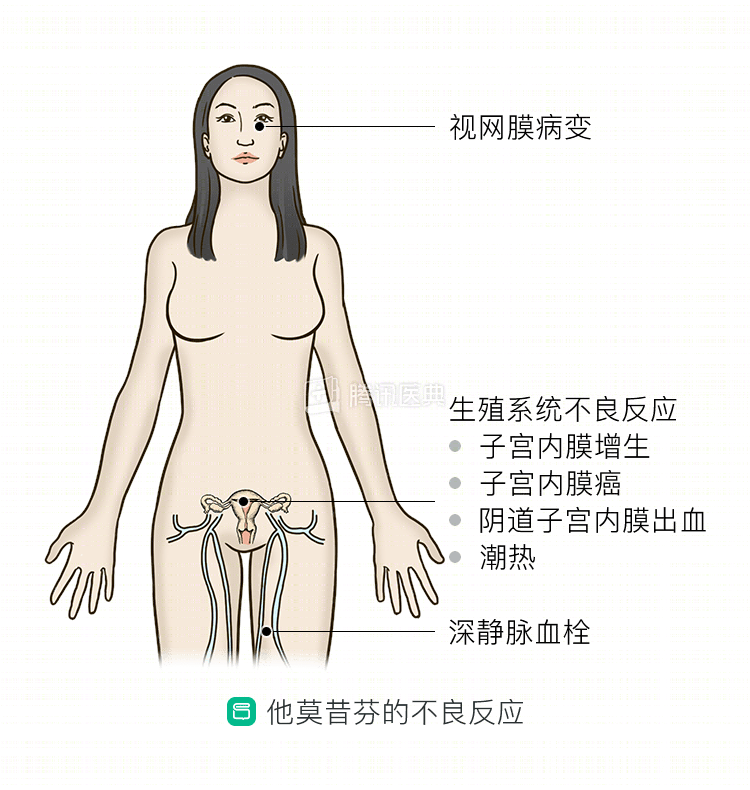
Studies have shown a 70.3% incidence of reproductive adverse effects with tamoxifen, manifested as endometrial hyperplasia, endometrial cancer, vaginal endometrial bleeding, and hot flashes. The use of high doses of tamoxifen may lead to ocular toxicity, with retinopathy being the most common. Tamoxifen also significantly increases the incidence of deep vein thrombosis. Therefore, in 2013, the American Society of Clinical Oncology (ASCO) updated its clinical practice guideline on the use of drugs to reduce the incidence of breast cancer, and tamoxifen is not recommended for breast cancer prevention in women >35 years of age with a history of deep vein thrombosis, pulmonary embolism, stroke, or transient cerebral ischemia.
In conclusion, chemical interventions need to be assessed and considered on an individualized basis, weighing the pros and cons before selection. Those considered to be at higher risk by risk assessment need chemoprophylaxis under medical supervision and close attention to the presence of serious adverse effects while taking the medication. With the development of genetic prediction models and risk factor assessment models, more individualized risk prediction is expected in the future to guide preventive drug use.