If you are in a high-risk group and have been recommended for lung cancer screening with low-dose computed tomography (LDCT), you may have these questions.
Is there a lot of radiation from LDCT? Not really!
The dose of radiation is measured in milli-sieverts (mSv). According to the 2008 report of the United Nations Scientific Committee on the Effects of Atomic Radiation, the radiation dose for a chest radiograph is about 0.1 mSv, a chest X-ray is about 1.1 mSv, and a 20-hour airplane ride is about 0.1 mSv. The annual dose of natural radiation received by human body is about 0.2 mSv.
The radiation dose of one LDCT is equivalent to 15 x-ray chest examinations, 300 hours of airplane travel, and six months of natural radiation exposure. And with the development of technology, the radiation dose has a tendency to further reduce.
The risk of death from tumors caused by radiation from a normal CT exam is much lower than the risk of death from a pre-existing CT exam, and the benefits of CT exams far outweigh the risks.
Is LDCT painful? No!
LDCT lung screening is one of the easiest tests to perform. There are no medications or shots required. However, you must be able to hold your breath for at least 6 seconds while the chest scan is performed.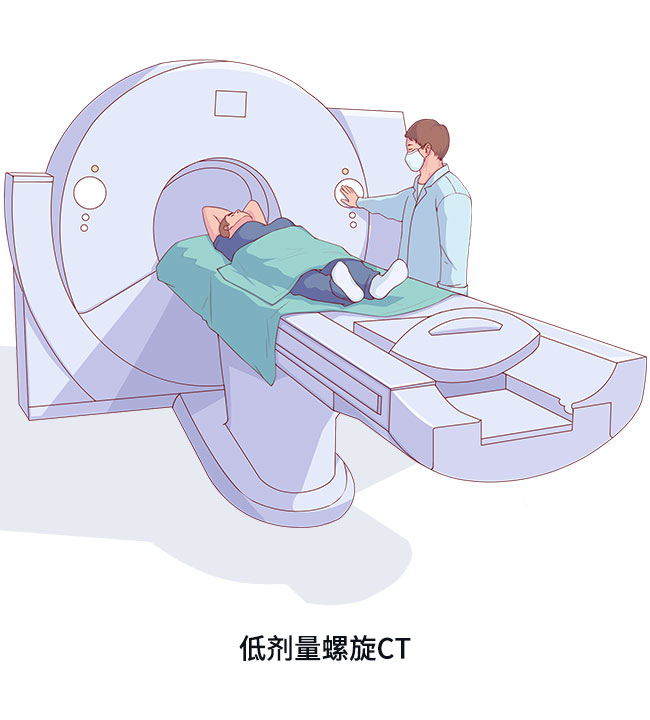
Is LDCT testing expensive? Varies by location
Prices vary by region and hospital, but on average, the cost of an LDCT exam in China today is usually a few hundred dollars.
How often should I get screened with LDCT? Once a year for people at high risk
If this screening is negative, do I still need to get this test at my next checkup?
At your next checkup, if you are still in the high-risk group, it is recommended that you get LDCT lung cancer screening every year. However, if you no longer meet the criteria for high risk, you may not be screened for LDCT. In addition, if you have had a chest CT in the past year for another condition, you will need to wait a year before having the screening.
What is a “high-risk group”? According to the “Expert Consensus on Low-Dose Spiral CT Lung Cancer Screening” published by the Cardiothoracic Group of the Chinese Medical Association’s Radiology Section in 2015, high-risk groups are those who
- Age 50 to 75 years;
- Combined with at least one of the following risk factors:
- style=”margin-left: 2em;”>
- Smokers who have smoked for at least 20 pack-years, which also includes former smokers who have quit for less than 15 years;
- Passive smokers;
- History of occupational exposure (to asbestos, beryllium, uranium, radon, etc.);
- History of malignancy or family history of lung cancer;
- History of COPD or diffuse pulmonary fibrosis.
What should I do if I have a positive screening result?
First of all, you don’t need to be too nervous. Any screening test has “false positives,” that is, it reports people who don’t have the disease as “positive,” and the more sensitive the test, the higher the false positive rate is usually. In a meta-analysis of 5 large, high-quality foreign clinical studies, the false-positive rate of low-dose CT screening was 23.1% in a total of 7739 asymptomatic high-risk patients. Therefore, when LDCT suggests the possibility of malignant nodules, you should immediately visit a specialist who may order additional tests (e.g. cytology, aspiration biopsy, etc.) and evaluate the results together.
With LDCT screening for lung cancer, you should not take it lightly. Because some pathological types of lung cancer grow quickly. For example, small cell lung cancer can double the number of cancer cells in as little as a month or so. Previous studies have also shown that for the more aggressive small cell lung cancer, most of the small cell lung cancers detected by LDCT and chest radiograph screening are already in advanced stages, with stage IV lung cancers accounting for 54.1% of all cases. Therefore, when symptoms such as chest pain and hemoptysis occur, prompt medical attention should be sought. You should not continue to maintain a high-risk lifestyle, such as smoking, just because you have the means to be screened. Prevention is the way to go.
If you would like to know why LDCT is recommended over chest radiographs to screen for lung cancer, read the related article at
Co-reviewed by: Guangdong Provincial People’s Hospital Guangdong Lung Cancer Research Institute Dr. Pan Xiao Yan Bai Dr. Zhang Yichen