The prostate gland is unique in that it is part of both the male urinary system and the male reproductive system. The company’s main goal is to provide the best possible service to its customers.
Where is the prostate?
The prostate gland is a mysterious place for men.
The male urinary system consists of the kidneys, ureters, bladder, prostate, and urethra.
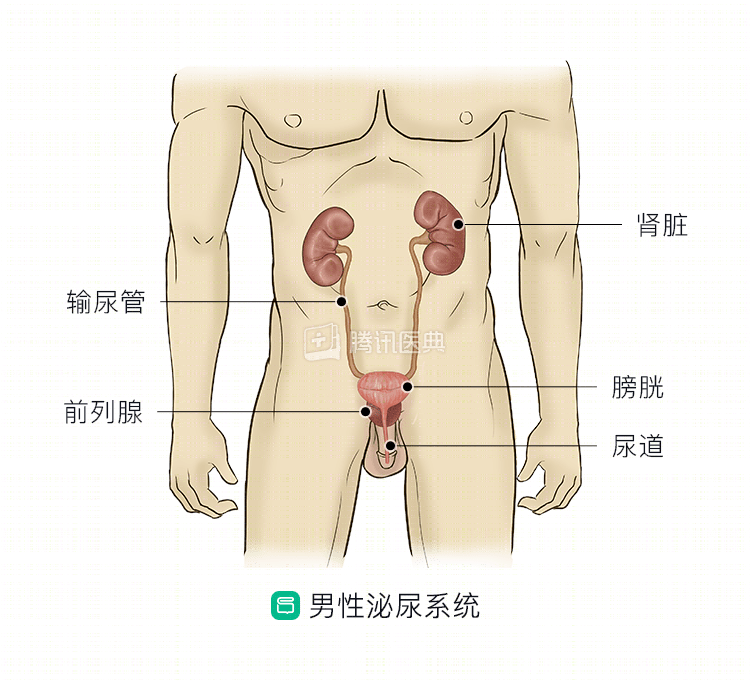
- Kidneys: The “waste treatment plant” of the body, producing 1.5 to 2 liters of urine per day.
- Ureter: After urine is produced by the kidneys, it flows along the right and left ureter to the bladder.
- Bladder: acts like a flexible water storage bag, holding an average of 350 to 500 milliliters of urine.
- Prostate: lies immediately below the bladder, like a chestnut placed upside down.
- Urethra: emanates from the bladder and passes through the middle of the prostate gland.
Did you know?
The urethra is like a “stick”.
The urethra is like a “rubber tube” and the prostate is like a fist at the top of the “rubber tube”. The first thing you need to do is to make sure that you have a good idea of what you are doing.
The male reproductive system includes the testes, epididymis, vas deferens, seminal vesicles, prostate, and penis.
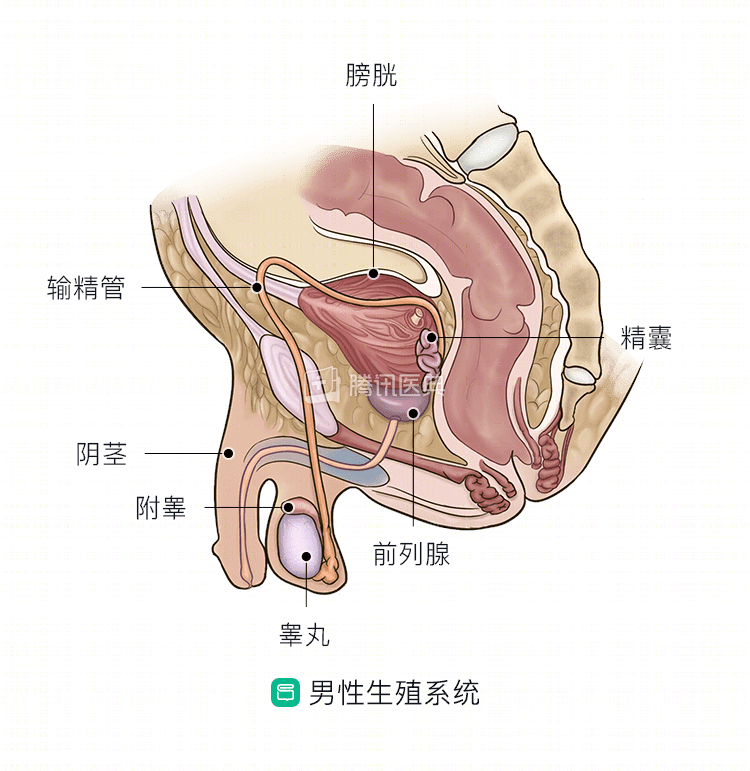
- Testes: Located in the scrotum, one on each side, they are responsible for producing sperm and secreting androgens (testosterone), and maintaining male secondary sexual characteristics such as beard, pubic hair, laryngeal nodes, and a thick voice.
- Epididymis: two soft tissues located on the back of the testes (which can be felt across the scrotum), where sperm produced by the testes are temporarily stored.
- Vas deferens: responsible for transporting sperm, the right and left vas deferens leave the epididymis and enter the abdominal cavity, eventually reaching the base of the prostate, where they meet the seminal vesicles behind the bladder and join the seminal vesicles to become the ejaculatory ducts.
- Prostate: The ejaculatory duct passes through the prostate and opens in the prostatic part of the urethra, where the secretions of the seminal vesicles and prostate (i.e., seminal vesicle fluid and prostatic fluid) participate in the composition of seminal fluid. During ejaculation, sperm are expelled through the vas deferens, ejaculatory ducts, and urethra.
- Penis: serves both urination and intercourse functions. It consists mainly of three spongy bodies and has no bones. During sexual excitement, the small veins of the penis temporarily close, causing the penis to become engorged with blood, and the penis becomes thick and hard and erect.
Did you know?
The erectile function of the penis is governed by many tiny nerves that lie close to the sides of the prostate, so some prostate surgeries can damage these nerves, leading to erectile dysfunction (commonly known as: impotence).
What does the prostate look like?
The normal adult prostate looks like an upside-down chestnut, with the broad upper part being the base of the prostate, the thin lower part being the tip, and the body of the prostate between the base and the tip.
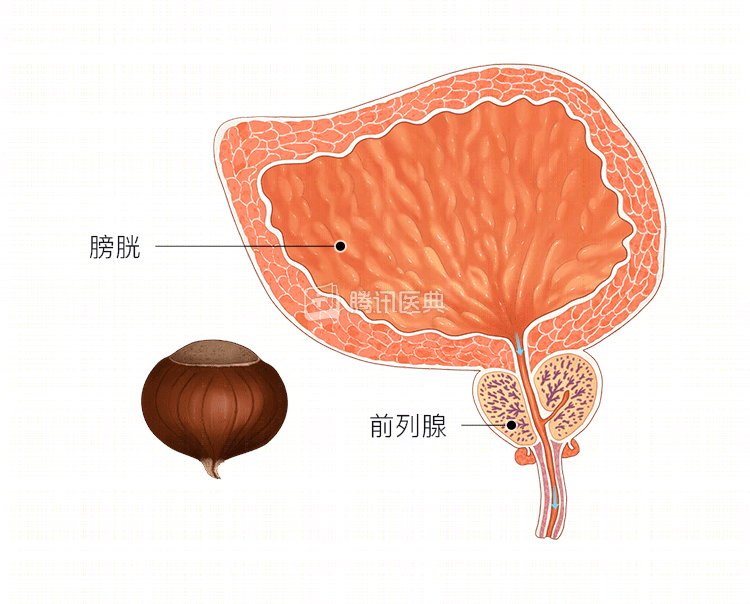
There is a longitudinal, shallow groove in the middle behind the body called the prostatic groove or central groove. This sulcus disappears when the prostate is enlarged.
The prostate gland is about 4 cm in diameter from side to side, 3 cm in diameter from top to bottom, and 2 cm in diameter from front to back, and weighs about 20 g. It is usually considered to be enlarged if the prostate weighs more than 20 g.

The growth and development of the prostate gland is controlled by testosterone secreted by the testes, and it is therefore related to the sexual development of the body:
- Pubertal to 20 years old: prostate grows from 5 g to 20 g.
- 20 to 50 years: prostate volume is relatively stable (pathological conditions, such as prostatitis, can also lead to an increase in prostate volume).
- After age 50: In many people, the prostate gland continues to increase in size, known as “prostate enlargement” or “prostate hypertrophy”.
Did you know?
Prostate enlargement can be a serious problem.
Prostate enlargement can be described as a normal enlargement of the prostate, but there is also an abnormal malignant enlargement of the prostate, which is prostate cancer. Although both prostate enlargement and prostate cancer are hyperplastic phenomena of prostate tissue, they tend to occur in different parts of the prostate: Almost all prostate enlargement occurs in the area of the prostate near the urethra (medically known as the migratory zone), whereas the vast majority of prostate cancers occur in the peripheral part of the prostate (medically known as the peripheral zone).
What role does the prostate gland play?
The function of the prostate gland has not been well studied, but it is thought to have 4 main aspects:
- Secretion of prostate fluid: Prostate fluid is a major component of semen, providing nutrition for sperm and facilitating sperm activity, which is the main function of the prostate.
- Synthesis of dihydrotestosterone: The prostate is rich in 5α-reductase, which converts testosterone into the more active dihydrotestosterone. Dihydrotestosterone plays an important role in the pathogenesis of BPH.
- Control of urination: The prostate wraps around the urethra and its circular smooth muscle fibers are involved in forming the internal urethral sphincter. During urination, the bladder forceps contract, the internal urethral sphincter relaxes, and urine is smoothly expelled.
- Transport function: During ejaculation, the contents of the vas deferens and the seminal vesicle ducts drain into the prostate-enveloped urethra, which in turn is expelled.
Did you know?
Prostate fluid is an important component of semen, and many of the important substances in semen come from prostate fluid, so prostate disease can affect semen quality and sperm viability.
In summary, the prostate is a gland hidden deep in the pelvis that is unique to men, and its main function is to secrete prostate fluid, which is involved in making up semen. The company’s main goal is to provide the best possible service to its customers.
Related articles: