Approval Date.
Revision Date.
Revision Date.
Description of Metformin Hydrochloride Tablets
Please read the instructions carefully and use under the guidance of your physician
[Drug Name]
Generic Name: Metformin Hydrochloride Tablets
English Name: Metformin Hydrochloride Tablets
Hanyu Pinyin: Yansuan Erjiashuanggua Pian
[Ingredients]
The main ingredient of this product is Metformin Hydrochloride.
Chemical name: 1,1-dimethylbiguanide hydrochloride.
Chemical structure formula.
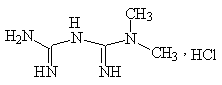
Molecular formula: C4H11N5-HCl
Molecular weight: 165.63
[Properties]
This product is a film-coated tablet, which appears white or off-white round tablets after removing the coating.
[Indications]
This product is preferred for type 2 diabetes mellitus in which blood glucose control by diet and physical exercise alone has failed.
For adults, it can be used as monotherapy or in combination with a sulfonylurea or insulin.
For children and adolescents 10 years of age and older, this product can be used as monotherapy or in combination with insulin.
[Specifications]
0.25 g
[Dosage and Administration]
To reduce the incidence of gastrointestinal complications and to keep the patient’s blood glucose sufficiently under control using the smallest dose, the dose should be started at a small dose and gradually increased.
During treatment initiation and dose adjustment (see recommended dosing schedule), determination of fasting glucose can be used to determine the response to treatment with this product and to determine the minimum effective dose for the patient. Thereafter, glycated hemoglobin should be measured at three-month intervals. The goal of treatment, either alone or in combination, is to reduce fasting glucose and glycosylated hemoglobin levels to normal or near normal using the lowest effective dose.
Recommended Dosing Schedule
Normal renal function (eGFR ≥ 90mL/min/1.73m2):
Monotherapy and combination therapy with sulfonylureas
Orally, adults and children start with 0.25g twice to three times a day and gradually increase the dose after 10-15 days according to the efficacy, the maximum recommended dose is 2g per day. take with meals to reduce gastrointestinal reactions.
Co-administration with sulfonylureas
Patients who do not respond after several weeks on the maximum recommended dose of this product should be considered for gradual addition of a sulfonylurea oral hypoglycemic agent while maintaining maximum dose therapy, unless the patient already has primary or secondary failure to sulfonylureas. Only clinical and pharmacokinetic data on the interaction between metformin and glibenclamide (euglycemia) are available.
Satisfactory glycemic control can be achieved with the combination of this product and a sulfonylurea by adjusting the dose of both drugs. The risk of hypoglycemia with sulfonylureas persists and is even increased with combination therapy with this drug and should be appropriately prevented.
If patients do not have satisfactory glycemic control after 1 to 3 months of treatment with the maximum dose of this drug in combination with the maximum dose of oral sulfonylurea, consider a change in therapy, including treatment with this drug in combination with insulin or insulin alone.
Co-administration with insulin
The dose of insulin can be maintained when adding this product is started. The starting dose of this product for insulin-treated patients should be 0.5 g once/day. If the patient does not respond adequately, increase by 0.5g after 1 week, and thereafter by 0.5g weekly until satisfactory glycemic control is achieved. The recommended maximum daily dose is 2 g. When the fasting blood glucose of a patient using this product in combination with insulin drops below 120 mg/dL, it is recommended that the insulin dose be reduced by 10% to 25%. Individualized adjustments should continue to be made or as prescribed by the physician based on the response to the lowering of blood glucose.
Dose adjustment in adults with impaired renal function
EGFR ≥60mL/min/1.73m2No dose adjustment is required, eGFR 45-59mL/min/1.73m2Decrease, eGFR<45mL/min/1.73m2Discontinue.
[Adverse Reactions]
According to foreign literature.
At initial treatment, the most common adverse reactions include nausea, vomiting, diarrhea, abdominal pain, and loss of appetite, which usually resolve on their own in most patients. The following adverse reactions may occur while taking metformin hydrochloride tablets.
The frequency of adverse reactions is defined as follows: very common (≥10%); common (1% to 10% with 1%) ,occasional (0.1% to 1% with 0.1%), rare (0.01% to 0.1% with 0.01%), and very rare (<0.01%). Within each frequency group, adverse reactions were listed in decreasing order of severity.
Metabolic and nutritional disorders.
Very rare.
- style=”margin-left: 45pt”>
-
Lactic acidosis (see [Precautions])
-
Long-term metformin administration may decrease the absorption of vitamin B12. This cause should be considered if the patient develops megaloblastic anemia.
Nervous system abnormalities.
Common.
-
Taste disorders
Gastrointestinal abnormalities.
Very common.
- style=”margin-left: 45pt”>
-
Gastrointestinal abnormalities such as nausea, vomiting, diarrhea, abdominal pain, and loss of appetite. Most of these adverse reactions occur at the start of treatment and usually resolve on their own in most patients. Slowly increasing the dose may improve gastrointestinal tolerability.
Abnormal hepatobiliary function.
Very rare.
- style=”margin-left: 45pt”>
-
Individual cases of abnormal liver function tests or hepatitis have been reported to return to normal after discontinuation of metformin.
Dermal and subcutaneous tissue abnormalities.
Very rare.
- style=”margin-left: 45pt”>
-
Dermal reactions such as erythema, pruritus, and urticaria.
Other possible adverse reactions include: gastric distention, malaise, dyspepsia, abdominal discomfort and headache, abnormal stools, constipation, bloating, hypoglycemia, myalgia, dizziness, lightheadedness, abnormal nails, rash, increased sweating, chest discomfort, chills, flu symptoms, hot flashes, palpitations, weight loss.
Children
Adverse events and their severity were similar to those in adults in published data, post-marketing data, and in a one-year controlled clinical study in a limited number of children aged 10-16 years.
[Contraindication]
- style=”margin-left: 51pt”>
-
severe renal failure (eGFR<45mL/min/1.73m2);
-
Acute conditions that may affect renal function conditions that may affect renal function, e.g., dehydration, severe infection, shock;
-
Diseases that can cause tissue hypoxia ( especially acute disease or worsening of chronic disease), such as decompensated heart failure, respiratory failure, recent onset myocardial infarction, and shock;
-
severe infections and trauma, major surgical surgery, clinical hypotension and hypoxia, etc;
-
Has known hypersensitivity to metformin hydrochloride and any of the ingredients in this product;
-
Any acute metabolic acidosis including lactic acidosis, diabetic ketoacidosis;
-
Prodrome of diabetic coma;
-
hepatic insufficiency, acute alcoholism, alcohol abuse;
-
Vitamins< span style="font-family:Times New Roman">B12, and uncorrected folic acid deficiency. .
[Caution]
Warning
Lactic acidosis.
Lactic acidosis is a very rare but serious metabolic complication that can be induced by accumulation of metformin in the body and is commonly seen in patients with acute deterioration of renal function, cardiopulmonary disease, or sepsis.
Patients who develop dehydration (severe diarrhea or vomiting, fever, or decreased fluid intake) should temporarily discontinue metformin and inform their physician.
In patients taking metformin, be alert to the use of medications that can cause acute impairment of renal function [including antihypertensives, diuretics, and nonsteroidal anti-inflammatory drugs (NSAIDs)]. Risk factors for lactic acidosis also include excessive alcohol consumption, hepatic insufficiency, poorly controlled diabetes mellitus, ketosis, prolonged fasting, and any illness that may cause hypoxia, as well as concomitant use of medications that may cause lactic acidosis.
Patients and/or caregivers should be informed of the risk of lactic acidosis. Lactic acidosis is characterized by acidotic dyspnea, abdominal pain, muscle cramps, debilitation, and decreased body temperature leading to coma. At the first sign of suspicion, patients should discontinue metformin and promptly inform their physician. Laboratory test abnormalities include decreased pH (<7.35), plasma lactate levels above 5 mmol/L and anion gap, and elevated lactate/pyruvate ratio.
Lactic acidosis is an acute condition that must be treated in the hospital. Patients with lactic acidosis taking this product should be discontinued immediately and promptly tested to support the diagnosis.
General Precautions
Renal function:
Chronic kidney disease is a common complication of diabetes, and once diabetes is diagnosed, renal function should be routinely checked. Metformin is excreted through the kidneys, and as the degree of renal impairment increases, the risk of metformin accumulation and the development of lactic acidosis increases. Renal function should be checked before starting treatment and at least annually after treatment.
This product is contraindicated in patients with eGFR<45mL/min/1.73m2. This product should be temporarily discontinued in patients presenting with acute conditions affecting renal function such as dehydration, severe infection, or shock (see [Contraindications]).
Cardiac function:
Patients with heart failure are at higher risk of hypoxia and renal insufficiency. Patients with stable chronic heart failure can take metformin with regular checks of cardiac and renal function.
Metformin is contraindicated in patients with acute and unstable heart failure (see [Contraindications]).
Iodinated Contrast Agent Use:
Intravascular injection of iodinated contrast media may lead to contrast nephropathy, which may cause metformin accumulation and an increased risk of lactic acidosis. Therefore, patients who are scheduled for this type of test must stop taking metformin before or at the time of the test and resume the drug at least 48 hours after the test is completed and only if renal function is stable on reexamination.
Surgery:
Metformin must be discontinued when undergoing surgery with conventional, spinal, or epidural anesthesia. Treatment should not be restarted until at least 48 hours after surgery or after resumption of feeding and assessment of stable renal function.
Other Precautions:
All patients should continue to rationalize their dietary intake of carbohydrates. Overweight patients should continue a calorie-restricted diet.
Routine laboratory tests should be performed regularly to monitor diabetes.
Vitamin B12 levels – Some patients (those with inadequate intake or absorption of vitamin B12 and calcium) may be more susceptible to decreased vitamin B12 levels. Such patients would benefit from having their serum vitamin B12 levels measured every 2-3 years.
Hypoglycemia – Patients receiving this product alone do not normally develop hypoglycemia, but should be alert for hypoglycemia when used in combination with insulin or other glucose-lowering drugs such as sulfonylureas or glinides. Older, frail, or malnourished patients, as well as patients with hypoadrenal and pituitary function and alcoholism, are more likely to develop hypoglycemia.
Children – A diagnosis of type 2 diabetes should be confirmed before starting metformin therapy. According to the foreign literature, a 1-year controlled clinical study has not found effects of metformin on growth and puberty in children, but no long-term data are available in this regard. Therefore, children treated with metformin, especially prepubertal children, should be carefully followed to determine the effect of metformin on these parameters.
Children 10 to 12 years of age
According to the foreign literature, a clinically controlled study in children and adolescents included only 15 children aged 10-12 years. Although the efficacy and safety data for metformin in these children did not differ from those in older children and adolescents, special caution should be exercised when prescribing metformin for children aged 10-12 years.
[For pregnant and lactating women]
Pregnant women
Metformin is not recommended for patients who are planning to become pregnant or are already pregnant, but insulin can be used to maintain blood glucose levels as close to normal as possible, thereby reducing the risk of fetal malformations.
Lactating women
Metformin can be excreted through breast milk. Breastfeeding is not recommended during metformin therapy.
[Pediatric Dosage]
This product may be used in children and adolescents 10 years of age and older as monotherapy or in combination with insulin. See [Dosage and Administration].
This product is not recommended for use in children under 10 years of age.
[Geriatric Use]
Because elderly patients may experience decreased renal function, renal function should be checked periodically and the dose of metformin should be adjusted based on renal function.
[Effects on the ability to drive and operate machinery
Patients treated with metformin alone do not normally develop hypoglycemia, so metformin has no effect on the ability to drive or operate machinery. However, the combination with insulin or other glucose-lowering drugs (e.g., sulfonylureas) should be used with caution for hypoglycemia.
[Drug Interactions]
1. No changes in pharmacokinetic parameters of metformin were observed with single-dose combination of metformin and glibenclamide.
2. In the combination of metformin and furosemide (tachyphylaxis), the AUC of metformin increased but renal clearance was unchanged; meanwhile, the Cmax and AUC of furosemide decreased, the terminal half-life was shortened, and renal clearance was unchanged.
3. Cationic drugs that are excreted via the renal tubules (eg, aminoclopramide, digoxin, morphine, procainamide, quinidine, quinine, ranitidine, aminoglutethimide, meperidine, and vancomycin) may theoretically compete with metformin for renal tubular transport systems and interact, so close monitoring and dose adjustment of this product and/or interacting drugs is recommended.
4. The plasma and whole blood AUC of metformin increased when metformin was combined with cimetidine, but no alteration in the clearance half-life of metformin was seen when the two drugs were combined alone. No changes in the pharmacokinetics of cimetidine were seen.
5. Monitor blood glucose closely if certain drugs that can cause elevated blood glucose, such as thiazides or other diuretics, glucocorticoids, phenothiazines, thyroid preparations, estrogens, oral contraceptives, phenytoin, nicotinic acid, sympathomimetics, calcium channel blockers, and isoniazid, are taken concomitantly, and watch closely for hypoglycemia after these drugs are discontinued.
6. Metformin is not bound to plasma proteins. Therefore drugs that are highly protein bound, such as salicylates, aminoglycosides, chloramphenicol, and probenecid, are less likely to interact with sulfonylureas than with serum proteins, which are primarily bound to serum proteins.
7. With the exception of chlorosulfonylurea, a conversion period is usually not required when patients switch from other oral hypoglycemic agents to treatment with this product. Patients taking chlorosulfonylurea should be closely monitored during the first 2 weeks of switching to this product because chlorosulfonylurea has a long retention period in the body, which can lead to drug overdose and hypoglycemia.
8. In healthy individuals on a single-dose combination of nifedipine and metformin, the peak plasma concentration and area under the plasma concentration time curve of metformin increased by 20% and 9%, respectively, and urinary excretion increased, with no effect on Tmax or half-life.
9. Metformin has a tendency to increase the anticoagulant properties of warfarin.
10. Resinous drugs in combination with this product may decrease metformin absorption.
[Drug overdose]
According to foreign literature, lactic acidosis can occur in this setting even though metformin doses up to 85 g have not been associated with hypoglycemia. In good hemodynamic conditions metformin can be cleared by dialysis at a rate of 170 mL/min. Therefore, in patients with suspected metformin overdose, hemodialysis can remove the accumulated drug.
[Pharmacology and Toxicology]
Pharmacological effects
Metformin decreases hepatic gluconeogenesis, inhibits intestinal absorption of glucose, and increases glucose uptake and utilization by peripheral tissues, which may improve insulin sensitivity by increasing peripheral glucose uptake and utilization.
Toxicological studies
Genotoxicity
The results of the Ames test, mouse lymphocyte gene mutation test, human lymphocyte chromosome aberration test, and mouse micronucleus test were all negative.
Reproductive toxicity
No effects on fertility were seen in male and female rats given metformin hydrochloride at doses up to 600 mg/kg/day (equivalent to 3 times the maximum recommended daily human clinical dose converted to body surface area). No teratogenic effects were observed in rats and rabbits given metformin hydrochloride at doses up to 600 mg/kg/day (2 and 6 times the maximum recommended daily dose for humans based on body surface area). Results in lactating rats showed that metformin hydrochloride can be secreted into breast milk and can reach levels in plasma.
Carcinogenicity
A carcinogenicity study in rats given metformin 900 mg/kg/day for 104 weeks and in mice given metformin 1500 mg/kg/day for 91 weeks (these doses are equivalent to 4 times the maximum recommended clinical daily dose of metformin of 2000 mg on a body surface area basis) showed no evidence of carcinogenic effects of metformin in either male or female mice. Metformin was also not found to be carcinogenic in male rats, but there was an increase in the development of benign interstitial uterine polyps in female rats at 900 mg/kg/day.
[Pharmacokinetics]
Absorption
After oral administration of metformin hydrochloride, blood levels peak (Cmax) after approximately 2.5 hours (Tmax). In a healthy population, the absolute bioavailability of oral metformin hydrochloride tablets is about 50-60%.
Eating reduces the extent and slightly slows the rate of absorption of the drug. A 40% reduction in peak blood concentrations and a 25% reduction in the area under the concentration curve (AUC) were observed with oral metformin hydrochloride tablets after eating.
Distribution
Metformin is barely bound to plasma proteins. Metformin partially enters the red blood cells. Peak metformin whole blood concentrations are lower than peak plasma concentrations, but occur at approximately the same time. Erythrocytes may be the second distribution compartment for metformin, with a mean volume of distribution (Vd) of approximately 1.12 L/kg.
Metabolism
Metformin is excreted from the urine as a prototype. No relevant metabolites have been detected in humans.
Excretion
The renal clearance of metformin>400 mL/min suggests that glomerular filtration and renal tubular secretion are the routes of metformin excretion. After oral administration, the terminal plasma clearance half-life of metformin is approximately 3.6 hours. In renal insufficiency, renal clearance decreases with creatinine clearance, so the clearance half-life of metformin is prolonged, resulting in an increase in plasma metformin concentration.
Characterization in special populations
Renal insufficiency
There are few data on treatment in patients with moderate renal insufficiency and no reliable estimates of systemic exposure to metformin in these populations compared with patients with normal renal function. Therefore, clinical efficacy/tolerability should be considered for dose adjustment.
Children
According to foreign literature.
Single-dose study: pediatric patients receiving a single oral dose of metformin hydrochloride tablets 0.5 g showed a pharmacokinetic profile similar to that of healthy adults.
Multiple-dose study: data from only one study. Pediatric patients taking metformin hydrochloride tablets 0.5 g orally twice a day for 7 days had approximately 33% and 40% lower peak blood levels and systemic exposure (AUC0-t), respectively, compared with adult diabetics taking the same dose for 14 days of treatment. Clinical relevance is limited because the drug dose is titrated according to individual blood glucose levels.
[storage]
Keep sealed.
[Packaging]
Packaged in aluminum and plastic, 2×12 tablets/plate/box, 3×12 tablets/plate/box, 4×12 tablets/plate/box.
[Expiration date]
18 months.
[Executive Standard]
[approval number]
State Drug Administration H20184130
[ Manufacturer]
Company Name: Ha Pharmaceutical Group Pharmaceutical Sixth Factory
Production Address: No. 326 Nanzhi Road, Daowai District, Harbin
Postal code: 150056
Phone number: 0451-55601688 After-sales service phone number: 400-6551068
Fax number: 0451-82401688
Website: www.hayao.com