Proton heavy ion technology: “targeted blasting” of tumor lesions
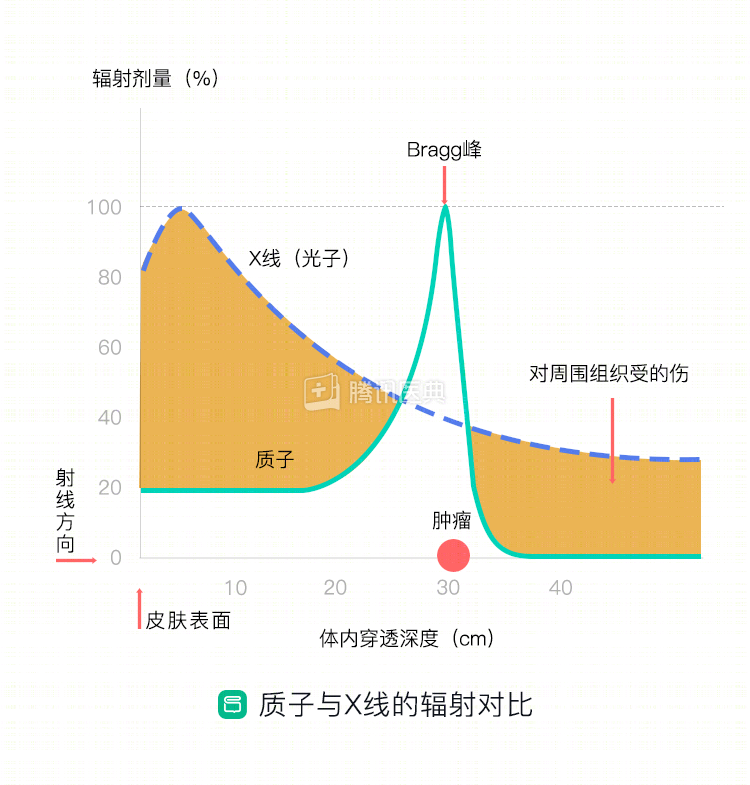
Proton heavy ion technology is an advanced radiation therapy that uses the physical properties of protons and heavy ions passing through matter to form Bragg peaks and the special biological properties of heavy ions to achieve “targeted blasting” of tumor areas. It has a significant advantage for radiation-resistant tumors and oxygen-depleted tumors that are difficult to treat with other rays.
Precise treatment of cancer cells while protecting normal tissues
.
The reason for the “targeted blast” is that traditional X-rays irradiate cancerous tissue and cause damage to surrounding normal tissue, while protons or heavy ions irradiate cancerous tissue and release all the energy in a “lightning bolt” to kill the tumor immediately afterwards. When a proton or heavy ion irradiates a cancerous tissue, it releases all the energy to kill the tumor, and then disappears immediately and completely without any residual radiation to the normal tissues behind the tumor. The newest addition to the line of products is the newest addition to the line of products.
Reducing the occurrence of radiation liver injury
Patients with hepatocellular carcinoma mostly have underlying diseases such as chronic hepatitis and cirrhosis, and may have undergone multiple interventions, and thus have relatively poor liver function. In contrast, proton heavy ion therapy can significantly reduce the irradiated dose to normal liver tissue and therefore reduce the incidence of radiological liver injury.
Summary
Taken together with the current findings, proton heavy ion therapy is a relatively safe and effective local treatment for patients with inoperable liver cancer, especially in terms of liver function protection. However, a comprehensive assessment of the patient’s tumor and surrounding vital organs is needed before treatment.
(Thanks to Dr. Xiaohang Wang, Department of Radiotherapy, Peking University Cancer Hospital, for participating in this article.)