The phrase “disease enters through the mouth” is a familiar one, referring to the disease that can be caused by a poor diet.
The food that we eat has to pass through the esophagus to be transported to the stomach for digestion. If the esophagus is narrowed or blocked due to pathology, it may be difficult to swallow, or “choke on it”.
Esophageal cancer is a malignant tumor that originates in the esophagus. As the tumor grows larger, patients with esophageal cancer have more and more difficulty swallowing when they eat and drink, so some regions in the north also refer to esophageal cancer as “choking disease.
Unlike abroad, 90% of esophageal cancers in China are squamous, and studies have found that this type is mostly diet-related, from “disease by mouth” to “choking on food”.
The “bite size” journey: getting to know our esophagus
The easiest way to learn about the esophagus is to follow a “bite of rice” (food group) and see what it has been through.
The esophagus is a long, narrow, flexible tube that is about 25 cm long. After we swallow a “bite” of food, the food mass goes all the way down, over the “gatekeeper” of the stomach, the cardia, and then into the stomach. The esophagus is primarily a transport tube.
The “journey” of the food mass through the esophagus passes through three physiological narrowings, called the “three narrowings of the esophagus” (below).
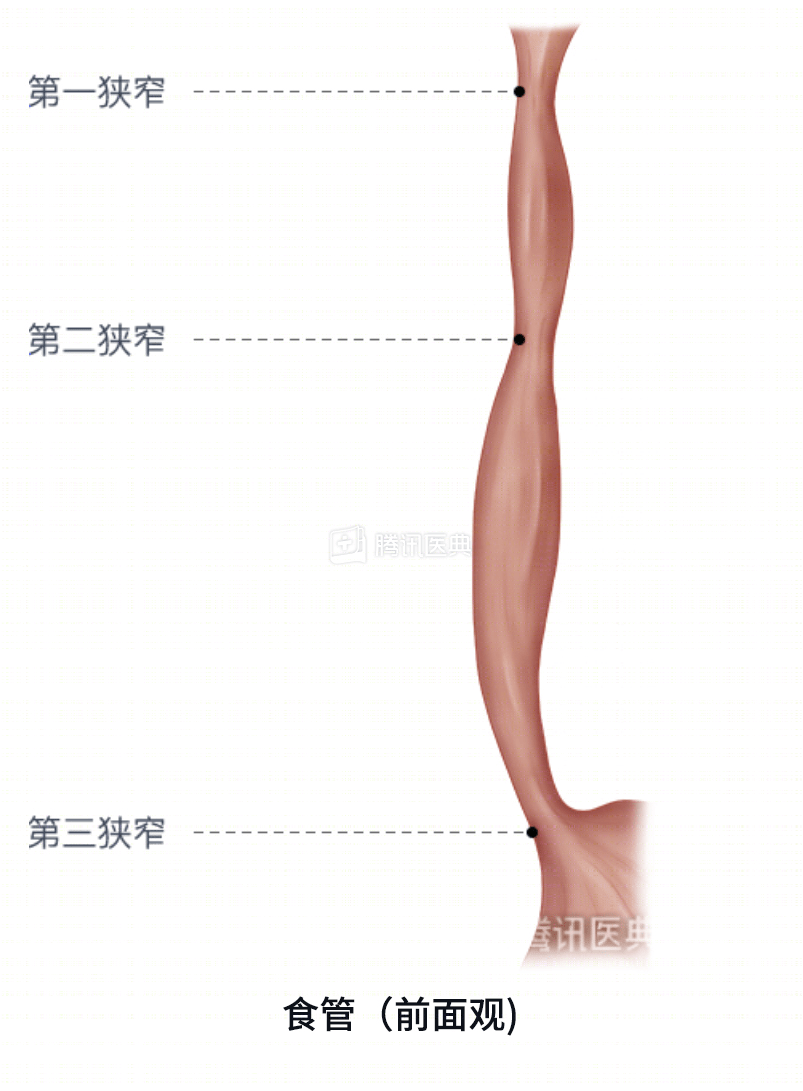
Triple stricture of the esophagus
These three strictures, especially the second and third strictures, are often a good site for esophageal cancer. The strictures tend to cause food retention and are subject to a lot of compression and friction, which can be an irritant in triggering esophageal disease.
Esophagus can’t take the “torture”, it could become cancer
Everything we eat and drink passes through the esophagus, which means it’s a very busy food passage, with snacks, refreshments, drinks, and more in addition to the three meals of the day, and wear and tear on the esophageal lining is the norm.
With the constant stimulation of multiple internal and external factors, normal esophageal cells are “tortured” and one day they are overwhelmed and mutate, becoming uncontrolled “crazy” cancer cells, which is the origin of esophageal cancer. This is the origin of esophageal cancer.
Because of the specific food culture in some parts of the country, most esophageal cancers are “eaten” cancers. For example, in areas such as Anyang, Henan, where the incidence of esophageal cancer is high, residents often eat coarse, hard foods such as deep-fried noodles and pancakes; in Chaoshan, Guangdong, where the incidence is also high, locals love to eat hot foods such as boiling hot kung fu tea and raw congee.
Overly hot, coarse food can do a lot of damage to the esophagus.
In 2016, the World Health Organization (WHO) has listed hot drinks above 65°C as a risk factor for esophageal cancer. is 65°C considered hot? The company’s main focus is on the development of new products and services, and the development of new products.
医典小提示:Just brewed soy milk, coffee; just out of the oven buns, dumplings, noodles; just baked barbecue products, the temperature is around 65 ℃ or even has exceeded this temperature, very easy to burn the digestive tract mucosa. If you need to blow to eat, still feel hot mouth and swallowing difficulties, do not rush to enter!
People who often eat food or drinks above 65°C, those whose food is too hard or not chewed finely, and those who have the habit of chewing betel nut and tobacco have chronic damage to the esophageal mucosa over and over again. In the long run, it may trigger precancerous esophageal lesions.
Also, picky eaters should pay attention. The fact that too few fresh vegetables and fruits are consumed leads to a lack of vitamin A, B2, and C intake, which is also a risk factor for esophageal cancer. Fruit and vegetable intake can significantly reduce the risk of esophageal squamous cancer. So it’s not just a matter of hygiene, it’s also important to have a proper diet to prevent the disease from entering your mouth.
It is important to note that the occurrence of esophageal cancer is related to genetics, poor lifestyle habits, and long-term exposure to cancer-causing factors. Smoking, alcohol abuse, pickled foods, and oral bacteria are all related to the occurrence of esophageal cancer,but that doesn’t mean that if these factors are present, you will definitely develop cancer. Each person still has individual differences in their exposure to cancer-causing and cancer-promoting factors in the environment.
Does a love of tea or coffee increase the risk of esophageal cancer?
Opening the door, there is no evidence that tea or coffee increases the risk of esophageal cancer, but hot tea and hot coffee (above 65°C) do. So don’t worry, tea and coffee are not risk factors for esophageal cancer, it’s the high water temperature that’s the “culprit”!
A 2018 study published in the Annals of Internal Medicine[6] found that the risk of esophageal cancer increased fivefold if you smoked, drank, and drank hot tea. The study found that the risk of esophageal cancer increased fivefold when the three hobbies of smoking, drinking, and hot tea were all present in China, the country with the highest incidence of esophageal cancer in the world.
As the saying goes, “disease enters through the mouth,” and esophageal cancer is related to eating and drinking. The company’s main focus is on the development of a new product, which is a new product for the company. The company’s main goal is to provide a comprehensive range of products and services to help you achieve your goals.