Smoking increases a woman’s risk of breast cancer
In the general consciousness smoking is only associated with respiratory diseases, such as slow-onset lung disease and lung cancer. If you think so, you’re greatly underestimating the dangers of smoking. The most you can do is to smoke and puff, and the smoke goes to your lungs, not to your breasts, so how can it trigger breast cancer?
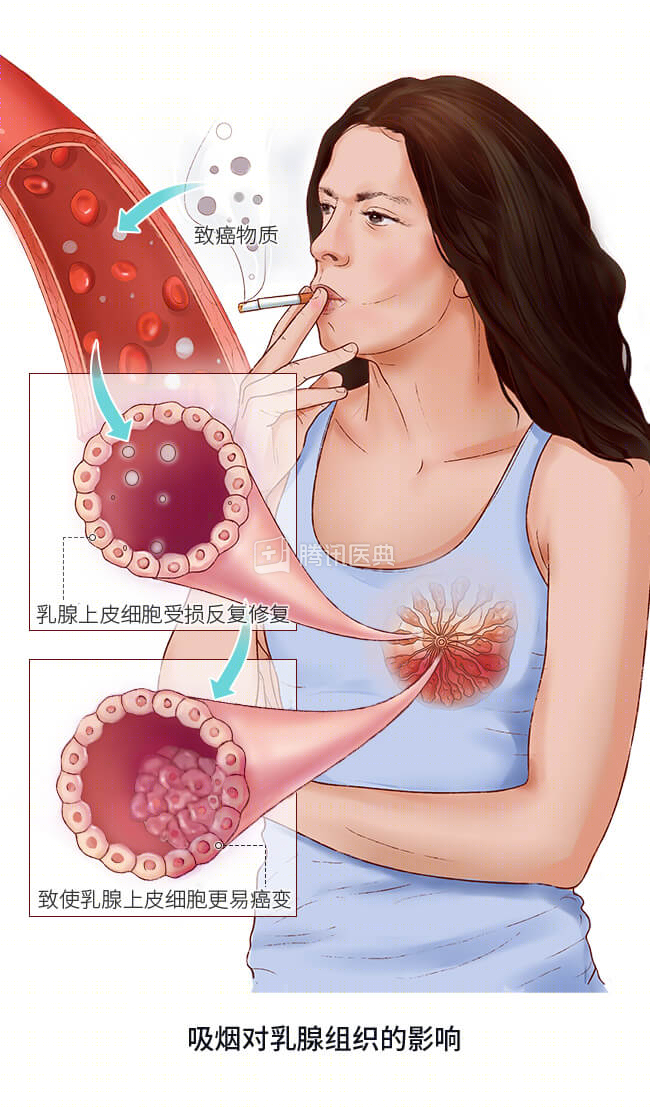
That’s because tobacco contains several carcinogens, some of which are small molecules that pass through the alveoli into the bloodstream, where they spread to all parts of the body, including, of course, the breast tissue.
Women metabolize nicotine more quickly than men, so both active and passive smoking are more damaging to women’s health than to men’s. Some studies have shown multiple tobacco components found in the lotions of women who smoke, showing the direct effects of smoking on the breast, and these toxic small molecule toxicants can cause damage to the mammary epithelium, which is when the mammary epithelium automatically repairs the damage it has sustained. It is good that the cells repair the damage automatically, but the problem is like taking a watch apart and putting it back together every day, sooner or later the watch will be repaired. The same is true for breast epithelial cells, which are repaired every day, and sooner or later they will be repaired wrongly and become immortalized cancer cells, according to research studies, the percentage of women who die from breast cancer is 16%-25% higher than non-smoking women.
No motivation to quit smoking? Check out these numbers!
One study found that former smokers (who have now quit) have a 10% increased risk of breast cancer; current smokers have a 13% increased risk of breast cancer; and even when there are people around who smoke and unconsciously inhale smoke dust particles and various toxic substances, the risk of breast cancer increases by 7%-30%. Not only does smoking increase the risk of developing breast cancer, smoking can also lead to a worse prognosis of breast cancer disease. A study that included 1,808 breast cancer patients found that smoking can increase the risk of all-cause death (death from all causes over a certain period of time) by 40% over 13 years and the risk of breast cancer-specific death by 20%.
Quitting smoking not only reduces the incidence of breast cancer, but also leads to a significant reduction in the risk of death after developing cancer. It is recommended that all breast cancer patients begin to quit smoking today.