A low-fat diet is appropriate for breast cancer patients
A high-fat diet, especially with excessive intake of saturated fatty acids, can induce an increased risk of breast cancer development and a worse prognosis for breast cancer patients. In addition, because of breast cancer itself and treatment, the risk of cardiovascular disease death has surpassed the risk of breast cancer death as the first cause of death in patients over 50 years of age, and a high-fat diet and obesity are equally important triggers of cardiovascular disease. Therefore, in order to reduce the risk of breast cancer occurrence or recurrence and prolong survival after breast cancer, breast cancer patients should pay attention to a low-fat diet. The results of the study showed that low-fat diet was associated with recurrence-free survival of breast cancer. For every 20% reduction in dietary energy, the risk of breast cancer recurrence was reduced by 24%.
Butter is over 80% fat, half of the roast duck skin is fat, and natural butter has 30 times more fat than milk
For breast cancer patients, a low-fat diet means that fat accounts for less than 15% of total calories, which means keeping daily fat intake below 30-50 grams. A table of fat content of common foods is provided below, so you can calculate the amount of food you should consume daily. In addition to the total amount of fat outside the need to limit, you should also pay attention to the type of fat intake, increase the intake of unsaturated fatty acids (mainly from fish, chicken, beans, nuts, etc.), and reduce the intake of saturated fatty acids (red meat and fried snacks, cakes and other foods containing trans fatty acids). The cooking method also needs extra attention. Frying and other cooking methods can invariably add a lot of fats and oils, while steaming can preserve the original taste of food and is healthier. Breast cancer patients should usually consume less animal fat and more fibrous foods, vegetables, fruits, cereals and legumes, and usually eat more whole wheat bread, carrots and pumpkins.
| Content | Food Name | Content | Food Name | Content | Food Name | Content | |
| Salad oil |
99.8 |
Butter (edible industry) |
55.5 |
Bologna |
48.3 |
Chocolate |
40.1 |
| 99.7 |
Egg yolk powder |
55.1 |
Pumpkin seed kernels |
48.1 |
Beef jerky |
40.0 |
|
|
99 |
Sunflower seed kernels |
53.4 |
Peanuts (fried) |
48.0 |
White sesame seeds |
39.6 |
|
|
99.2 |
Peanut butter |
53.0 |
Dried lamb |
46.7 |
Peach kernels |
37.6 |
|
|
98.8 |
Sautéed sunflower seeds |
52.8 |
Black sesame |
46.1 |
Cantonese sausage |
37.3 |
|
|
78.6 |
Sesame sauce |
52.7 |
Watermelon seed kernels |
45.9 |
Cashew nuts |
36.7 |
|
|
92.0 |
Fried almonds |
51.0 |
Almonds |
45.4 |
Salted meat |
36.0 |
|
|
88.6 |
Pecans (ripe) |
50.8 |
Hen sissies |
44.8 |
Broiler (fat) |
35.4 |
|
|
88.0 |
Sautéed hazelnuts |
50.3 |
Hazelnuts (dried) |
44.8 |
Pork (soft pancetta) |
35.3 |
|
|
70.6 |
Duck skin |
50.2 |
Watermelon seeds (fried) |
44.8 |
Duck egg yolk |
33.8 |
|
|
60.5 |
Sunflower seeds (raw) |
49.9 |
Pork rinds |
44.6 |
Spring rolls |
33.7 |
|
|
59.0 |
Bacon (raw) |
48.8 |
Fried vegetarian shrimp |
44.4 |
Crisping (snack) |
31.7 |
|
|
58.8 |
Potato chips (fried) |
48.4 |
Peanut kernels (raw) |
44.3 |
Cookies |
31.6 |
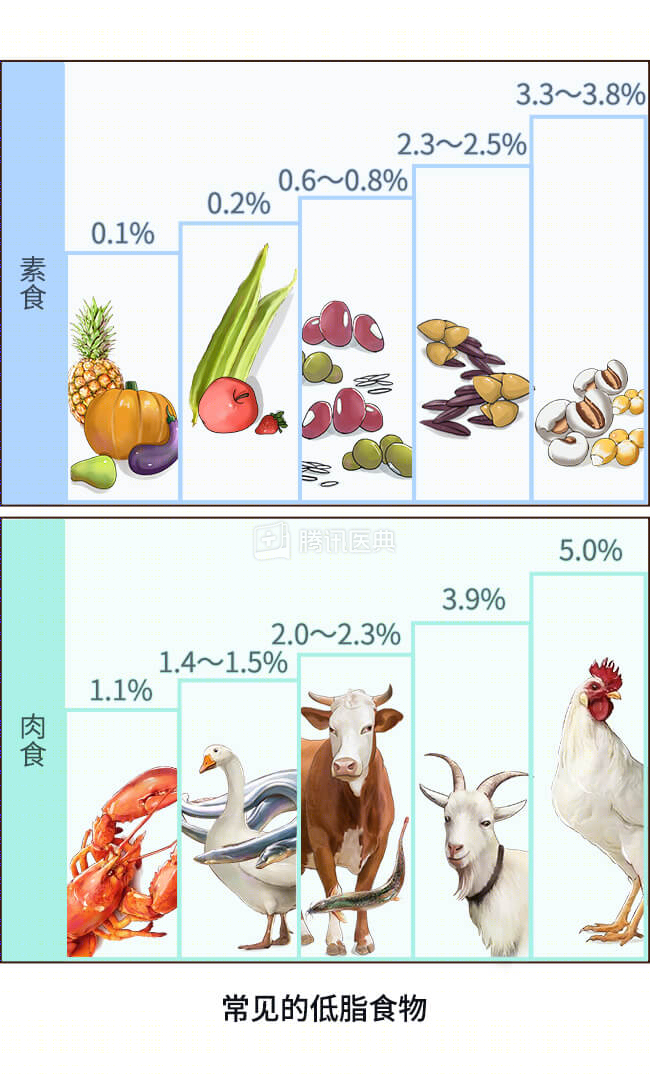
Common low-fat foods to keep in mind
Common low-fat foods to keep in mind are:
- Vegetables: such as celery, leek, spinach, chard, broccoli, rape, winter squash, cucumber, bitter melon, loofah, pumpkin, eggplant, etc. Among them, pumpkin has 0.1% fat, loofah has 0.2% fat, bitter melon has 0.1% fat, and eggplant has 0.1% fat.
- Fruits: such as pineapple, strawberry, apple, pear, grape, orange, banana, apricot, watermelon, etc. Among them, pineapple has 0.1% fat, strawberry has 0.2% fat, pear has 0.1% fat, and apple has 0.2% fat.
- Beans: such as red beans, mung beans, peas, cowpeas, black beans, green beans, etc. Among them, red beans have 0.6% fat, mung beans have 0.8% fat, peas have 1.1% fat, and cowpeas have 1.2% fat.
- Cereals: such as rice, corn, buckwheat, black rice, barley, sorghum, etc. Among them, rice has 0.8% fat, buckwheat has 2.3% fat, black rice has 2.5% fat, barley has 3.3% fat, and corn has 3.8% fat.
- Aquatic products: such as sea cucumber, jellyfish, squid, grass carp, guppy, eel, loach, river shrimp, lobster, etc. Among them, the fat content of eel is 1.4%, the fat content of loach is 2.0%, and the fat content of lobster is 1.1%.
- Lean meat: such as beef, lamb, donkey, dog, rabbit, etc. Among them, the fat content of beef lean meat is 2.3%, donkey lean meat fat content is 3.2%, sheep lean meat fat content is 3.9%.
- Poultry: such as chicken, duck, pigeon, etc. Among them, the fat content of chicken breast meat is 5%, and the fat content of duck meat (breast meat) is 1.5%.
- In addition, eggs, potatoes, and nonfat dairy products are also low-fat foods.