
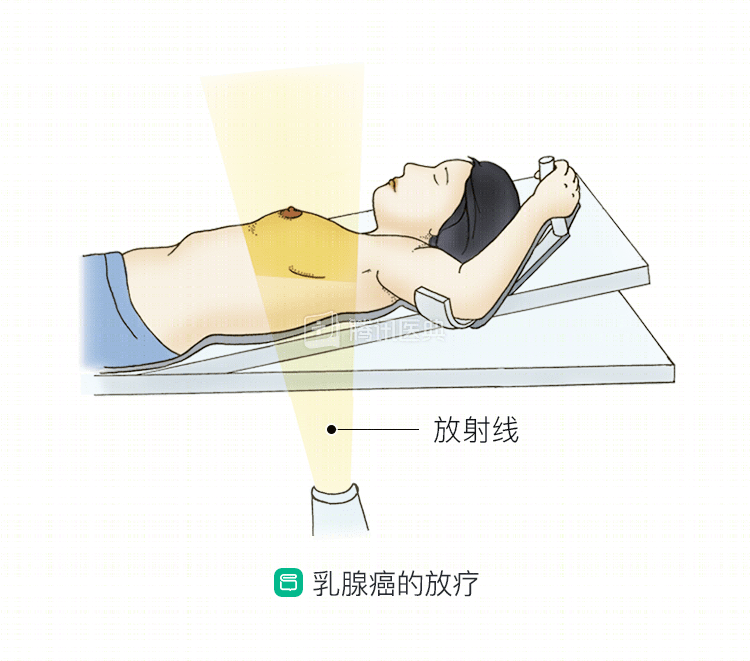
Radiotherapy plays an important role in breast cancer treatment. But most patients don’t know much about radiation therapy. Radiotherapy, simply put, is the use of radiation to treat tumors. So, which breast cancer patients need to receive radiation therapy?
People with breast-conserving surgery
If the diagnosis is early-stage breast cancer and the lump in the breast is small, the doctor recommends breast-conserving surgery, which means that only the breast containing the tumor is removed and as much of the breast tissue that is not invaded by the tumor is preserved so that the breast can be kept in better shape after surgery. Breast-conserving treatment usually requires radiation therapy after surgery. Radiation therapy can reduce the risk of breast cancer recurrence.
The treatment modality of breast-conserving surgery plus postoperative radiation therapy is the same as total mastectomy, but it preserves as much of the breast’s shape as possible and improves quality of life. This is the currently recommended treatment modality for early-stage breast cancer.
Total mastectomy with lymph node metastases
Some patients are already too large to undergo breast-conserving surgery at the time of presentation and have to undergo total mastectomy. If the patient also has multiple lymph node metastases in the axilla, the risk of breast cancer recurrence in the local chest wall and ipsilateral neck is higher in this case, requiring postoperative radiation therapy. In this case, local radiotherapy can not only reduce the risk of local recurrence, but also improve the chance of long-term survival. That is, the likelihood of local chest wall or cervical lymph node recurrence will be reduced after radiotherapy and the possible survival time will be prolonged.
Local treatment for those with recurrence or metastasis
Some patients with breast cancer may still develop recurrence or metastasis even with standard treatment. For these patients, radiation therapy can also play an important role.
For example, if bone metastases occur, especially if they are associated with pain, radiotherapy can target the bone metastases, which can provide effective pain relief and also promote calcium deposition in the bone, reducing the risk of pathologic fractures.
Brain metastases require immediate local treatment, and radiation therapy is the most effective and preferred treatment to control brain metastases from breast cancer. Depending on the size of the brain metastases and the number of metastases, doctors will choose different irradiation techniques. After radiation therapy for brain metastases, the metastases can shrink significantly or even disappear, prolonging the survival time and effectively controlling the symptoms of brain metastases.
As you can see, radiation therapy is a very important breast cancer treatment that can directly affect survival time. The doctor will make a comprehensive judgment based on the disease.