
Radiotherapy techniques are changing and evolving rapidly. The radiotherapy technique with the longest history of application is conventional radiotherapy, which usually involves one or two fields of irradiation perpendicular to the site to be treated, and the shape of the field can only be a regular rectangle. In addition, what other new techniques are available?
3D conformal radiotherapy
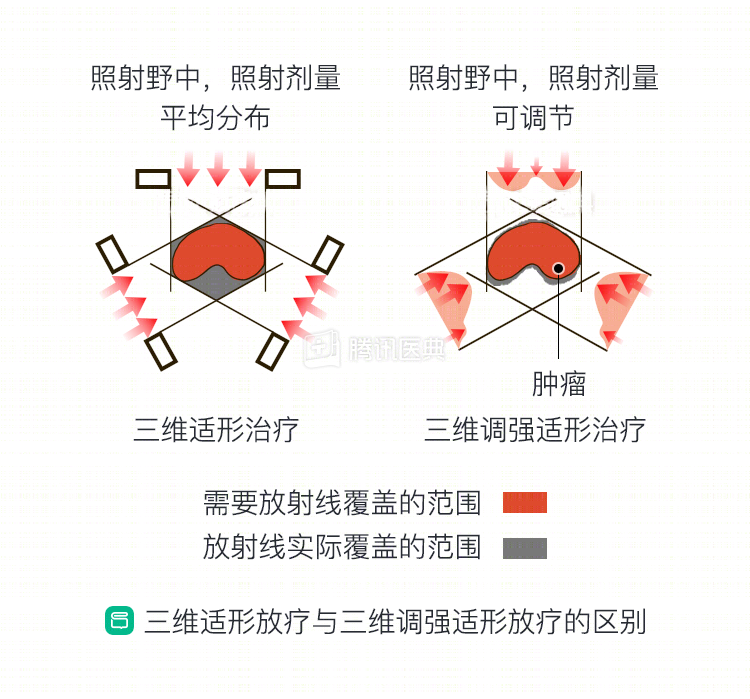
On top of conventional radiotherapy, 3D conformal radiotherapy allows for additional fields to be irradiated, and the shape of each field is adjustable to match the shape of the area to be irradiated.
3D Intensity Modulated Conformal Radiotherapy
Based on conformal radiotherapy, 3-D intensity-modulated conformal radiotherapy also allows the dose at each point in each field to be adjusted so that the dose at each point in the three-dimensional space for the site to be treated can be achieved and not overdosed. This is a tremendous advance in the history of radiotherapy, bringing it into the era of precision therapy, where the radiation dose can be applied to “every point” of the body.
With the use of 3D intensity-modulated radiotherapy, the side effects of radiotherapy have been reduced while the effectiveness of tumor treatment has improved. Some tumors that were previously untreatable with conventional radiotherapy can now be treated with radiotherapy. For breast cancer, especially for breast-conserving patients, intensity-modulated radiotherapy will reduce the amount of irradiation received by normal organs, improve the dose uniformity within the breast, and reduce the response after breast radiotherapy.
Volumetric rotational intensity modulation technique
It is essentially a form of intensity-modulated radiotherapy that provides uniform dose distribution within the target area and results in a significant reduction in treatment time per session, allowing for significantly greater patient comfort during treatment. The technique effectively reduces the change in patient position during treatment and improves treatment accuracy. In addition to this, the technology has a much lower scattered dose, reducing radioactive contamination.
Spiral Tomotherapy System (TOMO)
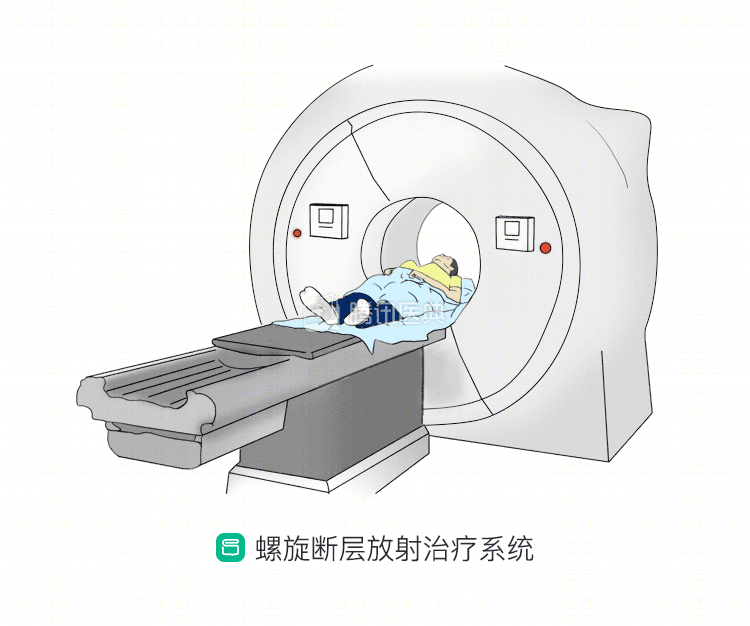
TOMO is a cutting-edge oncology radiotherapy device that provides CT-guided 360-degree focused tomographic irradiation of tumors, allowing efficient, precise, and safe treatment of patients with malignancies.
TOMO enables adaptive radiation therapy for tumors, especially for tumors with multiple foci and in close proximity to vital organs or tissues. Specifically, TOMO can improve the therapeutic effect on tumors by increasing the irradiation dose to the target area while adequately protecting normal organs. This means that the irradiation can be tightly wrapped around the tumor with minimal damage to the critical organs surrounding the tumor. TOMO has been shown to be effective in the treatment of advanced breast cancer with multiple metastases and brain metastases.
There are many new technologies for radiation therapy, and for each patient specifically, the physician will choose the most appropriate radiation therapy for the patient’s specific situation, not necessarily the most advanced. Adequate communication with the physician prior to radiotherapy is necessary.