There are two types of chemotherapy pumps: intravenous pumps and arterial pumps.
The intravenous pump is a continuous intravenous pump of fluorouracil in the oxaliplatin-based FOLFOX4 regimen.
EACH study: significant patient benefit effect of FOLFOX4 regimen in the experimental arm compared with the control arm with single-agent adriamycin
The regimen was confirmed in an open, randomized, symptomatic international multicenter phase III study (EACH study):
- FOLFOX4 regimen
- Single-agent adriamycin
The FOLFOX4 regimen treated significant patients with mPFS, DCR, and DCR compared with single-agent adriamycin, and had some benefit on OS. This included an objective response rate (ORR) of 8.15%, a disease control rate (DCR) of 52%, and a median survival (mOS) of 6.5 months.
The arterial pump is used for hepatic artery infusion chemotherapy at the time of intervention.
A retrospective study: the experimental HAIF group was more effective and safe compared with the sorafenib group
A retrospective study with two groups:
- HAIF group (hepatic artery infusion of oxaliplatin + fluorouracil, local high dose of oxaliplatin, continuous 46-hour dosing of fluorouracil, 180 cases)
- Sorafenib treatment group (232 cases)
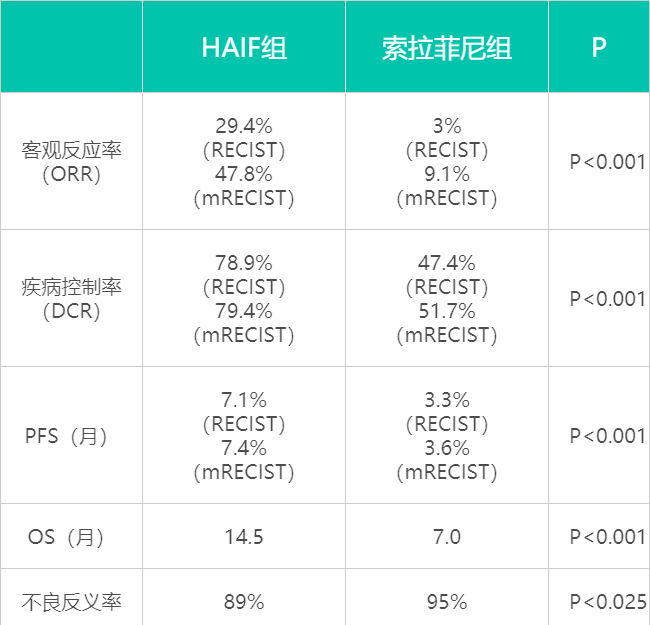
Results The HAIF group had significantly better ORR, DCR, PFS, and OS than the sorafenib group, with ORR 29.4%, DCR 78.9%, PFS 7.1 months, and OS 14.5 months. Table 1 below
Table 1 Comparison of the effectiveness and safety of HAIF and sorafenib
Statistical terms are briefly defined here:
OS: Overall survival, the best efficacy endpoint in oncology clinical trials.
PFS: progression-free survival, the time required for tumor regrowth under drug control.
ORR: objective response rate, the proportion of patients whose tumors shrink by a certain amount and stay that way for a certain amount of time.
DCR: disease control rate, the proportion of patients whose tumors shrink or are stable and remain so for a certain amount of time.