Primary liver cancer is one of the most common malignancies in clinical practice, and according to the latest statistics, liver cancer is the 4th most common malignancy and the 3rd leading cause of tumor death in China. According to cellular typing, primary liver cancer can be divided into hepatocellular liver cancer, cholangiocellular liver cancer and mixed liver cancer. The most common clinical type is hepatocellular carcinoma. Early stage hepatocellular carcinoma can be treated surgically, which includes hepatectomy, liver transplantation. Intermediate stage patients are treated mainly with local treatment, including radiofrequency, interventional and radiotherapy. Late stage patients are treated mainly with drug therapy, including targeted drugs, chemotherapy drugs, and Chinese herbal medicine, and in the future immunotherapy will be approved for liver cancer indications.
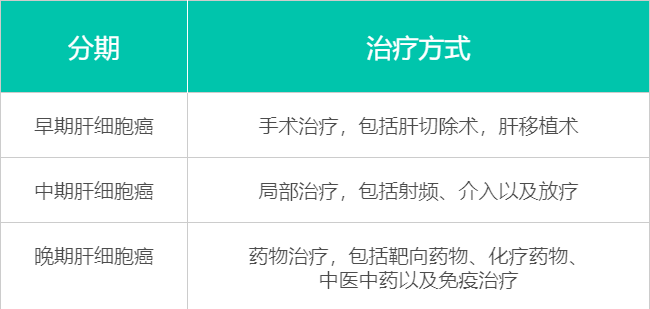
For further details on treatment modalities by stage see link
I Hepatocellular carcinoma (early stage)
II hepatocellular carcinoma (early stage)
III hepatocellular carcinoma (intermediate stage)
IV hepatocellular carcinoma (advanced)

The following will describe the current medical reimbursement and out-of-pocket payments for each treatment, using Nanjing as an example
◆Surgical treatment, about 70% reimbursed by medical insurance
The cost of liver resection in a medium-sized hospital is about 50,000, which is basically covered by the city’s health insurance, with an out-of-pocket ratio of about one-third. Liver transplantation costs 600,000, including 300,000-400,000 for the liver source, completely out-of-pocket, 200,000-300,000 for the surgery, some materials not covered by medical insurance, and 100,000-150,000 out-of-pocket.
◆Radiofrequency and interventional treatment, about 50%-60% reimbursed by Medicare
There are two types of radiofrequency treatment, open radiofrequency and percutaneous radiofrequency. The cost of open RF is around 50,000, of which RF needles are not yet included in medical insurance, about 10-15,000, and the rest is mostly covered by medical insurance, totaling about 25,000 out of pocket. Percutaneous radiofrequency costs in the range of 20-30,000, with an out-of-pocket payment of 15-20,000. Interventional treatment is about 20k per visit, which is covered by Medicare, and some of the ultra-fine catheters require out-of-pocket payments, totaling about 10k out-of-pocket.
◆Radiation therapy, which is covered by health insurance for about 25%-60%
The cost of radiation therapy needs to be actually assessed based on the location and method of irradiation. For example, the cost of irradiating the liver is about $30,000 for general irradiation and $80,000 for TOMO knife irradiation. If there are also bone metastases that need to be irradiated, one sequence will not be covered and an additional cost of about $15,000 per site will be added. about $20,000 of the TOMO cost can be covered by Medicare. General irradiation is covered by Medicare.
◆Medication (chemotherapy and targeted drugs), about 70% reimbursable by Medicare
Advanced liver cancer is mainly treated with drugs. Chemotherapy drugs are treated according to the FOLFOX4 regimen approved in China’s primary liver cancer diagnosis and treatment specification, using domestic oxaliplatin, at a cost of about $5,000 per cycle, fully covered by Medicare with about 30% out-of-pocket. Targeted drugs currently approved are sorafenib and lenvatinib. Sorafenib has been included in medical insurance, with differences in reimbursement rates across the country. The current retail price is RMB 11,500.00 per box, with 2 boxes used per month. Nanjing implements a special drug reimbursement policy, with 50% reimbursement first and then a second reimbursement according to the level of major medical insurance, with an annual out-of-pocket payment of about 65,000. Lenvatinib is 16,800 per box, 30 capsules per box, size 4mg/capsule. 2 capsules per day under 60kg, 33,400 Yuan per month. 3 capsules per day over 60kg, 3 boxes per month, 50,400.00 Yuan per month. The current charity policy is to buy two months (at least four boxes) and give two months free, and buy two more months and give ten months free. It is expected that lenvatinib may be included in Medicare by the end of the year.
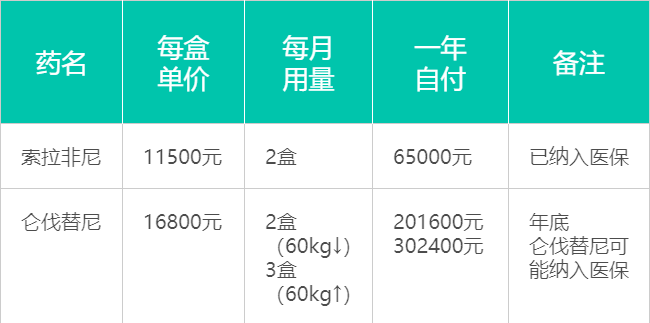
*Annual out-of-pocket costs for lenvatinib are based on a buy two months, get two months free offer
◆Immunotherapy, not currently reimbursable
Immunotherapy is not yet approved in China for the indication of liver cancer, but it has been approved abroad and is expected to be approved in China in the future. The imported drugs navulizumab and pablizumab for liver cancer treatment have no charitable gift and are expected to be around $200,000. For domestically produced Tremelimumab, Sindilizumab, and Carrilizumab, charitable programs exist, but vary by manufacturer and are expected to be $110,000-150,000 per year. It has been reported that the combination of immune drugs and targeted drugs can improve the efficacy, and the cost increases when the two drugs are stacked, as well as the cost of dealing with dealing with side effects, which is difficult to estimate and needs to be treated specifically.
◆Other treatments, about 70% reimbursed by medical insurance
Chinese herbal medicine, nutritional support, pain management, immune support, etc. are all interspersed throughout the treatment of liver cancer and vary greatly by region, making it difficult to estimate costs. All are covered by health insurance, except for albumin, with an out-of-pocket ratio of about 30%.