
In advanced breast cancer, the incidence of bone metastases is 65% to 75%. Although bone metastases themselves are usually not directly life-threatening, they can seriously affect a patient’s quality of life. So, how do you detect bone metastases? How to treat bone metastases after they appear? Let’s find out.
Major manifestations of bone metastases: pain and fractures
Pain is the first symptom of most bone metastases. Initially, the pain is intermittent, but after the tumor compresses the nerve, it may become severe radiating pain in the corresponding innervated area, and as the disease progresses, it may become persistent pain, which increases with activity and cannot be relieved with rest, and becomes more pronounced at night.
Bone metastases from breast cancer are often osteolytic, meaning that they destroy the normal structure of the bone and lead to osteolysis. Some people with bone metastases will have pathological fractures due to bone destruction, which can be very painful and associated with deformity and dysfunction at the fracture site.
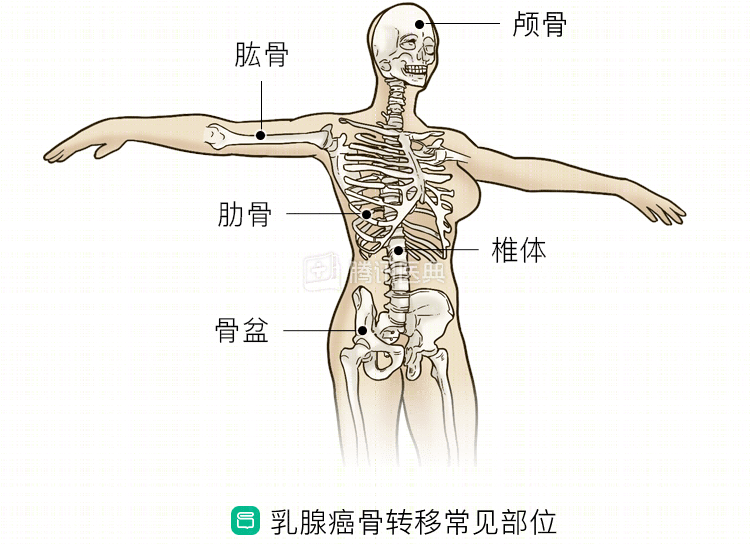
How are bone metastases diagnosed?
Bone radionuclide scanning (ECT) is the most common primary screening method for bone metastases today. When a breast cancer patient presents with bone pain or fractures, or when blood tests reveal elevated alkaline phosphatase or hypercalcemia, suggesting possible bone metastases, the doctor will usually first perform a bone ECT. It is important to emphasize that although this test is more sensitive in detecting lesions early and is less likely to be missed, it can also easily misclassify those without bone metastases as having metastases, and it is not easy to distinguish the nature and extent of destruction of bone lesions.
So, for those with abnormalities on bone ECT, physicians often perform further X-rays, CT, or magnetic resonance imaging (MRI) of the abnormalities to clarify the diagnosis and understand the severity of the bone destruction.
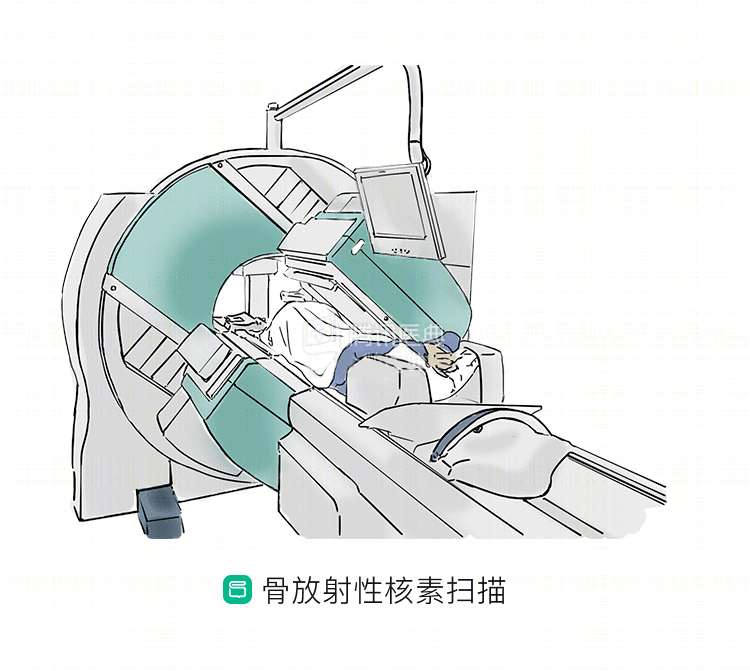
The value of PET-CT in the diagnosis of bone metastases has yet to be studied and is expensive, so it is not routinely used.
When necessary, physicians can take biopsies of bone lesions to obtain a pathologic diagnosis. Bone biopsy pathology is the gold standard for diagnosing metastatic bone cancer, but it is rarely used by physicians because of the difficulty and risk of the procedure.
How do you treat bone metastases?
The primary goals of comprehensive treatment of breast cancer bone metastases are to relieve pain, restore function, improve quality of life, prevent and treat bone-related events (including worsening bone pain or the development of new bone pain, pathologic fractures, vertebral compression or deformity, spinal cord compression, post-radiotherapy symptoms of bone, and hypercalcemia), control tumor progression, and prolong survival.
Bone metastases from breast cancer are a systemic disease, so treatment includes chemotherapy, endocrine therapy, targeted therapy, bisphosphonate therapy, surgical treatment, radiation therapy, analgesia, and other supportive treatments. The physician will develop an individualized comprehensive treatment plan for each patient based on the receptor expression of the tumor tissue, age, menstrual status, site of bone metastases, and the rate of disease progression.
In summary, bone pain and fractures are the main symptoms of bone metastases, and recognizing the symptoms and making early diagnosis using bone ECT and other tools can help to take early treatment measures. There are many treatments that can be used, including chemotherapy, endocrine therapy, targeted therapy, bisphosphonate therapy, surgery, and radiation therapy, and doctors will individualize the treatment to the patient.