The body’s immune system is a very complex factory in which each department and each worker works together to kill foreign “invaders,” such as bacteria and viruses. How does the body itself eliminate tumor cells? How does immunotherapy work against tumors?
Here we start with a concept – the tumor immune loop.
What is the tumor immune ring?
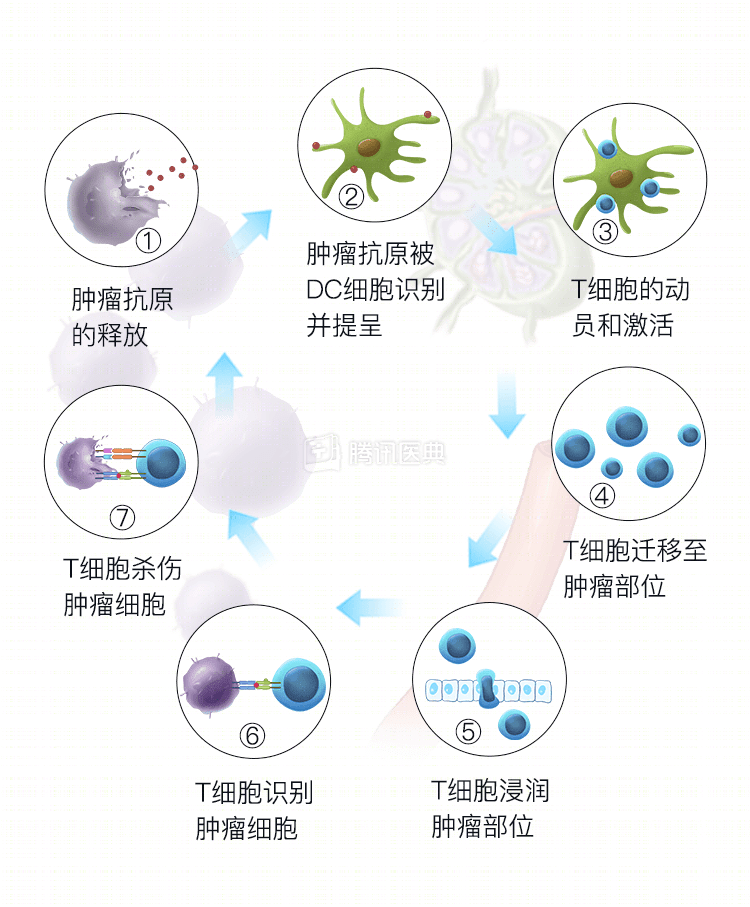
Tumor antigens expressed or released by tumor cells are a foreign “invader.
In most cases, tumor antigens can be presented to T cells, and activated T cells migrate to the tumor site, gradually infiltrating and recognizing tumor cells and eventually eliminating them.
The above process is known as the tumor immune loop (see figure).
What is immunotherapy?
In most cases, T cells recognize tumor cells and kill them in their “cradle”.
However, there are cells in the tumor microenvironment that can inhibit the action of T cells, and cancer cells compete with T cells for nutrients in this microenvironment, making the “immune sentry” much less functional due to lack of nutrients.
Eventually, a small number of tumor cells escape immune surveillance, which is what we call the “immune evasion mechanism“.
Specifically, the immune evasion mechanism may take the following forms:
1. Cells within the cancer nest can secrete a variety of substances that form a physical barrier encasing the tumor tissue and preventing immune cell infiltration.
2. The tumor can produce or recruit some immunosuppressive molecules that directly inhibit the immune response.
3. Tumor cells have a special mechanism to reduce or even eliminate their own antigens, so that immune cells cannot find a “target” to track and kill.
Tumors use these mechanisms to escape the T-cell “hunt”.
The tumor will use these mechanisms to escape from the T-cells and grow beyond the body’s ability to respond to it.
Immunotherapy for tumors is a therapeutic strategy to enhance the links in the tumor immune loop and to block the immune escape mechanism. It does not kill cancer cells directly, but rather exerts an anticancer effect by targeting the body to enhance immune killing of tumors.
Currently, the main immunotherapies for tumors are: therapeutic antibodies, cell therapy, cancer vaccines, immune checkpoint inhibitors, and immune system modulators.
To learn more about the specific methods of immunotherapy and whether esophageal cancer can be treated with immunotherapy, please read: