What is radiation therapy for prostate cancer?
The treatment of prostate cancer includes surgery, radiation therapy, endocrine therapy, and chemotherapy, with radiation therapy and surgery being the primary means of radical treatment for prostate cancer. Radiation therapy is a local treatment for tumors using radiation to kill tumor cells by breaking the double-stranded DNA of tumor cells using high-energy X-rays produced by a gas pedal.
With the help of CT imaging and computer technology, radiotherapy has evolved from two-dimensional radiotherapy to three-dimensional radiotherapy and four-dimensional radiotherapy, and radiotherapy dose distribution has evolved from point dose to volume dose distribution, and the dose intensity in volume dose distribution is adjusted according to clinical requirements (referred to as intensity-modulated radiotherapy).
The mainstay of radiotherapy for prostate cancer is now image-guided intensity-modulated radiotherapy based on the intensity-modulated radiotherapy technique, which reduces the extent of irradiation while providing a higher dose to the tumor tissue, minimizing side effects for the patient while achieving satisfactory outcomes.
What are the advantages and disadvantages of radiation therapy for prostate cancer compared to other treatment options?
Radiotherapy compared to surgery:
- The indications are broad, and local radiation therapy can be administered in early to advanced stages.
- No incision, no anesthesia. The patient simply lies on the treatment bed while the gas pedal moves around the patient, and the treatment time varies from 1 to 15 minutes depending on the gas pedal;
- Effective, radiation therapy combined with endocrine therapy can achieve a radical cure for patients with limited-stage prostate cancer.
Radiation therapy compared with endocrine and chemotherapy:
- Radiation therapy can treat prostate cancer radically;
- Endocrine therapy alone can only retard tumor growth;
- Prostate cancer is insensitive to chemotherapy, which is now commonly used for androgen-resistant recurrent or metastatic prostate cancer.
In practice, radiation therapy combined with endocrine therapy has become the mainstay of radical treatment for prostate cancer.
Which prostate cancer patients are suitable for radiation therapy?
- Limited stage low-, intermediate-, and high-risk patients are eligible for radiation therapy;
- For patients with pelvic lymph node metastases, radiation therapy is also feasible;
- For patients with bone metastases, radiation therapy can relieve bone metastasis pain and control bone-related events such as fractures due to bone metastases.
What are the means of radiation therapy for prostate cancer?
The main types of radiation therapy for prostate cancer include external and internal irradiation.
- External irradiation is the use of gas pedals to produce high-energy X-rays that kill tumor cells. The external irradiation techniques for external radiation therapy mainly include conventional radiotherapy, 3D conformal radiotherapy, and intensity modulated conformal radiotherapy. The recent development of image-guided intensity-modulated radiotherapy has further reduced the irradiation range of prostate cancer radiotherapy, and the surrounding normal tissues can be better protected.
- Internal irradiation techniques include transient insertion therapy and permanent particle implantation therapy, the latter, or intertissue implantation of radioactive particles, is relatively common and aims to increase the local dose to the prostate while decreasing the radiation dose to the rectum and bladder by accurately positioning the radioactive particles within the prostate with a three-dimensional treatment planning system.
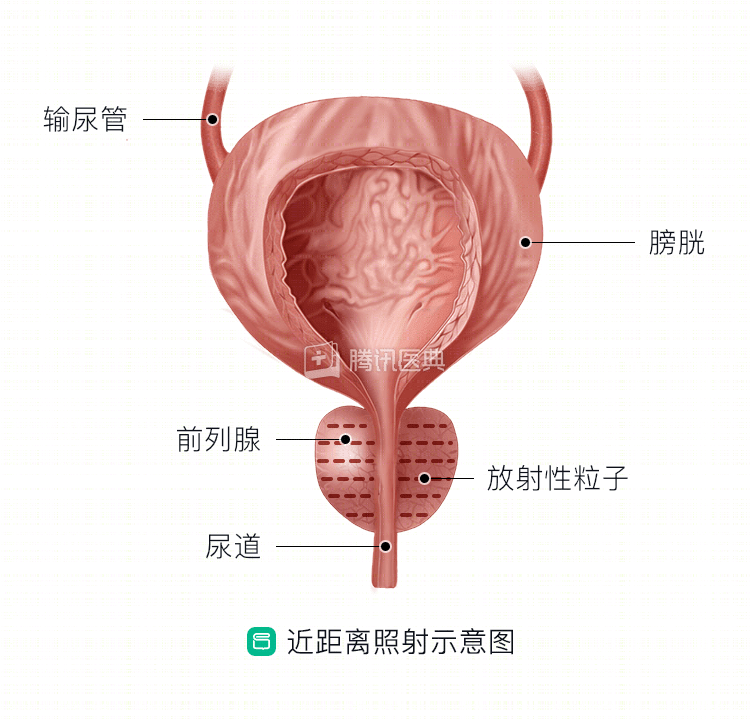
External irradiation techniques may be combined in some patients where the radical dose has not been achieved after permanent particle implantation, or where the patient requires irradiation of the pelvic lymph node drainage area.
Palliative radiotherapy is given to patients with distant metastases, such as bone metastases, to relieve pain, reduce obstructive symptoms, and improve quality of life.
Side effects of radiation therapy for prostate cancer
The side effects of radiation therapy for prostate cancer are mild, with about 5% of patients experiencing varying degrees of side effects, including immediate and long-term effects.
Recent reactions mainly include:
- Decreased appetite, bloating, abdominal discomfort during radiotherapy;
- Bladder reactions: urinary frequency, urinary urgency, increased nocturia, painful urination, very rare patients with hematuria, difficulty in urination;
- Reaction of rectum: increased frequency of stools, anal cramping, worsening of hemorrhoids, etc.
- Radiation cystitis;
- Radiorectalitis, etc.
- Patients should have a full body workup, blood PSA, pelvic MRI/CT, bone scan, chest radiograph, abdominal ultrasound, routine blood work, liver and kidney function, etc.
- Patients should have a prostate puncture to clarify the type of pathology and Gleason score so that patients can get accurate staging for treatment planning. Endocrine therapy is recommended for about 3 months before radiation therapy for patients with intermediate or high risk of limited stage, which can reduce the volume of prostate and seminal vesicles, facilitate the reduction of irradiation volume, reduce toxic side effects, and increase the efficacy.
- Patients are advised to take a shower the day before (because CT positioning requires marking the patient’s body), have a morning bowel movement (emptying the rectum) on the day of positioning, eat normally, bring 500 ml of warm water, drink water after emptying the bladder under the doctor’s guidance, and time the CT simulation positioning after about 30 minutes, depending on individual conditions.
- Protect the positioning markers on the body and try to ensure that the bladder and rectal status is consistent with the day of positioning at the time of daily treatment.
- Patients with hemorrhoids who develop hemorrhoid symptoms should use the medication as early as possible.
- After defecation, it is recommended to use soft hand towels to wipe clean, and if possible, it is recommended to use water to wash the perianal skin, followed by a soft towel to gently dry or blow dry.
- Avoid spicy food and eat nutritious food that is easy to digest.
- After radiotherapy, regular review is done, and some patients continue to use endocrine therapy as prescribed by the doctor.
Distant reactions include:
What are the considerations for patients before and after radiation therapy for prostate cancer?
For example, before starting radiation therapy for external irradiation:
.
After starting radiation therapy:
Related articles: