Esophageal cancer is less likely to have brain metastases.
The most common mechanism of brain metastasis is hematogenous dissemination, in which cancer cells are like seeds that flow throughout the body with the blood circulation and colonize when they encounter the right soil, proliferating into tumors.
Metastases are usually located right at the junction of the gray and white matter of the brain, where the diameter of blood vessels is reduced, making it easy for tumor masses to lodge, adhere, and penetrate the vascular and interstitial barriers to colonize and grow into tumors. Brain metastases are also often found in the terminal “watershed area” of the arterial circulation, which is prone to aphasia when damaged.
How do brain metastases from esophageal cancer occur?
It is now generally accepted that brain metastases from esophageal cancer occur as shown in the figure below.
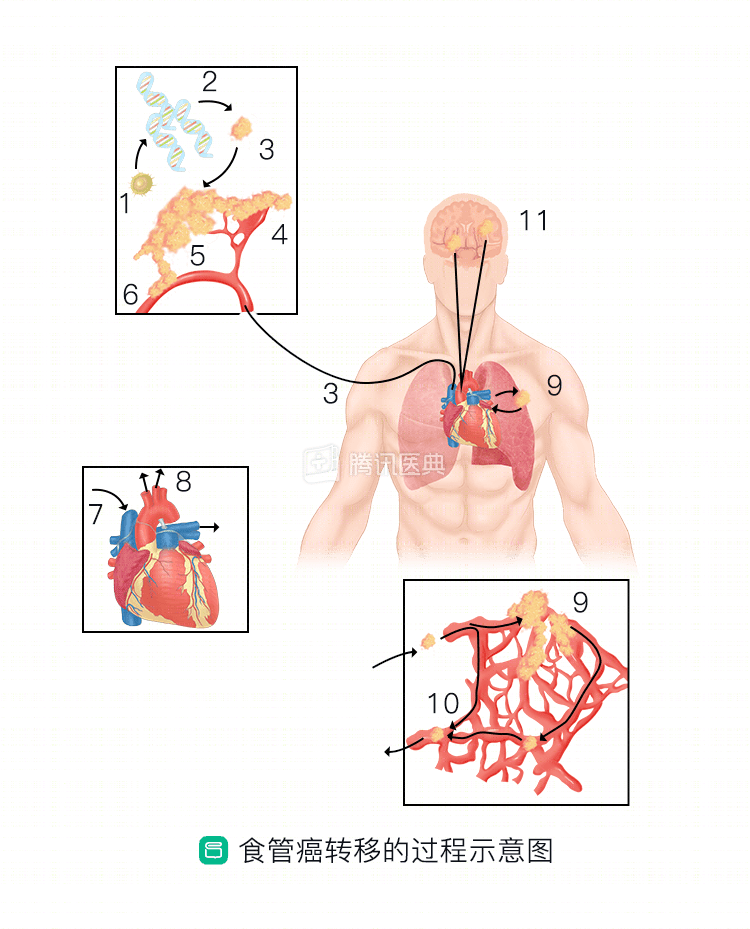
What are the symptoms of brain metastasis from esophageal cancer?
The symptoms of brain metastasis from esophageal cancer are diverse. Due to gradual enlargement of the tumor mass, edema around the tumor, obstruction due to compression, intratumoral hemorrhage, and embolization of tumor cells, patients may experience headache, focal neurological dysfunction (such as mild hemiparesis), cognitive dysfunction, seizure, stroke, and other symptoms.
Usually, the possibility of brain metastases should be suspected if a patient presents with any of these conditions. However, there are many other causes that can lead to similar abnormalities, so prompt medical attention and a differential diagnosis by a medical professional is needed.
Headaches caused by brain metastases are associated with the following characteristics:
- Acute, new-onset and usually severe headache, or headache that differs from the previous pattern;
- Headaches on exertion, nocturnal attacks, or early morning attacks;
- Progressive headache, where the headache is getting worse;
- Headache with fever or other systemic symptoms;
- Headache with signs of meningeal irritation (mainly manifested as cervical tonicity, which may be accompanied by vomiting, etc.);
- Headache with new neurological signs;
- Headache induced by the Valsalva test (coughing, sneezing, or bending over).
How do doctors diagnose if brain metastases have occurred?
To confirm a diagnosis of brain metastases, doctors need to take a detailed history, complete a neurological physical exam, hematologic tests, imaging, and sometimes a pathologic biopsy to confirm the diagnosis.
Enhanced MRI is the imaging test of choice. If you have a metal implant that interferes with MRI (such as a pacemaker), are claustrophobic, or have other reasons for not tolerating MRI, prefer enhanced CT. scan CT may be considered in those who cannot receive MRI and have poor kidney function to avoid aggravating kidney damage with contrast.
Is there a cure for brain metastases?
Brain metastases from esophageal cancer require comprehensive multidisciplinary expert treatment to treat both the symptoms and the root cause.
Cause of the metastasis, which is aimed at treating the metastasis itself, repairing neurological damage, and prolonging survival, includes surgery, whole brainradiotherapy (WBRT), stereotactic radiosurgery (SRS), chemotherapy, or targeted therapy.
Surgery is the standard of care for solitary brain metastases. For limited brain metastases (one to three lesions in close proximity), surgical resection may also be considered if the primary tumor is well controlled. In the case of multiple brain metastases, surgery is not recommended, but larger isolated metastases may be removed to improve symptoms.
A combination of these treatments can provide the most benefit to patients.
Supportive therapy focuses on tumor complications such as epilepsy, cerebral edema, psychiatric abnormalities, and deep vein thrombosis to improve symptoms and quality of survival.