Advanced kidney cancer is when the tumor invades the tissues and organs surrounding the kidney, or escapes the kidney and reaches distant organs such as the lungs, liver, bones, and brain.
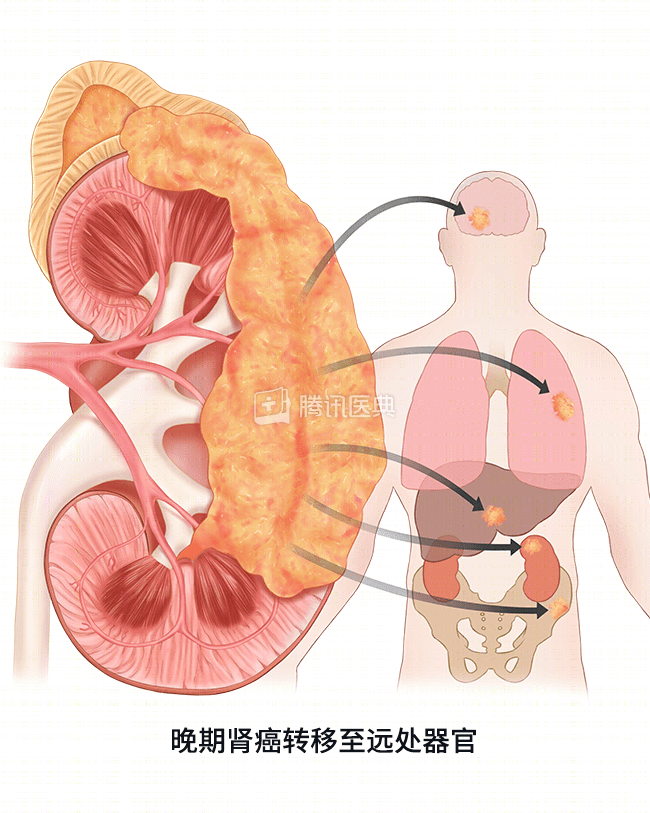
Advanced kidney cancer needs to be evaluated by imaging such as X-rays, CT scans, or bone scans. imaging such as CT, MRI, and PET-CT cannot detect single kidney cancer cells or small nests of kidney cells, but can detect metastatic tumors up to a diameter of >1cm. It is important to emphasize that even if kidney cancer cells metastasize to other organs, they are still renal cell carcinoma and should still be treated as such.
There are many treatment options for advanced kidney cancer, mainly including surgery, targeted therapy, immunotherapy, radiotherapy, ablative therapy, Chinese medicine treatment, etc. Different combinations of comprehensive treatment need to be chosen according to the actual situation of different patients. If a patient has not undergone resection of the primary tumor of the kidney and is in good health, he or she can consider resection of the primary tumor of the kidney first, and then systemic systemic therapy including targeted therapy, immunotherapy, or clinical trials are needed to treat the residual tumor in the body, and sometimes radiotherapy, radiofrequency ablation, and cryoablation are needed to enhance the control of the local tumor.
The main concern of patients with advanced kidney cancer is whether they can be cured and how long they can live. In the past, the average survival time for patients with metastatic renal cell carcinoma was 12 to 14 months. But new targeted drugs can extend this time.
It is important to note that 12 to 14 months is the average time for a large sample size of patients, and this survival time can vary widely from a few months to several years for each patient.
Many factors affect the prognosis of patients, such as a longer survival time for patients who are fit and have a robust immune system, whose tumors may not be immediately life-threatening, and who are mostly able to tolerate a variety of related treatments. In general, patients who are in good shape tend to survive longer than those who are depressed after being struck by cancer.
In addition, patients who respond better to treatment tend to survive longer. But it is still impossible to tell exactly which patients a particular treatment is appropriate for, or what is the most appropriate treatment for a particular patient? Patients with advanced kidney cancer who are treated effectively may even survive for a long time (≥5 years). Therefore, patients with advanced kidney cancer should have confidence and active treatment, even if they cannot be completely cured, there is hope for long-term survival with tumor.