For those with suspected gastric cancer, the first thing a doctor should do is to clarify whether they have gastric cancer and then further understand the extent of disease progression and systemic status. The combination of these is what allows the most appropriate individualized treatment plan to be developed for the patient.
Following this line of thinking, this article will take you through the step-by-step process of how doctors diagnose stomach cancer.
Confirming the diagnosis
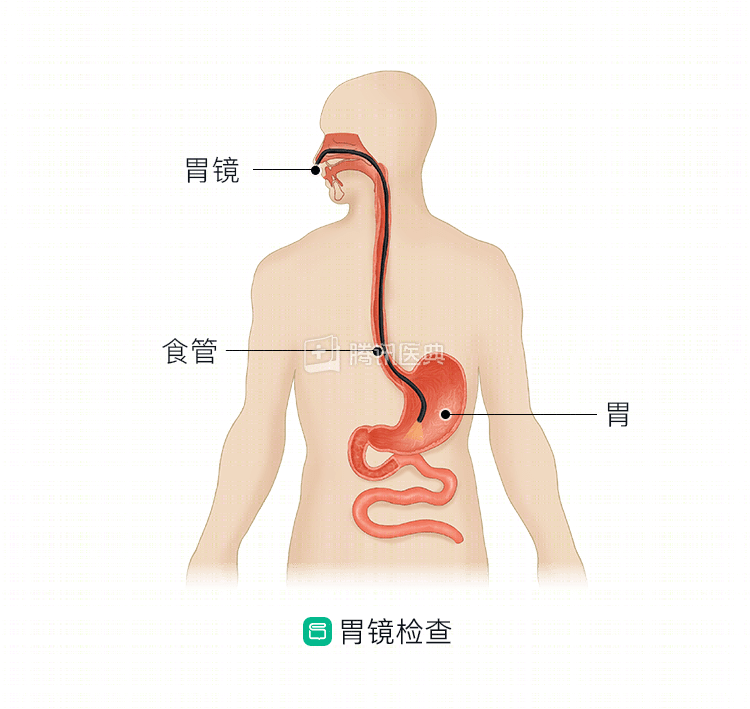
- Gastroscopy and biopsy Gastroscopy and pathologic histology are the first tests doctors use to confirm the diagnosis of gastric cancer. For those who suspect gastric cancer, doctors usually perform gastroscopy. The advantage of gastroscopy is that the site, shape, size and scope of the lesion can be directly observed, while a sample is clamped on the suspected lesion for pathological histological examination to further clarify the nature of the lesion. Histopathology to find cancer cells is the only gold standard for the diagnosis of gastric cancer.
- Gas-barium double contrast imaging Gastroscopy is also not a panacea and sometimes needs to be supplemented with other tests. Some lesions are difficult to sample by gastroscopy, in which case the doctor will consider gastric gas-barium double contrast imaging. Borrmann type IV s gastric cancer with infiltrative growth under the gastric mucosa is one such case where gastroscopy cannot take a biopsy.
Assessment of disease status
After the diagnosis of gastric cancer, the doctor will further clarify the extent of disease progression, often choosing the following tests in sequence.
- Stomach-enhanced CT or whole abdomen-enhanced CT After diagnosing gastric cancer, with an enhanced CT of the stomach or abdomen, the physician will want to know the following: further determine the extent of the gastric cancer and its relationship to surrounding organs, such as whether there is invasion of the pancreas or liver; assess local lymph node metastasis and whether the metastatic lymph nodes encircle large blood vessels. Whether there is metastasis to distant organs (e.g. peritoneum, liver, adrenal glands, ovaries, etc.). Currently, enhanced CT is the main tool for determining preoperative TNM staging of gastric cancer with high accuracy and can be used to guide the next step of treatment.
- Pulmonary X-ray or CT is used to determine the presence of pulmonary metastases, as well as to understand the condition of the lungs and to assess surgical tolerance.
- Liver-enhanced magnetic resonance imaging (MRI) For patients with suspected liver metastases on an enhanced CT, physicians typically recommend a liver-enhanced MRI to clarify whether there are combined liver metastases and the number of metastatic lesions.
- Head CT For those who have headache, limited limb movement, etc., the doctor may recommend a head CT to determine if there is a combination of brain metastases or a combination of cerebrovascular disease.
- Bone scan of the whole body Patients with generalized skeletal pain will usually have a whole body bone scan recommended to determine if there is a combination of bone metastases.
- Gynecologic ultrasound Women with gastric cancer are often prone to bilateral ovarian metastases, known as Krukenberg’s tumor, and doctors typically recommend that patients receive a 3-D ultrasound of the uterus as well as bilateral adnexa.
- Esophageal spot film For gastroesophageal junction cancer with dysphagia, doctors usually recommend an esophageal spot film to understand whether the tumor invades the esophagus and the extent of invasion, and to guide the choice of subsequent surgical approach.
- Ultrasound gastroscopy is chosen for patients with suspected early gastric cancer to assess the depth of tumor infiltration within the gastric wall and metastases in the surrounding lymph nodes. This helps determine the preoperative T and N staging, which can be complemented with gastric enhancement CT to assist the surgeon in determining whether the lesion is suitable for endoscopic resection.
- Whole-body PET-CT A whole-body positron emission and computed tomography (PET-CT) scan may be recommended when metastases are suspected elsewhere in the body.
- Blood tumor markers Often, patients will have blood drawn to look for tumor markers, and some patients with gastric cancer will have elevated tumor markers, which may indicate peritoneal metastases when they are significantly elevated, and patients with elevated CA125 may have a poor outcome.
- Laparoscopy In the initial evaluation of progressive gastric cancer, especially locally advanced gastric cancer where the tumor involves the outermost layer of the stomach (plasma layer), doctors will usually recommend laparoscopy. Laparoscopy can detect some tiny metastases in the abdominal cavity. In addition, laparoscopy also allows for lavage of the abdominal cavity, and examination of the lavage fluid can help determine the presence of free tumor cells in the abdominal cavity, which can help further determine the stage.
Understanding whole body status
To understand the organ function and physical status of the patient for the next step of treatment, doctors usually also perform the following tests.
- Blood tests Tests include routine blood, liver function, kidney function, blood glucose, coagulation, blood type, hepatitis series, syphilis, HIV antibodies, blood gas analysis, etc.
- Urine and stool examination including urine routine, fecal occult blood test, etc.
- Cardiac function and cardiac ultrasound In patients with comorbid heart disease (e.g., hypertension, coronary artery disease, heart valve disease, etc.) or in the elderly, doctors usually recommend cardiac function and cardiac ultrasound to understand how well the heart is functioning and tolerating the procedure.
- Pulmonary function For patients with comorbid respiratory disease (e.g., bronchitis, chronic obstructive pulmonary disease, emphysema, pulmonary heart disease, etc.), pulmonary function tests can provide an understanding of the ventilation reserve of the lungs and assess whether the procedure can be tolerated.
In summary, for those with suspected gastric cancer, physicians generally follow the above-mentioned ideas and processes to progressively confirm the diagnosis of gastric cancer and clarify the stage of gastric cancer and the patient’s systemic status so that further individualized treatment plans can be developed.