Drinking alcohol increases the risk of gastric cancer
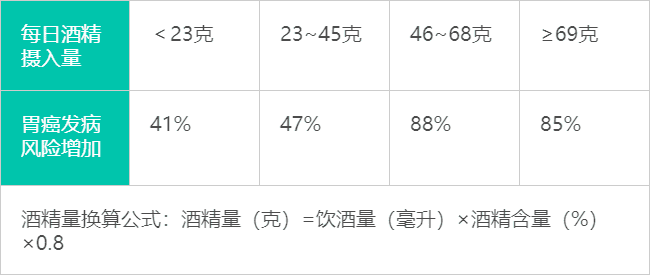
Many gastric cancer patients are in the habit of drinking a little wine, but it’s important to know that alcohol is a definite risk factor for the development of gastric cancer. In a study that followed 50,000 people for more than 13 years, alcohol consumption increased the risk of gastric cancer by up to 82%, and the more alcohol consumed, the higher the risk of gastric cancer, as shown in Table 1. Every 10 grams of additional alcohol intake per day (about the alcohol content of one 330ml can of beer, one and a half red wine, or one and a half white wine) increased the risk of gastric cancer by 7%.
Table 1: Association between daily alcohol intake and increased risk of gastric cancer
The main carcinogenic risk associated with alcohol is its metabolite in the body, acetaldehyde (a class 1 carcinogen), which directly binds DNA and induces gene mutations. In addition, alcohol can promote translocation activation of oncogenes, producing reactive oxygen species that can directly damage DNA and cause cancer.
Alcohol abstinence can reduce the risk of death from stomach cancer by about half
Alcohol consumption not only increases the risk of developing gastric cancer, but also increases the mortality rate of gastric cancer patients. No or light alcohol use (<20 grams of alcohol per day) can reduce the risk of death from gastric cancer by 48% compared to patients with gastric cancer who drink moderate to heavy alcohol. Therefore, for gastric cancer patients, abstaining from alcohol can reduce the risk of death by almost half. In addition, reducing alcohol consumption also significantly inhibits the development of second gastric cancer (meaning that a second cancer occurs in the stomach, which, unlike recurrence, is an organ that is prone to second cancers).
People at high genetic risk for stomach cancer can cut their risk in half by doing these 4 things
Stomach cancer has a certain genetic risk, with family clustering. So for those at genetic risk, it’s really important to stop drinking.
One study showed that for people at high genetic risk for gastric cancer, simply adhering to a healthy lifestyle of 1) not smoking (or quitting for more than 15 years); 2) not drinking alcohol (or drinking for ≤1 month in the past year); 3) eating less pickled foods (≤4 days per week); and 4) eating fresh fruits and vegetables regularly (≥4 days per week). It would be possible to reduce the relative risk of gastric cancer by 47%.
In addition, genetic risk and lifestyle factors have a mutually reinforcing effect on gastric cancer. That is, if genes are not dominant enough, and then you don’t pay attention to your lifestyle, it really adds up. Therefore, it is recommended that all people at high risk for gastric cancer begin to stop drinking today.