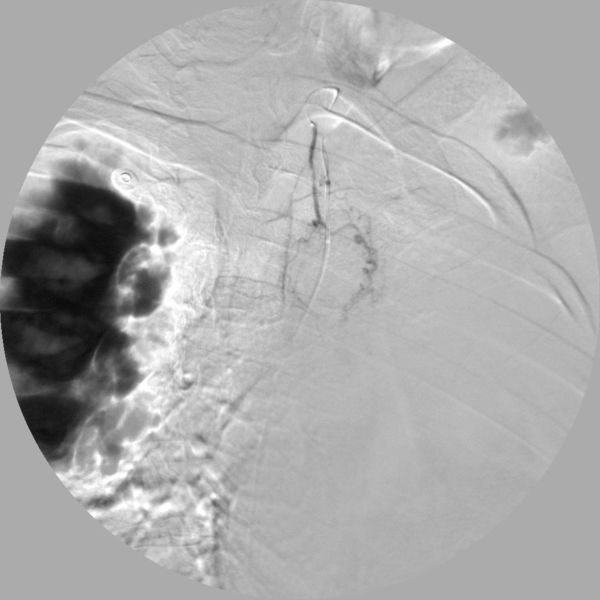
Hemoptysis is common in bronchiectasis, tuberculosis, primary lung cancer, lung abscess, etc. Most of the bleeding arteries originate from the pulmonary system, mainly from the bronchial arteries, but also from other body arteries such as the subclavian artery branches such as the internal thoracic artery and intercostal artery, and in a few cases from the pulmonary artery branches. Hemoptysis is a serious life-threatening condition with a daily bleeding volume of 500-2000 ml, with a high mortality rate, and the main cause of death is asphyxia, followed by shock. In the past, hemoptysis was mostly treated with conservative medical therapy, such as intravenous administration of posterior pituitary hormone. Most patients with hemoptysis are too late for surgery or cannot be treated surgically for various reasons. Interventional therapy has become an effective treatment for bronchial hemoptysis because of its clear objectives and significant efficacy. The following is a picture of a patient with hemoptysis and interventional embolization treatment for lung cancer recently completed in our hospital; although the patient was given active medical treatment to stop the hemoptysis after admission, the patient’s hemoptysis symptoms still could not be completely stopped, and nearly 600ml of blood was hemoptysis within 2 hours. Bronchial arteriography was performed urgently to investigate the bronchial artery, all intercostal arteries, the left internal mammary artery and other subclavian artery branches, etc. The bleeding artery was finally found to be the tracheal branch from the left inferior thyroid artery. Figure 1: Subclavian arteriogram revealed that the bleeding artery was a tracheal branch of the left inferior thyroid artery. Figure 2, the microcatheter was super-selected into this artery, and embolization was given after the angiography was clear.